Modern concrete technology relies on the precise manipulation of particle suspensions at the micro- and nanoscale. Achieving high-performance concrete (HPC), self-consolidating concrete (SCC), and ultra-high-performance concrete (UHPC) requires radical reductions in water-to-binder (w/b) ratios without compromising workability or pumping logistics. Central to this performance paradigm is the new generation superplasticizer for concrete, predominantly based on comb-like polycarboxylate ether (PCE) copolymers. Unlike traditional linear polymers, these advanced chemical architectures provide tailored electro-steric dispersion mechanisms that redefine modern mix design.
The contemporary construction market demands materials capable of handling extreme structural geometries, massive aggregate replacement ratios, and aggressive carbon-reduction targets. Incorporating supplementary cementitious materials (SCMs), particularly Ground Granulated Blast-Furnace Slag (GGBS/GGBFS) and low-calcium fly ash, introduces unique surface chemical phenomena into the paste matrix. Mastering the interactions between chemical admixtures, binder interfaces, and interstitial water forms the basis of contemporary structural engineering.
The Molecular Architecture of Polycarboxylate Polymers
The evolution from traditional dispersants—such as sulfonated naphthalene formaldehyde (SNF), sulfonated melamine formaldehyde (SMF), and purified lignosulfonates—to polycarboxylate-based systems represents a fundamental shift in polymer engineering. First- and second-generation water reducers rely exclusively on electrostatic repulsion. Anionic groups along the polymer backbone adsorb onto the positively charged surfaces of hydrating cement phases, generating a negative zeta potential that forces particles apart through Coulombic forces.
Traditional electrostatic mechanisms exhibit clear limitations when the ionic strength of the pore solution increases rapidly during early hydration. As calcium ($Ca^{2+}$) and sulfate ($SO_4^{2-}$) ions saturate the liquid phase, Debye screening compresses the electrical double layer, causing flocculation and severe slump loss. A new generation superplasticizer for concrete overcomes this limitation by utilizing steric hindrance alongside electrostatic repulsion.
These synthetic macromolecules feature a comb-like architecture consisting of two distinct structural components:
The Anionic Main Chain: Typically composed of methacrylic, acrylic, or maleic acid units containing carboxylate groups ($-COO^-$). This backbone anchors the polymer onto the positively charged hydrating clinker phases, predominantly tricalcium aluminate ($C_3A$) and the early hydration products of alite ($C_3S$).
Neutral Polyether Side Chains: Usually made of poly(ethylene glycol) (PEG) or poly(ethylene oxide) (PEO) macromonomers grafted onto the backbone. These hydrophilic chains extend outward into the interstitial pore solution, creating a physical barrier that prevents cementitious grains from agglomerating.
Precision synthesis allows polymer chemists to manipulate the carboxylate-to-side-chain ratio, the length of the backbone, and the molecular weight of the PEG branches. A higher charge density (lower side-chain spacing) drives rapid initial adsorption and high early water reduction. Conversely, high side-chain densities yield prolonged steric hindrance, maintaining workability for extended transportation and placement windows.
Rheological Transformations in Low-Water Cementitious Systems
Concrete rheology in the fresh state is primarily characterized by the Bingham model or the Herschel-Bulkley model, defined by two key parameters: yield stress ($\tau_0$) and plastic viscosity ($\mu$). Yield stress dictates the energy required to initiate flow, governing slump and filling ability, while plastic viscosity influences the resistance to sustained flow, dictating pumpability, sticky behavior, and segregation resistance.
Deploying a new generation superplasticizer for concrete drastically depresses the yield stress of dense suspensions. By breaking down the interconnected colloidal flocs of cement, entrapped mixing water is released into the continuous phase, increasing the effective volume fraction of lubricating fluid.
Managing plastic viscosity presents a distinct chemical challenge. At low w/b ratios (below 0.30), concrete often becomes excessively viscous and thixotropic, placing extreme pressure on batching equipment and high-rise pumping lines. Tailored polymer structures with short, high-density side chains reduce the hydrodynamic radius of dispersed grains, mitigating intermolecular friction and preventing structural jamming during steady-state shear.
Hydration Kinetics and Adsorption Dynamics
The operational window of polycarboxylates is governed by competitive adsorption against ambient sulfate ions in the pore solution. When water contacts cement, sulfate from added gypsum ($CaSO_4 \cdot 2H_2O$) and hemihydrate dissolves rapidly. These free $SO_4^{2-}$ ions compete directly with the carboxylate groups on the PCE backbone for anchoring sites on aluminate surfaces.
Admixture specialists calibrate polymer formulations to prevent two common field failures: premature polymer entrapment within fast-forming ettringite needles, and excessive hydration retardation. By managing the grafting density, the adsorption rate of a new generation superplasticizer for concrete can be synchronized with sulfate depletion, stabilizing both early-stage workability and late-stage mechanical development.
Synergy with GGBS and High-Volume SCM Systems
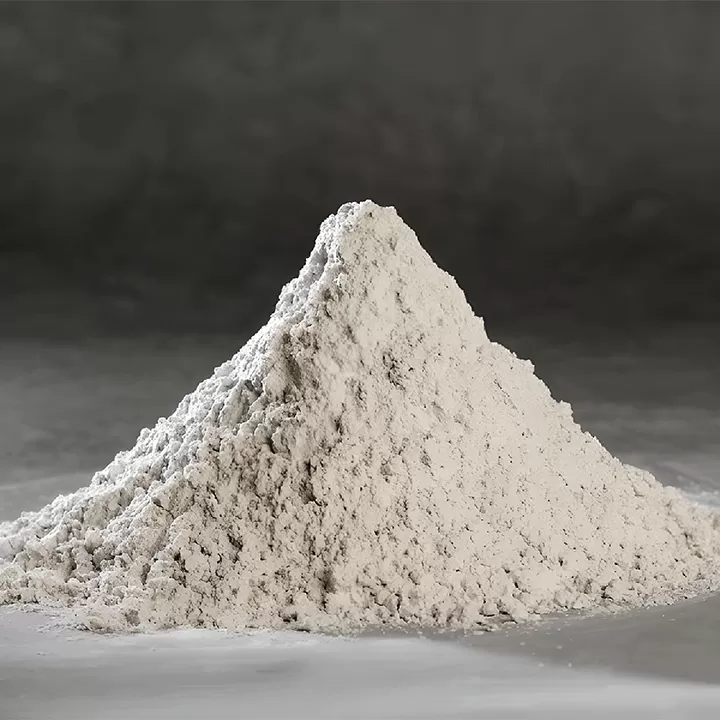
The decarbonization of civil infrastructure relies on clinker replacement with supplementary cementitious materials. Ground Granulated Blast-Furnace Slag (GGBS) modifies the fresh and hardened state behavior of the composite paste. Possessing a vitrified, latent-hydraulic chemistry rich in calcium aluminosilicates, GGBS alters the surface charge distribution and the kinetics of the liquid phase.
Compared to Portland cement clinker, GGBS particles generally present a smoother surface morphology and lower early reactivity. However, their particle size distribution is often ground to a higher Blaine fineness ($>400\text{ m}^2/\text{kg}$) to ensure adequate compressive strength development. This increased specific surface area demands precise chemical dispersion to avoid excessive water demand. Industrial suppliers like Golden Fortune provide stable raw material streams that allow admixture chemists to balance rheology in high-slag mixtures without inducing bleeding or segregation.
Integrating a new generation superplasticizer for concrete into GGBS-rich binders yields unique rheological benefits:
Reduced Adsorption Competition: GGBS exhibits a lower early aluminate dissolution rate than ordinary Portland cement, reducing the rapid consumption of polymer molecules and allowing a higher concentration of active PCE to remain functional in the pore solution.
Optimized Particle Packing: High dispersion efficiency allows the angular GGBS fines to slip between the clinker grains, increasing bulk packing density and reducing overall paste porosity.
Extended Slump Retention: The moderate hydration heat of slag systems pairs well with steric-hindering polymers, extending workability windows up to three hours in elevated ambient temperatures without the need for high doses of supplementary set retarders.
Maintaining compatibility across ternary blends containing Portland cement, GGBS, and silica fume requires polymer blends that combine fast-adsorbing chains with sustained-release polymers. Tailored chemical solutions developed alongside material specialists like Golden Fortune ensure consistent flow properties, even with complex binder blends.
Performance Parameters in HPC and UHPC Formulations
Ultra-high-performance concrete push materials science to the physical limit, with w/b ratios routinely dropping below 0.20. Achieving flowability under these conditions requires dense packing and near-total dispersion of all ultrafine components.
The table below illustrates the typical physical and chemical shifts observed when moving from conventional dispersants to polycarboxylate-based systems in advanced cementitious matrices:
| Performance Metric | Conventional Dispersants (SNF/SMF) | New Generation PCE Superplasticizers |
|---|---|---|
| Primary Dispersion Mechanism | Electrostatic repulsion | Steric hindrance + Electrostatic repulsion |
| Water Reduction Capability | 15% – 25% | 30% – 45%+ |
| Slump Retention (at 20°C) | 30 – 60 minutes | 120 – 180+ minutes |
| Dosage Efficiency (% solid-on-binder) | 0.50% – 1.20% | 0.15% – 0.45% |
| Viscosity Control in Low w/b | Poor (sticky, dilatant tendencies) | High (tailored shear-thinning behavior) |
| Compatibility with High-Volume SCMs | Moderate (prone to rapid slump loss) | High (tailorable molecular structures) |
In addition to water reduction, controlling the entrained air void system is critical. Standard polycarboxylate synthesis leaves residual surfactants that can stabilize large, irregular air pockets within the concrete paste. These unstable voids degrade compressive strength and increase permeability. Formulations for a new generation superplasticizer for concrete integrate molecular-grade defoaming agents directly into the polymer solution. These organosilicone or polyether-modified defoamers destabilize coarse macro-voids while preserving stable, sub-micron air voids needed for freeze-thaw durability.
Durability and Microstructural Densification
The long-term performance of reinforced concrete structures depends on transport properties: permeability, diffusivity, and capillary absorption. By maximizing water reduction and promoting continuous hydration, advanced polycarboxylates optimize the microstructure of the hardened paste.
The transition zone between the aggregate matrix and the bulk cement paste—the Interfacial Transition Zone (ITZ)—is historically the weakest link in concrete durability. Under high water-to-binder conditions, water films bleed onto the aggregate surfaces, creating a porous layer rich in oriented calcium hydroxide ($Ca(OH)_2$) crystals. The extreme dispersion delivered by a new generation superplasticizer for concrete eliminates local bleeding and capillary channeling.
Combined with the secondary pozzolanic and hydraulic reactions of GGBS, this chemical dispersion converts portlandite into dense, space-filling Calcium Silicate Hydrate (C-S-H) gels. The resulting microstructural matrix exhibits:
Significantly lower chloride diffusion coefficients, protecting reinforcement from corrosion in marine environments.
High electrical resistivity, reducing current flow in electrochemical degradation processes.
Near-impermeable pore structures, protecting concrete against sulfate attack, external carbonation, and cyclic freezing.
Quality Standards and Site Application Protocols
Achieving predictable performance with advanced PCE chemistry requires rigorous quality management across storage, batching, and mix adjustments. Polycarboxylate superplasticizers comply with international standards including ASTM C494 (Standard Specification for Chemical Admixtures for Concrete, Types A, F, and G) and EN 934-2 (Admixtures for concrete, mortar, and grout).
Dosing sequences directly influence polymer performance. Adding the admixture alongside the initial batch water often leads to premature polymer consumption by the early-dissolving aluminate phases ($C_3A$). Delaying the superplasticizer addition until 70%–80% of the batch water has wetted the aggregates ensures the polymer acts on partially hydrated silicates, maximizing flow with lower dosages.
Temperature fluctuations also demand close monitoring. In hot-weather concreting, high ambient temperatures accelerate both polymer desorption and ettringite precipitation, leading to faster slump loss. Custom polymer blends containing delayed-action side chains help offset these temperature-induced changes on site.
Frequently Asked Questions
How do side-chain densities affect workability retention in high-slump mixes?
Side-chain density determines the spatial frequency of polyether (PEG/PEO) branches along the polymer backbone. A high grafting density limits immediate anchor points, slowing the adsorption process and leaving unadsorbed polymer molecules in the pore solution. These residual polymers gradually attach to newly exposed hydration surfaces over time, providing sustained steric repulsion and maintaining slump across extended transit and placement periods.
Why does cement alkali content cause incompatibility issues with certain PCE superplasticizers?
The total soluble alkali content ($Na_2O_{eq}$) of cement accelerates the initial dissolution rate of sulfate ($SO_4^{2-}$) ions into the pore liquid. When alkali concentrations are elevated, the excessive concentration of sulfate ions competes directly with the carboxylate groups for adsorption sites on the cement grains. This competition can suppress polymer adsorption, leading to rapid slump loss, increased paste viscosity, or sudden structural stiffening.
What role does GGBS fineness play when optimizing superplasticizer dosage?
GGBS ground to elevated Blaine fineness levels ($>450\text{ m}^2/\text{kg}$) increases the surface area that requires polymer coverage. While slag consumes fewer polymer molecules via initial chemical binding than clinker phases, its physical water demand increases. The superplasticizer formulation must provide strong deflocculation without excessive retarding effects, balancing fluidity against early mechanical strength.
How do ambient temperature variations alter the performance of polycarboxylate admixtures?
Elevated ambient temperatures accelerate early cement hydration kinetics, driving the rapid crystallization of hydration products that can bury adsorbed polymer chains. High temperatures also weaken hydrogen bonding between polyether side chains and surrounding water molecules, reducing steric layer thickness. Cold environments produce the opposite effect, where standard PCE formulations can extend setting times if the base polymer structure is overly retarding.
Can polycarboxylate superplasticizers eliminate bleeding in high-fluidity concrete?
PCE polymers reduce the total water content needed to achieve high fluidity, fundamentally lowering free water volume. However, because polycarboxylates reduce yield stress, overtreatment or unbalanced aggregate gradings can still cause dynamic segregation. Incorporating compatible viscosity modifying admixtures (VMAs) or balancing polymer molecular weights stabilizes the paste matrix, delivering self-consolidating fluidity without aggregate settlement or bleed-water collection.
For technical inquiries regarding high-purity mineral components, SCM compatibility, and raw material sourcing, contact the engineering and supply chain team at Golden Fortune via sales@ultrafineggbs.com to discuss project specifications and bulk industrial requirements.