Extended transit intervals, elevated ambient temperatures, and complex structural placements present continuous challenges to modern concrete engineering. When concrete leaves the batch plant, it enters a volatile rheological state where the hydration of Portland cement immediately begins consuming free mixing water. The rapid stiffening of the paste, known as slump loss, compromises pumping efficiency, increases placing labor, and promotes cold joints. Achieving better slump retention requires a holistic understanding of cement chemistry, particle interactions, and the controlled deployment of supplementary cementitious materials such as Ground Granulated Blast-Furnace Slag (GGBS).
The preservation of workability without relying on retempering with water represents a fundamental objective for concrete producers. Adding water on site disrupts the calculated water-to-binder ratio, permanently degrading the mechanical capacity and durability of the matrix. Incorporating high-quality slag into the binder system alters both the physical packing of the granular skeleton and the early-stage chemical kinetics, offering predictable rheological control over extended placement windows.
Early Hydration Kinetics and the Physics of Slump Decay
Slump loss stems directly from the rapid formation of early hydration products within the cement paste. Ordinary Portland Cement (OPC) contains tricalcium aluminate (C3A) and tricalcium silicate (C3S), both of which hydrate vigorously upon contact with water. The initial dissolution phase releases calcium, sulfate, aluminate, and hydroxyl ions into the pore solution.
Within minutes, C3A reacts with calcium and sulfate ions to precipitate ettringite (AFt phases). These needle-like crystals interlock mechanically, bridging the gaps between adjacent cement grains. Concurrently, the early nucleation of calcium silicate hydrate (C-S-H) gel increases the interparticle friction. This rapid structural build-up extracts free water from the matrix, immobilizing the lubricant that allows fresh concrete to flow under its own weight or under applied shear stress.
Ambient thermal conditions accelerate these reactions exponentially according to Arrhenius kinetics. As the mixture temperature rises, the rate of ion dissolution and subsequent crystal growth surges, resulting in swift workability loss during the first 45 to 90 minutes post-batching. The paste experiences an abrupt increase in yield stress, the minimum shear stress required to initiate flow, alongside an increase in plastic viscosity.
The Latent Hydraulicity of GGBS in Rheological Stabilization
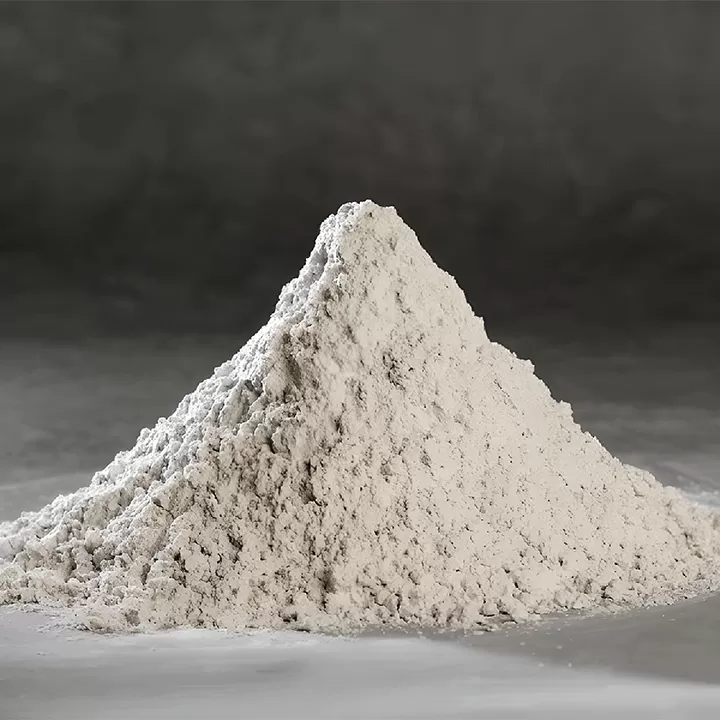
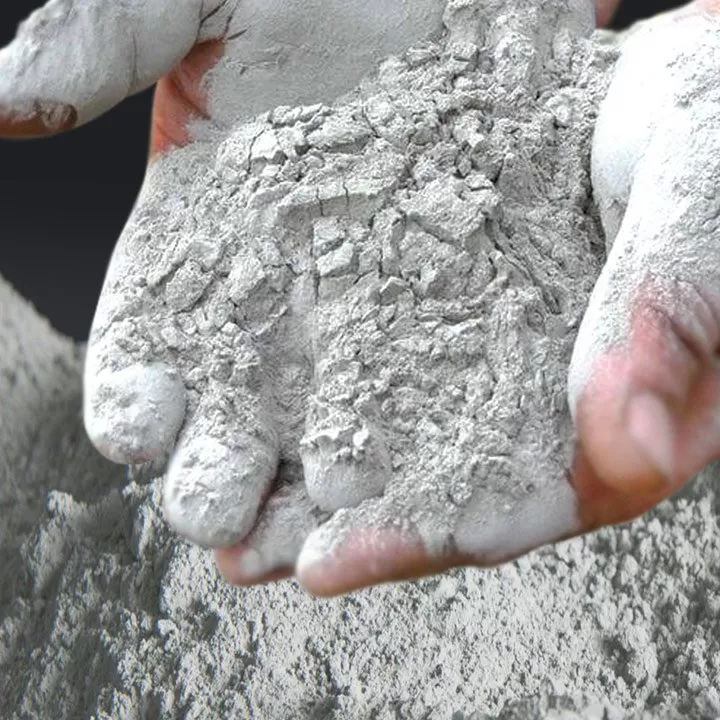
Ground Granulated Blast-Furnace Slag counteracts rapid stiffening through its distinctive latent hydraulic nature. Unlike Portland cement clinker, which contains crystalline silicate and aluminate minerals ready for immediate dissolution, GGBS consists primarily of a vitrified aluminosilicate glass network. This glass phase remains thermodynamically stable in neutral water.
Activation of the slag occurs only after the primary hydration of OPC releases sufficient calcium hydroxide (portlandite) to raise the pore solution pH above approximately 11.5. This high alkaline threshold dissolves the protective silicate-alumina glass network of the slag particles. Because this secondary activation sequence exhibits an induction period lasting several hours, GGBS behaves largely as a dense, inert mineral component during initial mixing, transport, and pouring stages.
Replacing 30% to 70% of the OPC component with refined GGBS substantially reduces the total volume of clinker phases undergoing instantaneous hydration. With fewer C3A and C3S surfaces reacting within the initial 120-minute window, the formation rate of ettringite needles and early C-S-H gels drops significantly. The pore water remains unconsumed, remaining available to maintain interparticle lubrication and facilitate better slump retention across prolonged haul routes.
Steric Hindrance and Admixture Compatibility
Chemical admixtures, specifically third-generation polycarboxylate ether (PCE) superplasticizers, govern modern concrete fluidity. PCE molecules function through steric hindrance: a main carbon backbone anchors to the positively charged hydration sites on cement grains, while pendant polyether chains extend outward into the interstitial water, physically repelling adjacent particles through steric repulsions.
In pure Portland cement matrices, early C3A hydration consumes a significant fraction of the added PCE. As ettringite rapidly forms, it incorporates the polymer molecules into its growing crystalline structure, a phenomenon known as polymer entrapment or intercalation. Once sequestered within the crystal lattices, these superplasticizer molecules can no longer contribute to dispersion, leading to sudden slump degradation.
The chemical profile of slag significantly stabilizes admixture interactions. The reduced initial aluminate reaction in slag-blended systems minimizes premature PCE depletion. Polymers remain active on the solid-liquid interface for far longer, providing sustained steric stabilization. Utilizing stabilized slag powders from Golden Fortune ensures uniform particle surface characteristics, minimizing erratic admixture absorption and maintaining steady dispersing forces across the target transit timeframe.
Particle Packing, Specific Surface Area, and Lubrication
Beyond chemical kinetics, the physical morphology of GGBS particles shapes the fresh rheology of the paste. Slag is processed from rapidly water-quenched iron blast-furnace slag, yielding glass granules that are subsequently ground into a fine powder. While slag particles possess angular, fractured geometries due to milling, their surface texture is generally smoother and less porous than the highly irregular, porous agglomerates typical of unhydrated cement clinker.
Concrete workability relies fundamentally on the water film thickness (WFT) concept. WFT defines the average thickness of the excess water layer coating all solid particles after the internal voids within the granular skeleton have been filled. A thicker water film reduces interparticle collisions, directly lowering the Bingham yield stress.
Optimized Grain-Size Distribution: Blending GGBS featuring a Blaine fineness of 4000–4500 cm²/g with coarser Portland cement yields a continuous particle size distribution that optimizes packing density.
Void Volume Reduction: Tighter packing decreases the interstitial volume between larger aggregates and cement grains, squeezing unconfined water out of internal cavities.
Enhanced Hydrodynamic Lubrication: The displaced water augments the boundary lubrication layer, creating thicker fluid buffers between particles and enabling better slump retention under dynamic placing conditions.
Thermal Moderation in Mass Concrete and Hot Climates
Ambient heat poses a persistent threat to rheological stability. In infrastructure projects characterized by large cross-sections, raft foundations, and bridge piers, internal thermal escalation combines with external atmospheric heat to rapidly exhaust workability.
Hydration reactions are intensely exothermic. Ordinary Portland cement liberates substantial heat within the first 24 hours of hydration, a thermodynamic spike that feeds back into the reaction rate, causing runaway slump loss. Replacing OPC with GGBS introduces a distinct dilution effect on early heat generation. The sluggish activation reaction of the slag produces a much flatter heat evolution profile during the initial 6 to 12 hours.
By controlling the adiabatic temperature rise within the mixer drum and delivery vehicles, slag mixtures maintain a cooler internal state. This thermal mitigation prevents the acceleration of ettringite precipitation, stabilizes the viscosity of the pore solution, and sustains flow properties over long distances, demonstrating better slump retention even when environmental temperatures exceed 35 degrees Celsius.
Rheological Modeling: Yield Stress Versus Plastic Viscosity
Fresh concrete behavior aligns with non-Newtonian fluid mechanics, commonly represented by the Bingham model or the Herschel-Bulkley model. Two independent parameters dictate fresh concrete mechanics: yield stress, which corresponds to the initial slump value, and plastic viscosity, which corresponds to the rate of concrete deformation during pumping and raking.
GGBS incorporation decouples these two rheological markers beneficially. Standard Portland cement systems often experience a simultaneous spike in both yield stress and plastic viscosity as hydration progresses. The concrete not only loses slump but also becomes sticky, difficult to pump, and resistant to consolidation via mechanical vibrators.
In contrast, an optimized GGBS blend selectively suppresses the rise in yield stress over time. The persistent electrostatic and steric repulsions prevent the formation of a continuous structural network of flocculated particles. Although the plastic viscosity may experience a modest, controlled elevation due to the high volume of fine particles, the mixture remains highly pumpable. The structural breakdown under shear remains reversible, allowing the concrete to resume flow effortlessly upon exiting the delivery line.
Industrial Applications Requiring Sustained Flowability
Predictable rheology over extended durations is essential across specialized modern construction applications:
Long-Distance Ready-Mix Transit: Mega-projects located far from urban batching facilities rely on haul times reaching up to two hours. Slag-blended concrete retains its designated class of workability without requiring additional chemicals on arrival.
Tremie Pours for Deep Foundations: Diaphragm walls, bored piles, and marine caissons require self-compacting or highly flowable concrete that must resist segregation under water while maintaining static fluidity throughout continuous multi-hour pours.
High-Rise Super-Pumping: Pumping concrete vertically beyond 50 stories generates immense frictional heat within delivery pipes. Consistent yield stress prevents line blockages, pump shutdowns, and dynamic segregation.
In these challenging scenarios, concrete producers utilize high-grade slag from Golden Fortune to maintain consistency batch after batch. Uniformity in glass content, chemical composition, and fineness eliminates the sudden slump drops that otherwise disrupt high-volume placing operations.
Comparative Slump Retention Profiles
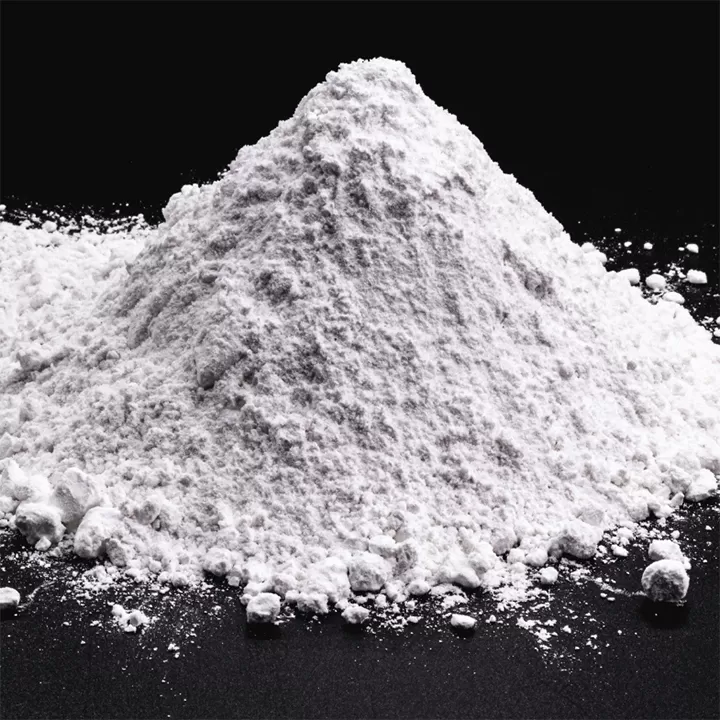
The operational divergence between plain cementitious systems and slag-modified systems becomes clear when examining standard testing data over a typical two-hour observation period:
100% OPC Reference System: Initial slump of 210 mm typically falls to 130 mm after 60 minutes, and reaches near-complete workability exhaustion (under 80 mm) by 120 minutes under moderate ambient conditions (25°C).
30% GGBS Replacement: Initial slump of 215 mm generally preserves a measurement around 170 mm after 60 minutes and maintains workable conditions around 130 mm at 120 minutes.
50% to 70% GGBS Replacement: Initial slump of 220 mm exhibits exceptional resilience, routinely measuring 190 mm after 60 minutes and sustaining roughly 160 mm after 120 minutes, demonstrating substantially better slump retention.
Frequently Asked Questions
Why does GGBS improve slump retention better than fly ash?
While both are supplementary cementitious materials, GGBS offers a much more tightly controlled chemical and physical profile compared to standard Class F or Class C fly ash. Fly ash particles frequently contain unburned carbon, measured as Loss on Ignition (LOI). This porous carbon indiscriminately adsorbs water and superplasticizers, leading to unpredictable slump decay. High-grade GGBS contains virtually zero unburned carbon and has a consistent glassy aluminosilicate composition, ensuring stable polymer retention in the pore fluid and more predictable flowability over time.
Does higher GGBS fineness negatively affect slump retention?
Elevating the Blaine fineness beyond 5000 cm²/g increases the specific surface area, which requires more water to wet particle exteriors. If the fineness is pushed excessively high without adjusting admixture dosages, it can accelerate early water absorption and reduce slump retention. However, maintaining a standard commercial fineness range of 4000 to 4500 cm²/g optimizes particle packing and releases free water into the paste, effectively prolonging workability.
How does slag impact the setting time of concrete?
GGBS naturally extends both initial and final setting times. Because its activation depends on calcium hydroxide released from OPC hydration, the precipitation of primary load-bearing C-S-H networks is delayed. This extended setting window correlates directly with the preservation of the plastic state, granting construction crews longer handling and finishing periods without the need for additional chemical retarders.
Can better slump retention be achieved with GGBS in winter conditions?
Yes, but mix designs must account for reduced ambient temperatures. Because low temperatures further slow the dissolution of the slag's glass phase, setting times can become excessively prolonged. In cold-weather concreting, the replacement level of GGBS is typically tuned downward (around 20% to 30%), or mild chemical activation is utilized to balance prolonged workability with the need for timely strength development.
What is the optimum replacement level of GGBS for slump preservation?
For standard transit windows of 60 to 90 minutes, replacement levels between 40% and 50% provide an optimal balance between early yield stress stability and acceptable 1-day compressive strengths. In heavy civil, mass foundation, or high-ambient-temperature projects where haul times reach 120 minutes, replacement ratios between 60% and 70% are frequently specified to maximize fluidity retention and control peak hydration temperatures.
Secure Reliable Rheological Performance
Stabilizing concrete workability demands rigorous control over material quality, chemical uniformity, and particle physics. To incorporate superior mineral components that ensure structural reliability and continuous batch consistency across demanding projects, consult with the engineering specialists at Golden Fortune.
Direct technical inquiries, material specifications, and logistics coordination to: sales@ultrafineggbs.com