Architectural concrete design demands uncompromising visual consistency, structural integrity, and strict adherence to aesthetic criteria. Modern civil infrastructure, high-end precast panels, and commercial facades increasingly utilize specialized supplementary cementitious materials (SCMs) to control matrix colorimetry while upgrading chemical durability. When structural engineers and concrete technologists are directed to replace the pigment requested in architectural batching, the task involves far more than simply withholding synthetic colorants. It necessitates a fundamental re-engineering of the cementitious matrix, balancing surface reflectance, particle size distribution, and hydration kinetics.
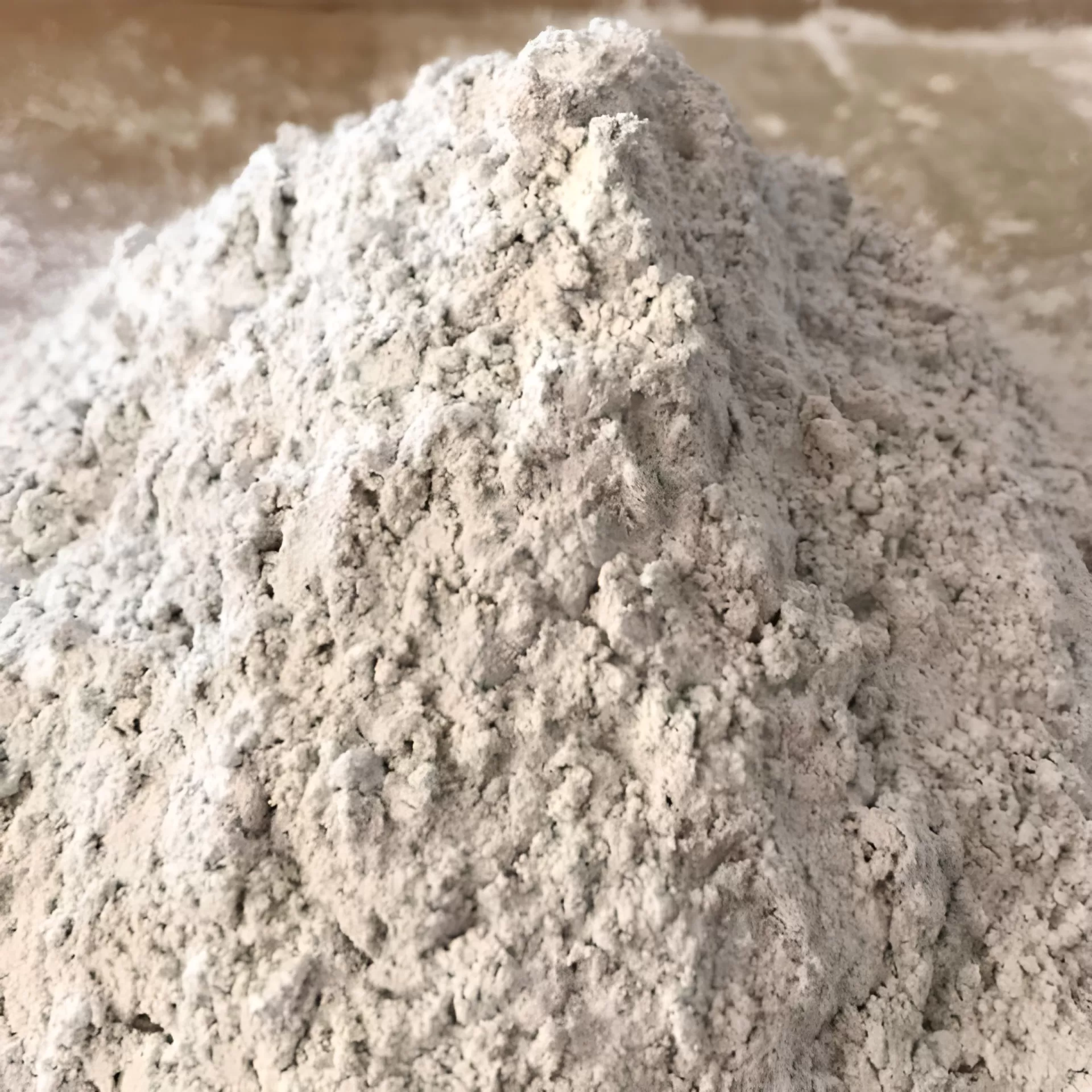
Ground Granulated Blast-Furnace Slag (GGBS, or GGBFS) stands as the primary mineral resource capable of fulfilling these demands. By virtue of its vitrified amorphous aluminosilicate structure and low heavy-metal transition phase content, high-quality GGBS alters the baseline chromatic properties of concrete. This extensive technical analysis examines the microstructural, optical, and mechanical processes that allow concrete producers to adjust batching formulations, lower raw material overhead, and meet stringent architectural standards.
Optical Physics and Chromatic Dynamics of Slag Cement Systems
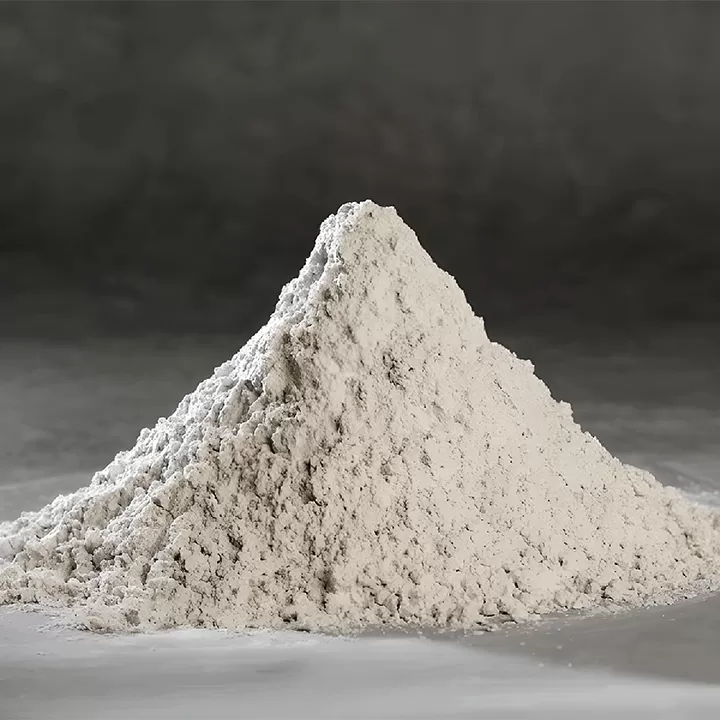
The baseline coloration of hardened Portland cement concrete derives predominantly from the chemical state of its raw clinker phases. Ordinary Portland Cement (OPC) contains notable concentrations of tetracalcium aluminoferrite (C4AF), which imparts a dull, dark-gray tone to the hydrated paste. When specifications dictate light, off-white, or pastel hues, batching plants traditionally add expensive synthetic mineral pigments such as titanium dioxide (TiO2) or light-tone synthetic iron oxides. These colorants artificially overwhelm the natural dark matrix, driving up cost and water demand.
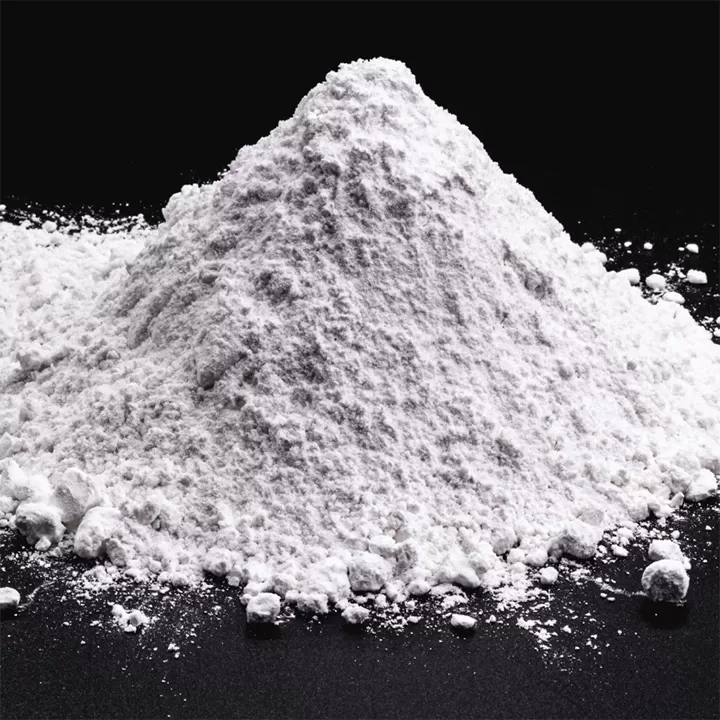
The CIE L*a*b* color space serves as the global standard for quantifying surface reflectance in architectural concrete. Within this three-dimensional model, the L* axis measures luminosity (ranging from 0 for pure black to 100 for diffuse white), the a* axis dictates green-to-red coordinates, and the b* axis indicates blue-to-yellow shifts. Standard OPC concrete typically registers an L* value between 55 and 65. High-grade GGBS, quenched rapidly from molten iron blast-furnace slag into an amorphous glassy granulate, contains less than 1.5% total iron oxides (Fe2O3) and negligible manganese oxides.
When concrete technologists replace the pigment requested through GGBS incorporation, they utilize this low-iron chemistry to raise the native cementitious matrix reflectance. Integrating high-reactivity slag at replacement levels between 50% and 70% elevates the paste's ultimate L* score upward of 82 to 86 without external mineral tinting. High-grade GGBS supplied by Golden Fortune exhibits an activity index and high vitreous content that steadily converts the calcium hydroxide released by OPC hydration into dense calcium silicate hydrate (C-S-H) gels, establishing an evenly diffused optical scattering layer across the cast surface.
Microstructural Densification and Light Scattering Mechanisms
The perceived brightness of architectural concrete is an optical phenomenon influenced by surface topography, pore fluid characteristics, and crystalline morphology. Porous concrete matrices absorb incident light internally, scattering it unevenly and manifesting visually as a darker, muddier surface. Dense, refined matrices reflect incident wavelengths more uniformly back to the observer, creating a brighter visual profile.
Secondary Pozzolanic Reaction: Slag dissolves slowly in the alkaline pore solution created by primary cement hydration. Slag grains react with free calcium hydroxide [Ca(OH)2], consuming Portlandite crystals that otherwise form coarse, vulnerable clusters along the interfacial transition zone (ITZ).
Pore Size Refinement: The resulting secondary C-S-H gels exhibit a lower C/S (calcium to silicon) ratio and a substantially higher gel density. Macro-capillaries (50 nm to 10 µm) collapse into micro-capillary and gel pores (less than 10 nm), significantly reducing light absorption.
Refraction Index Uniformity: The microstructural shift increases the refractive consistency across the cement paste. Light striking the cured surface encounters fewer voids and micro-fractures, producing high diffuse reflectance that mimics the optical impact of finely milled pigments.
These microstructural enhancements explain why GGBS concrete often appears deeper or slightly greenish-blue when formwork is initially stripped. This temporary coloration stems from trace sulfide ions (S2-) reacting with iron in the early pore solution to form iron sulfide complexes. Once the concrete surface is exposed to ambient atmospheric oxygen, these compounds oxidize rapidly into colorless sulfates, yielding the characteristic, highly reflective marble-like finish that enables engineers to successfully replace the pigment requested in the original project design.
Formulation Protocols to Replace the Pigment Requested Using Vitrified Slag
Modifying mix designs to replace the pigment requested demands an exact calculation of the pigment volume concentration (PVC), total water-binder ratio (w/b), and fine aggregate grading. Slag does not react with the rapid kinetics of OPC; its reactivity is governed by glass dissolution and subsequent activation by the hydroxyl ions released by clinker hydration. Technologists must maintain balanced parameters to preserve both aesthetic parameters and early-age demolding strengths.
Slag Replacement Ratios and Clinker Optimization
To establish an off-white or high-luminosity substrate capable of eliminating secondary whitening pigments, a replacement level of 50% to 65% GGBS by mass of total binder is required. At these dosages, the dilution of the clinker's ferrite phase is substantial enough to shift the matrix baseline from dark gray to bright cream-white. When pairing high-slag content with light-colored fine aggregates, such as crushed limestone or white quartz sand, the need for supplementary white pigments drops to zero.
Water-Binder Ratio Control and Dispersant Selection
The morphology of GGBS particles—typically angular and glassy—presents lower initial water absorption compared to porous synthetic pigments. Replacing dry pigment powders with slag lowers the water demand required to reach normal consistency. A low w/b ratio, strictly maintained between 0.32 and 0.38 via high-range polycarboxylate ether (PCE) superplasticizers, prevents bleeding. Bleeding water transports fine unhydrated cement particles upward, creating dark flow lines, aggregate shadows, and surface mottling that disrupt color uniformity.
Particle Size Distribution and Packing Density
Standard GGBS ground to a Blaine fineness of 4,000 to 4,500 cm2/g integrates cleanly into the particle packing matrix between Portland cement grains (average 3,200 to 3,800 cm2/g) and ultrafine fillers. The controlled glass phase content in Golden Fortune materials minimizes variable iron-phase hydration, stabilizing the particle distribution curve. This tight packing reduces permeability to liquids and atmospheric carbon dioxide, protecting the newly established matrix luminosity throughout the structure's service life.
Combating Discoloration and Environmental Attack
Architectural concrete that depends solely on external pigments often suffers from long-term optical degradation. Environmental weathering, cyclic wet-dry exposure, and atmospheric carbonation selectively strip surface pigments or provoke catastrophic efflorescence that permanently stains the building envelope. Utilizing GGBS as a structural and aesthetic agent directly counters these degradation pathways.
Primary and secondary efflorescence occur when water migrates through the capillary pore network, dissolves free calcium hydroxide, and carries it to the surface where it reacts with atmospheric carbon dioxide to form insoluble calcium carbonate (CaCO3). On pigmented surfaces, white efflorescence salt blooms cause immediate visual failures. GGBS directly reduces the total concentration of leachable Portlandite by binding it chemically into durable hydration products. With the continuous conversion of free lime into insoluble C-S-H, the physical mechanism driving efflorescence is neutralized at the molecular level.
Sulfate attack and chloride penetration also induce progressive discoloration by degrading the cementitious matrix from within. Magnesium sulfates react with calcium aluminate hydrates and Portlandite to form expansive gypsum and ettringite, causing micro-spalling that manifests visually as white map-cracking and chromatic dullness. GGBS drastically restricts the availability of reactive aluminates and free calcium hydroxide, creating a highly impermeable barrier that retains its pristine surface finish even in aggressive coastal and industrial atmospheres.
Sustainability and the Industrial Decarbonization Mandate
Modern building certifications (LEED, BREEAM, Envision) penalize projects with excessive embodied carbon footprints. Ordinary Portland Cement production remains an energy-intensive industrial process, responsible for roughly 8% of global anthropogenic carbon dioxide emissions, generating nearly 0.85 to 0.90 metric tons of CO2 per ton of clinker. Synthetic pigments, particularly titanium dioxide, introduce their own heavy environmental tax due to chloride or sulfate process refining, acid waste generation, and high calcination temperatures.
By using GGBS to replace the pigment requested, structural engineering teams achieve substantial life-cycle assessment (LCA) optimizations. Blast-furnace slag is an industrial co-product; its processing requires crushing, drying, and high-efficiency vertical roller mill grinding. Its embodied carbon footprint is up to 80% to 90% lower than that of conventional clinker and several orders of magnitude below that of processed inorganic pigments.
Furthermore, the solar reflectance index (SRI) of slag-rich architectural surfaces is markedly higher than that of standard gray concrete. Concrete structures with high albedo values reflect a greater portion of direct solar radiation back into space, actively mitigating the urban heat island (UHI) effect. Pavements, bridge decks, and exterior wall panels designed with high-L* slag mixes lower localized ambient temperatures, reducing the operational cooling demands of surrounding facilities while fulfilling architectural mandates without external chemical additives.
Quality Assurance and Curing Protocols for Slag Matrices
Because GGBS relies on the slower release of alkaline activators from clinker hydration, concrete placed with high slag content is sensitive to early-age moisture loss. Evaporation rates must be strictly monitored on site to avoid surface dehydration, which can result in plastic shrinkage cracking, dusting, and uneven localized coloration.
Formwork Selection: Non-absorptive formwork materials, such as high-density polyethylene (HDPE), coated steel, or marine-grade phenolic-filmed plywood, are mandatory. Absorptive timber forms extract water non-uniformly from the surface, leading to localized variations in the water-cement ratio and dark patches.
Release Agents: Low-viscosity, non-reactive mineral-oil or polymer-based release agents must be applied in micro-thin layers. Excess release agent pools within the formwork, entrapping air bubbles and chemically interacting with slag calcium ions to produce localized yellowing or dark stains.
Extended Moist Curing: Slag mixes require longer continuous curing compared to pure OPC mixes. Formwork should remain in place for a minimum of 48 to 72 hours under controlled temperatures. Upon stripping, immediate continuous wet curing or the application of an ASTM C309-compliant resinous curing compound preserves internal relative humidity above 80%, allowing secondary C-S-H formation to proceed to full density.
Temperature Control: Slag hydration generates a lower heat peak than clinker hydration, reducing thermal stress gradients in mass elements. However, ambient temperatures below 10°C delay setting times significantly. Thermal insulation blankets must be implemented to sustain internal hydration temperatures without resorting to chloride-based accelerators that alter matrix color.
In precast manufacturing, the decision to replace the pigment requested with optimized GGBS dosages yields immediate surface reflectivity while simplifying batch-plant inventory. Silos previously dedicated to mineral pigments or specialty white cement clinkers can be consolidated, reducing cross-contamination risks within aggregate hoppers and planetary mixers.
Frequently Asked Questions
Can GGBS completely eliminate the need for white cement in architectural concrete?
In many architectural applications, GGBS can replace the majority of white cement or eliminate it entirely, depending on the targeted CIE L* value. Blending 60% to 70% high-whiteness GGBS with light-colored Portland cement yields surface luminosities comparable to pure white cement systems, particularly when paired with clean, light-colored quartz or limestone aggregates. For ultra-bright, stark-white finishes (L* > 90), a blend of white Portland cement and GGBS is optimal.
How long does it take for the temporary blue-green cast of GGBS concrete to dissipate?
The blue-green coloration, caused by trace polysulfide compounds within the deep pore structure, oxidizes rapidly upon contact with ambient atmospheric oxygen. Under dry, well-ventilated conditions, the coloration typically fades within three to fourteen days, revealing a bright, uniform off-white surface. In enclosed or permanently damp settings, complete oxidation may take slightly longer, but the process is completely harmless and does not affect structural durability.
What standards govern the quality and whiteness of GGBS for architectural mixes?
GGBS is primarily specified under ASTM C989/C989M (Standard Specification for Slag Cement for Use in Concrete and Mortars) as Grade 100 or Grade 120, and under European Standard EN 15167-1. While these standards primarily regulate chemical composition, glass content, and the slag activity index (SAI), architectural applications also require producers to assess the material's dry powder whiteness and CIE L* values using standard spectrophotometric methods.
Does replacing pigments with GGBS alter the concrete setting time?
GGBS hydration exhibits slower early-age reaction kinetics than pure Portland cement, resulting in extended initial and final setting times, particularly in cool conditions. This slower setting is advantageous for architectural finishes, as it extends workability, facilitates thorough consolidation, and virtually eliminates cold joints during complex pours. Demolding schedules should be adjusted accordingly or maintained through thermal curing systems.
How does the use of GGBS affect surface durability and abrasion resistance?
When properly cured, the secondary pozzolanic reactions of GGBS produce a denser, more tightly cross-linked calcium silicate hydrate (C-S-H) microstructure than OPC alone. This refined pore architecture enhances surface hardness, increases compressive strength at 28 and 56 days, and significantly improves abrasion resistance compared to concrete relying on high concentrations of unhydrated, inert pigment powders that can weaken the surface matrix.
What impact does high GGBS content have on freeze-thaw durability without pigments?
GGBS concrete demonstrates excellent freeze-thaw resistance provided it is designed with an adequate air-void system (typically 5% to 7% total air content with a spacing factor below 0.20 mm). The absence of soft pigment agglomerates, coupled with a dense, impermeable paste matrix, prevents moisture ingress, reducing hydraulic and osmotic pressures during freezing cycles.
Procurement and Technical Implementation Support
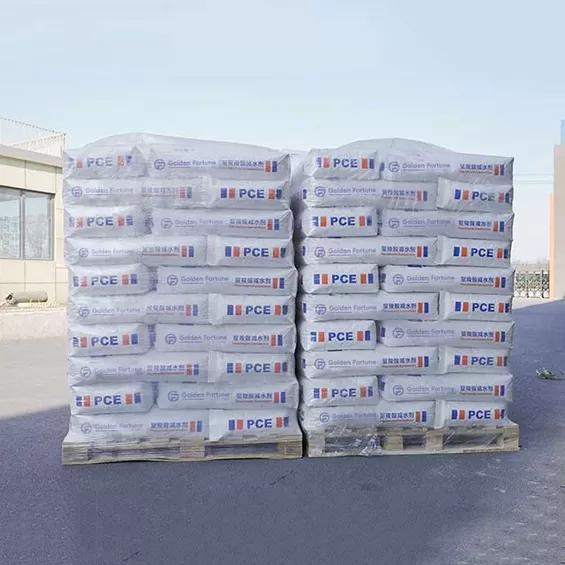
Executing architectural concrete projects that successfully abandon secondary chemical additives in favor of engineered slag systems requires material precision. Chemical composition, fineness modulus, glass phase purity, and supply-chain uniformity dictate the final aesthetic and mechanical performance of the structural element. Our technical department at Golden Fortune works directly with concrete producers, precast engineers, and specifiers worldwide, providing raw material characterization, mix optimization, and delivery logistics tailored to stringent project criteria.
To request technical dossiers, grind size analyses, or project-specific trials to replace the pigment requested across commercial precast batches, reach out to our engineering team. We supply industrial-grade GGBS that meets ASTM and EN certifications, supporting your operational goals with advanced technical assistance and reliable global bulk shipping.