Modern civil engineering constantly demands materials capable of withstanding aggressive environmental exposures while delivering exceptional mechanical properties. While conventional supplementary cementitious materials (SCMs) have long served the ready-mix and precast industries, empirical limits emerge when structural designs call for ultra-low permeability, early-age strength acceleration, and crack-free durability under high-stress conditions. The industrial development and precise classification of Superfine GGBFS has fundamentally shifted these technical boundaries. By refining the particle size distribution of water-quenched blast furnace slag beyond standard milling criteria, material engineers can directly manipulate concrete microstructure at the sub-micron scale, addressing long-standing vulnerabilities associated with mass pours, offshore structures, and ultra-high-performance concrete (UHPC).

Particle Dynamics and Physical Characterization
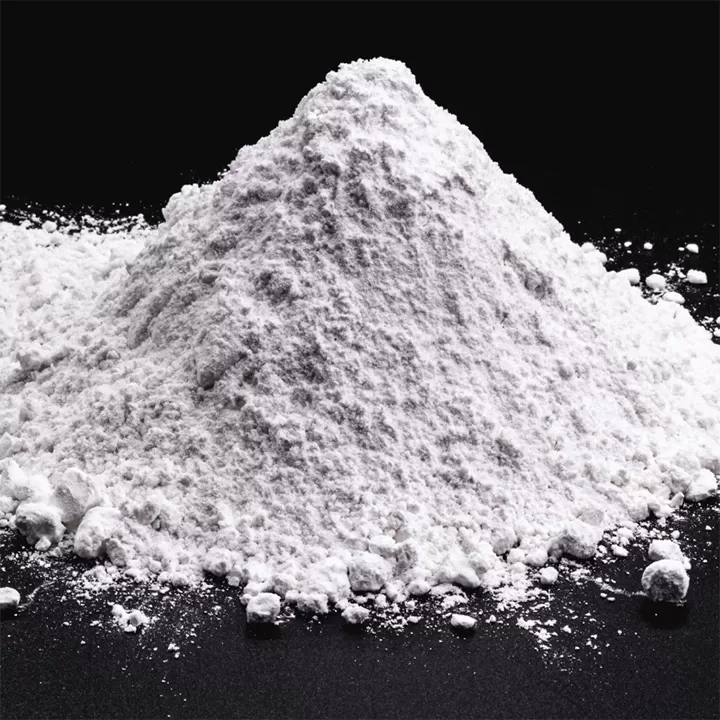
The operational value of ground granulated blast furnace slag depends heavily on its physical state after processing. Standard industrial GGBS typically presents a Blaine fineness spanning 400 to 450 m²/kg, yielding a mean particle diameter (d50) between 12 and 18 microns. By comparison, modern ultrafine processing utilizes specialized vertical roller mills coupled with high-efficiency dynamic air classifiers to drive the specific surface area past 800 to 1,200 m²/kg, shifting the d50 down to a range of 2.0 to 4.5 microns. This mechanical modification radically alters the particle physics within a fresh paste.
Grain distribution curves show that standard cementitious blends possess significant interstitial voids between Portland cement grains, which typically measure between 10 and 30 microns. Processing systems managed by manufacturers such as Golden Fortune employ advanced classification systems to maintain a continuous, narrow particle gradation. These micro-scale fragments slip effortlessly into the voids between hydrating clinker particles. Rather than creating excessive water demand, the spherical and angular vitreous grains provide a micro-ball-bearing effect when dispersed with modern third-generation polycarboxylate ether (PCE) superplasticizers, optimizing particle packing density without compromising fresh-state yield stress.
- Specific Surface Area: Blaine values calibrated from 800 to over 1,200 m²/kg compared to 400 m²/kg for standard grades.
- Particle Size Metrics: Controlled d95 under 10 microns and d50 under 3.5 microns, ensuring void elimination.
- Morphology: High-density glass fractures producing angular yet isotropic shapes that improve spatial packing.
- Specific Gravity: Ranging between 2.85 and 2.95 g/cm³, permitting precise stoichiometric calculation during binder substitution.
Hydration Kinetics and Microstructural Evolution of Superfine GGBFS
Portland cement hydration produces calcium silicate hydrate (C-S-H) along with a substantial byproduct: calcium hydroxide, or portlandite (Ca(OH)²). Portlandite crystals are mechanically weak, chemically soluble, and exhibit large, plate-like hexagonal morphologies that orient themselves along the interfacial transition zone (ITZ) between cement paste and aggregate fractions. These crystalline planes represent the weakest links in conventional concrete, providing pathways for chemical attack and mechanical shear failure.
The activation of vitreous aluminosilicate networks within the slag occurs as the pore solution reaches high alkalinity through the release of hydroxyl ions (OH⁻) from early cement dissolution. Because the specific surface area is dramatically expanded, the activation threshold drops significantly in time compared to standard slag. The exposed glassy network breaks down, consuming free portlandite and converting it into secondary, high-density C-S-H and calcium aluminosilicate hydrate (C-A-S-H) gel structures. The resulting C-S-H exhibits a lower Ca/Si ratio, which significantly enhances its capacity to chemically bind alkalis and chloride ions within its stratified nanostructure.
This dual mechanism—simultaneous physical micro-filling and accelerated secondary pozzolanic conversion—radically alters the capillary pore system. Mercury intrusion porosimetry reveals that the critical pore diameter decreases from the typical 50 to 100 nanometer range down to less than 10 nanometers. Capillaries transform into disconnected nano-pores, effectively arresting the transport mechanisms that govern moisture transmission, gas diffusion, and ionic migration.
Engineering Durability in Severe Operational Environments
Specifying high-density cementitious systems is essential when designing infrastructure for exposure classes where chemical ingress governs design service life. In marine environments, the primary deterioration pathway involves the penetration of chloride ions toward reinforcing steel bars, triggering passive film destabilization. Standard concrete mixtures develop micro-fissuring and continuous capillary pathways that accelerate this ingress.
Mixtures incorporating specialized slag fractions exhibit near-zero electrical conductivity values in ASTM C1202 Rapid Chloride Permeability Tests (RCPT), frequently recording charges below 500 Coulombs at 28 days, and well under 300 Coulombs at 90 days. Migration coefficient tests (NT BUILD 492) reflect similar orders of magnitude reductions. This performance stems from the consolidated ITZ, where secondary hydration products have eliminated porous boundary conditions around coarse aggregate boundaries.
Resistance to external sulfate attack presents another primary operational metric. Tricalcium aluminate (C³A) phases in ordinary Portland cement react with sulfate ions to form expansive ettringite and thaumasite, producing internal crystallization pressures that crack the hardened matrix. When binders are processed by Golden Fortune to maintain an active glass content above 90%, the reduction in Portland cement content directly lowers baseline C³A levels. Concurrently, the fine slag binds available aluminum into stable hydrate phases, shielding the structural matrix from sulfate-induced dimensional expansion.
Mechanical Properties and Thermal Management in Mass Pours
The physical properties of structural concrete depend fundamentally on gel-to-space ratios over time. Standard slag additions are historically characterized by sluggish early-strength gain, often forcing project managers to limit replacement rates to 25% or 30% when rapid formwork stripping is critical. This trade-off changes when the fineness profile is shifted into the micro-domain.
The ultra-high surface area accelerates early dissolution rates, meaning the 3-day and 7-day compressive strengths of concrete containing finely ground materials can match or exceed control concretes containing only pure Portland cement. At 28 and 90 days, the continuous densification of the matrix produces compressive strength values capable of exceeding 100 to 150 MPa in UHPC formulations, alongside substantial improvements in elastic modulus, flexural capacity, and abrasion resistance.
Simultaneously, the material resolves the thermal challenges inherent to deep structural elements. Massive foundation rafts, bridge piers, and dam walls experience severe core-to-surface temperature differentials during early-age hydration. Because Portland cement clinker releases significant heat during the first 48 hours, thermal cracking vulnerabilities multiply. Utilizing high-efficiency slag binders alters the heat evolution curve, spreading the cumulative enthalpy release over a broad, manageable time window. Peak core temperatures decrease by 15°C to 30°C, preventing the development of internal tensile stresses that exceed the tensile capacity of the early-stage concrete.

Specialized High-Performance Applications
The unique rheological and microstructural attributes of this material open high-value engineering avenues where standard industrial minerals fall short of technical performance requirements.
- Ultra-High-Performance Concrete (UHPC): Replacing or supplementing expensive micro-silica with Superfine GGBFS optimizes rheological yield stress, reduces self-desiccation cracking, and enhances overall packing density, allowing compressive strengths to exceed 150 MPa without requiring high-temperature curing regimes.
- Microfine Grouting Systems: For geotechnical stabilization, deep curtain grouting, and fractured rock sealing, conventional cement slurries cannot penetrate fissures finer than 100 microns. The micro-scale particle size distribution enables deep grout penetration into micro-fractures and soil strata, delivering structural anchoring and reliable water cutoff barriers.
- Marine and Subsea Structures: Submerged splash-zone infrastructure demands resilience against concurrent chloride ingress and tidal erosion. Concrete elements designed with dense slag binders prevent ionic penetration, stabilizing reinforcement passivity throughout centuries of service life.
- Precast Segmental Linings: Tunnel lining segments exposed to high hydrostatic heads and aggressive groundwater conditions benefit from the accelerated curing potential, precise dimensional stability, and low permeability provided by micro-milled mineral components.
Frequently Asked Questions
How does the particle size distribution of Superfine GGBFS affect the rheology of fresh concrete?
The refined particle size works alongside primary cement grains to optimize overall packing density. When properly dispersed using polycarboxylate ether superplasticizers, the fine slag particles act like microscopic ball bearings, reducing internal shear friction within the fresh cement paste. This behavior enhances the flowability and deformability of self-consolidating and ultra-high-performance concrete without introducing segregation or dynamic bleed-water channels.
What is the primary difference in pozzolanic reactivity between standard grade GGBS and the superfine variant?
Standard GGBS features a lower Blaine fineness (around 400 to 450 m²/kg), which requires extended curing periods to achieve meaningful hydration of its vitreous aluminosilicate phases. The superfine variant, with its specific surface area exceeding 800 to 1,200 m²/kg, exposes vastly more surface area to alkaline pore solutions. This immediate exposure accelerates dissolution rates, transforming portlandite into structural C-S-H gel within the first 72 hours rather than taking weeks to begin meaningful contribution.
How does the incorporation of this material suppress the alkali-silica reaction (ASR)?
Alkali-silica reaction occurs when reactive silica phases within aggregates react with sodium and potassium alkalis in the pore solution, forming an expansive gel that cracks concrete from within. The inclusion of high-fineness slag creates secondary C-S-H phases characterized by low Ca/Si ratios. This altered C-S-H possesses a strong capacity to bind and entrap alkali metal ions within its layers, depleting the hydroxyl ion concentration of the pore fluid and rendering it chemically incapable of attacking vulnerable aggregate phases.
What water-reducing admixtures demonstrate the highest compatibility with micro-milled blast furnace slag?
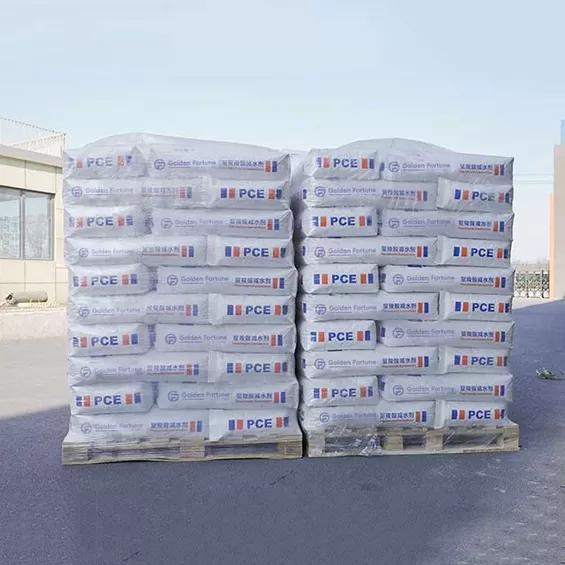
Third-generation polycarboxylate ether (PCE) superplasticizers are the standard choice for dispersing high-fineness slag systems. Due to the vast specific surface area, older sulfonated melamine or naphthalene-formaldehyde condensates struggle to supply sufficient electrostatic repulsion. PCE polymers work through steric hindrance, where molecular side-chains physically prevent particle agglomeration, maintaining workable slump flows at low water-binder ratios (0.18 to 0.35).
Can this material entirely replace silica fume in Ultra-High-Performance Concrete (UHPC) formulations?
Superfine materials can replace substantial proportions—and in some mix designs, 100%—of raw silica fume without sacrificing ultimate mechanical properties. While silica fume possesses an even higher surface area, it introduces substantial water demand, causes color darkening, and often leads to autogenous shrinkage issues. Finely milled slag delivers comparable particle packing and secondary pozzolanic densification, while simultaneously lowering fresh yield stress and improving workability retention during placement.
What handling and batching considerations are necessary for high-fineness mineral additives?
Due to the increased fineness and low bulk density of the dry powder, pneumatic conveying lines must operate with precise air-to-solid ratios to prevent pipeline clogging and air-fluidization issues inside storage silos. Silo extraction systems must feature properly calibrated aeration pads or bin activators. Dust extraction filtration membranes must also be rated for particulate sizes below 2 microns to capture airborne fines during bulk transfer operations.
Commercial Specification and Procurement Guidance
Integrating high-reactivity mineral additives into large-scale infrastructure projects requires strict alignment with internationally recognized material testing protocols, including ASTM C989 (Standard Specification for Slag Cement for Use in Concrete and Mortars) and EN 15167 (Ground Granulated Blast Furnace Slag for Use in Concrete, Mortar and Grout). In modern industrial specifications, simply meeting Grade 100 or Grade 120 criteria is insufficient; projects demand defined chemical limits regarding glass phase percentages (>90%), low loss on ignition (<1.5%), controlled="" moisture="" content="">
For large-scale infrastructure works, cross-sea transport systems, and specialized industrial flooring, procurement teams must ensure that processing plants enforce batch-to-batch consistency. Engaging in direct technical consultation with engineering specialists at Golden Fortune provides detailed access to chemical composition sheets, third-party leaching certifications, Blaine fineness verification records, and customized blending recommendations tailored to specific project requirements.
Submit your project specifications, target mechanical properties, and planned exposure classes to the technical materials division at Golden Fortune to request a formal quotation, comprehensive technical data sheets (TDS), or trial sample quantities for independent laboratory verification.