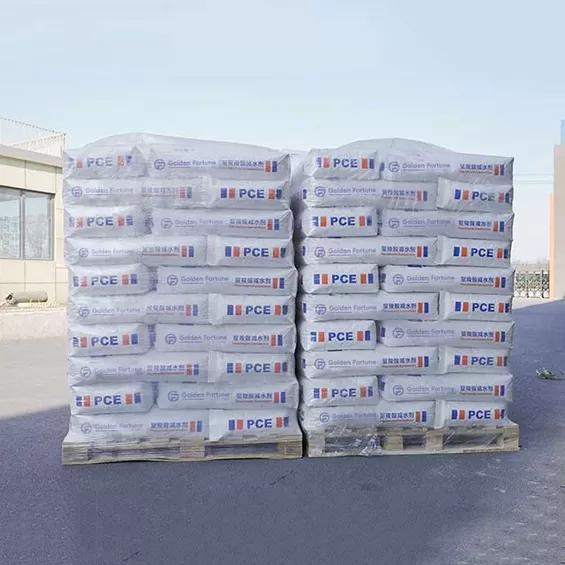
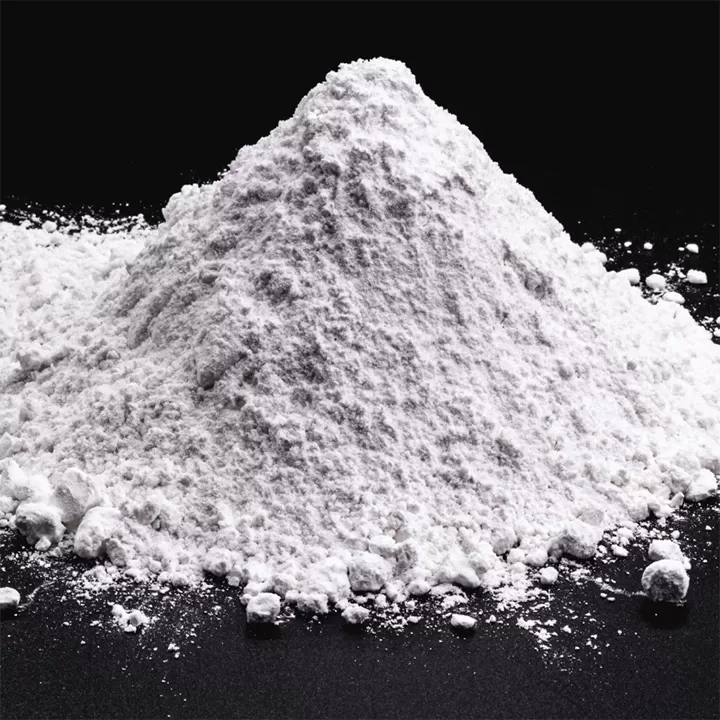
Ground Granulated Blast-Furnace Slag (GGBS) has transitioned from an optional supplementary cementitious material (SCM) to an essential constituent in high-performance, low-carbon infrastructure. The performance of GGBS within a cementitious binder is governed principally by two factors: its glass (amorphous) content and its specific surface area. While standard construction projects frequently utilize slag ground to standard fineness levels between 350 and 380 m2/kg, specifying a Blaine of GGBS over 400m2/kg fundamentally alters the early-age and ultimate mechanical behavior of concrete. Understanding the balance between mechanical activation, hydraulic reactivity, workability, and pore-structure refinement allows structural engineers and ready-mix producers to tailor mixes for aggressive environments and demanding structural applications.
Surface Area, Particle Size Distribution, and Hydraulic Reactivity
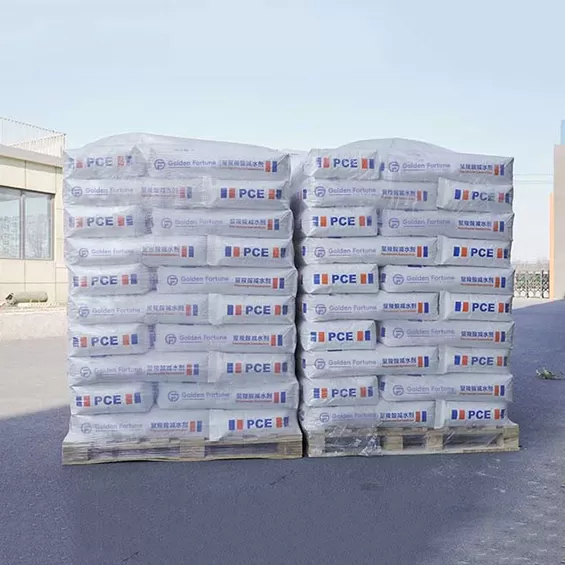
The Blaine air permeability test, standardized under ASTM C204 and EN 196-6, measures the specific surface area of fine powders by determining the rate at which air flows through a prepared bed of material. When the manufacturing process achieves a Blaine of GGBS over 400m2/kg, the specific surface area per unit mass increases substantially, accelerating the dissolution rate of the glassy aluminosilicate network upon contact with alkaline pore solutions.
The reaction of GGBS is primarily a latent hydraulic mechanism. Unlike ordinary Portland cement (OPC), which reacts rapidly with water to form calcium silicate hydrate (C-S-H) and calcium hydroxide (portlandite), slag particles require the presence of activators—predominantly hydroxyl (OH-) and sulfate (SO4^2-) ions released during clinker hydration. The rate-limiting step in this secondary reaction is the breakdown of the polymerized slag glass structure. Increasing the specific surface area exposes a significantly higher volume of reactive surface sites to the alkaline pore fluid, shortening the induction period and accelerating the formation of secondary C-S-H and calcium aluminate hydrate phases.
Particle size distribution (PSD) plays a decisive role alongside the single Blaine value. Two materials with an identical Blaine can exhibit dissimilar rheological and mechanical behavior if their particle size distributions diverge. Optimal industrial grinding targets a tight, continuous Rosin-Rammler-Sperling-Bennett (RRSB) distribution where the fraction of particles below 10 microns is maximized without generating excessive sub-micron fractions that compromise workability. Premium processing facilities, such as those operated by Golden Fortune, utilize advanced multi-stage classification systems to ensure that increased Blaine metrics translate directly to usable hydraulic activity rather than unreactive, agglomerated dust.
Hydration Kinetics and Compressive Strength Evolution
The practical consequence of utilizing slag ground to higher fineness is the mitigation of the characteristic early-age strength deficit associated with high replacement ratios. Slag ground to standard levels often shows sluggish strength gain during the first 3 to 7 days, particularly in temperate or cold climates.
Raising the fineness to a Blaine of GGBS over 400m2/kg shifts the reaction envelope. The enhanced dissolution kinetics generate early hydration products that contribute directly to load-bearing matrices within initial curing windows. ASTM C989 categorizes slag into three grades based on its Slag Activity Index (SAI): Grade 80, Grade 100, and Grade 120. Moving past the 400 m2/kg threshold typically elevates a raw material with suitable chemical composition into Grade 100 or Grade 120 performance categories.
- 3-Day Strength: Accelerated nucleation of C-S-H gel across the inter-particle spaces, narrowing the early performance gap between pure Portland systems and blended mixes.
- 7-Day Strength: Substantial consumption of calcium hydroxide, yielding strength values often comparable to straight OPC controls at equivalent water-binder ratios.
- 28-Day and 56-Day Strength: Continuous densification of the matrix, routinely exceeding the compressive capacity of baseline cement mixtures due to higher packing density and extensive microstructural bridging.
The enhanced reactivity alters the thermal profile of the hydrating mass. While standard GGBS is specified to suppress thermal peaks in mass concrete, micro-fine fractions generate higher heat release rates during the initial 48 hours compared to coarse slag. The total adiabatic temperature rise remains lower than that of an equivalent 100% OPC mix, but thermal calculations must account for the faster heat evolution kinetics characteristic of these finer particles.
Microstructural Densification and Durability Performance
The long-term service life of reinforced concrete depends heavily on its transport properties—namely, permeability, sorptivity, and diffusion rates. Specifying a Blaine of GGBS over 400m2/kg produces measurable transformations within the paste microstructure, altering the physical durability of the hardened composite.
Mercury Intrusion Porosimetry (MIP) and scanning electron microscopy (SEM) demonstrate that higher-fineness slag changes the pore size distribution rather than simply reducing overall porosity. The hydration products formed by the high-surface-area slag segment continuous capillary pores into disconnected, tortuous gel pores below 50 nanometers in diameter. This pore refinement dramatically restricts the movement of aggressive species.
Chloride Ion Ingress Resistance
Reinforced marine structures depend on high electrical resistivity and low apparent chloride diffusion coefficients. Concrete containing slag with elevated specific surface area exhibits exceptional chloride resistance through two distinct mechanisms. Chemically, the alumina content of the slag forms complex carboaluminate and sulfoaluminate phases (such as Friedel’s salt), binding free chloride ions directly out of the pore solution. Physically, the refined pore structure limits ionic diffusion rates under concentration gradients and hydrostatic pressure.
Sulfate and Chemical Attack
External sulfate attack damages concrete primarily through the formation of expansive ettringite and thaumasite, alongside the decalcification of C-S-H. Higher fineness accelerates the pozzolanic consumption of portlandite (CH), leaving minimal free calcium hydroxide available to react with penetrating sulfate ions. The resulting low-permeability boundary layer presents a physical barrier against chemical penetration, making high-Blaine blends suitable for exposure classes defined under EN 206 (such as XA2 and XA3).
Alkali-Silica Reaction (ASR) Mitigation
Aggregates containing reactive silica can cause catastrophic expansion when exposed to pore solutions with elevated hydroxyl concentrations. Blended systems incorporating fine slag reduce the availability of alkalis through several pathways. Finer slag binders entrap alkalis (sodium and potassium ions) securely within their lower Ca/Si ratio C-S-H structures. The accelerated formation of dense hydration phases early in the curing cycle prevents moisture and alkali migration toward susceptible aggregate boundaries.
Grinding Systems and Particle Morphology
Achieving an optimal particle profile requires precise grinding and separation machinery. Producing a Blaine of GGBS over 400m2/kg demands significant specific electrical energy, making the choice of grinding circuit critical to operational viability and particle geometry.
Industrial grinding primarily relies on two technological pathways:
- Ball Mills with Dynamic Separators: Traditional ball mill systems require high energy inputs (often exceeding 60–75 kWh per ton) to grind hard granulated slag to fineness levels above 400 m2/kg. The resulting particles typically exhibit high angularity and a broad size distribution, which can increase water demand if the internal air-classification circuit is not calibrated correctly.
- Vertical Roller Mills (VRM): VRM setups dominate modern processing due to their 30% to 40% energy savings compared to tube mills. Operating on compressive and shearing principles, VRMs integrate high-efficiency dynamic classifiers that strip finished particles immediately from the grinding zone. This minimizes over-grinding, narrows the particle size distribution, and provides precise control over the targeted Blaine range.
Material sourced from manufacturers like Golden Fortune leverages modern grinding systems to maintain uniform particle distribution curves. This mechanical consistency ensures predictable setting behavior and steady water demand batch after batch.
Rheology, Packing Density, and Admixture Compatibility
Higher fineness introduces specific challenges regarding fresh-state properties. As specific surface area expands, the inter-particle friction and direct surface area requiring wetting also rise. Unless mix designs account for these changes, concrete workability and slump retention can degrade rapidly.
A key mechanism in managing this demand involves particle packing optimization. Slag particles with a Blaine of GGBS over 400m2/kg can pack into the void spaces left between coarser Portland cement grains, displacing entrapped water back into the bulk paste to maintain fluidity. Realizing this packing benefit requires compatible chemical admixtures.
Polycarboxylate ether (PCE) superplasticizers are sensitive to changes in cementitious surface area. High-surface-area slag adsorbs a larger portion of the active polymer chains during initial batching. To prevent slump loss while maintaining low water-to-binder ratios, concrete technologists must balance the side-chain density and charge density of the PCE polymers. Retarding agents or extended-slump-retention polymers may be required in high-ambient-temperature placements to counteract the rapid early dissolution kinetics of the refined slag particles.
Comparative Property Matrix
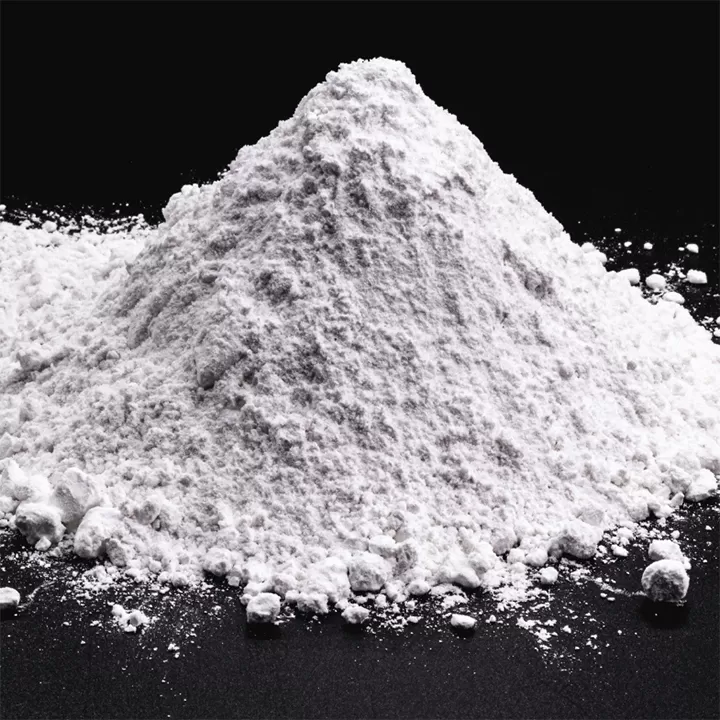
The practical differences across common slag fineness specifications highlight why selecting specific Blaine thresholds is necessary for modern engineering projects:
| Property Parameter | Standard Fineness (350–380 m2/kg) | Enhanced Fineness (400–450 m2/kg) | Ultra-Fine Fineness (>550 m2/kg) |
|---|---|---|---|
| Grinding Energy Consumption | Low to Moderate (Base reference) | Moderate (+20% to +35%) | Very High (+80% to +150%) |
| Early Strength Contribution (3–7 Days) | Lower; extended curing required | Substantial; comparable to OPC | Very rapid early strength gain |
| Water Demand / Admixture Dosage | Baseline dosage | Slight increase; manageable via PCE | High increase; requires specialized rheology modifiers |
| Pore Refinement Potential | Standard capillary segmentation | High; dense interfacial transition zone | Extreme micro-densification |
| Primary Application Focus | Mass concrete, unreinforced footings | Infrastructure, marine, high-durability mix designs | Repair grouts, UHPC, precast manufacturing |
Target Structural Applications
Choosing a Blaine of GGBS over 400m2/kg is not an arbitrary design decision; it is a calculated engineering solution for environments where concrete must endure harsh chemical and physical conditions throughout multi-decade design lives.
- Marine and Coastal Infrastructure: Ports, jetties, seawalls, and submerged tunnel elements rely on the dense pore networks formed by higher-fineness slag to halt chloride ion ingress, protecting structural reinforcing steel from premature depassivation.
- Precast Prestressed Elements: Precast yards require accelerated strength development to facilitate early formwork stripping and prestress transfer. High-activity slag allows producers to replace substantial portions of Type I/II cement without extending thermal steam-curing cycles.
- Ultra-High-Performance Concrete (UHPC) and Self-Consolidating Concrete (SCC): High-fineness slag functions as both a reactive binder and a physical packing optimizer, delivering tight particle distribution and low viscosity under shear in densely reinforced structural members.
- Aggressive Industrial Flooring: Chemical processing plants and wastewater treatment facilities demand surfaces resistant to soft water leaching, weak organic acids, and abrasion, conditions where the dense C-S-H phase generated by fine slag outlasts standard OPC surfaces.
Frequently Asked Questions
How does a Blaine of GGBS over 400m2/kg affect water demand?
Increasing the specific surface area raises the total surface that must be wetted by mix water. In non-plasticized mixes, this can cause a noticeable drop in slump. However, in modern concrete designs that incorporate PCE superplasticizers, the improved particle packing often offsets this surface effect, resulting in only minor increases in admixture dosage to maintain desired flow and workability.
What is the impact on concrete setting time?
Slag blends generally extend initial and final setting times relative to pure Portland cement mixtures. Operating at a Blaine of GGBS over 400m2/kg shortens this delay compared to coarser grades because the higher surface area accelerates the early activation reactions, narrowing setting time differences while keeping mix temperatures stable.
Can this material grade replace silica fume in high-performance concrete?
While silica fume possesses a substantially higher specific surface area (typically 15,000–20,000 m2/kg), GGBS ground to over 400 m2/kg can partially replace silica fume in high-strength and low-permeability applications. Doing so helps lower material costs, improves long-term rheology, and reduces early water consumption while still producing a dense, highly refined microstructural matrix.
What curing standards are recommended for concrete containing high-fineness slag?
Extended moist curing remains best practice for all slag-blended systems. The secondary hydraulic reaction depends entirely on the presence of internal capillary moisture. Continuous wet curing or the application of high-efficiency curing compounds for a minimum of 7 days is strongly advised to prevent plastic shrinkage cracking and ensure complete hydration within the outer cover layer.
How does a Blaine of GGBS over 400m2/kg perform regarding carbon footprint reduction?
Because GGBS is an industrial byproduct of iron manufacturing, its embodied carbon is fundamentally lower than that of Portland cement clinker. Specifying a higher fineness enables concrete producers to safely raise slag replacement rates to 50% through 70% without sacrificing early compressive strength, substantially lowering the overall carbon intensity of the structural mix.
Procurement and Technical Specification Inquiries
Specifying high-reactivity slag requires tight production controls, consistent mineralogy, and reliable supply chains. For structural engineers, ready-mix batching plant operators, and infrastructure contractors seeking to align material parameters with international standards, Golden Fortune provides high-grade ground granulated blast-furnace slag meeting rigorous quality specifications. Contact our technical sales and materials engineering team directly to request detailed product data sheets, mill test certificates, and bulk delivery pricing tailored to your upcoming infrastructure projects.