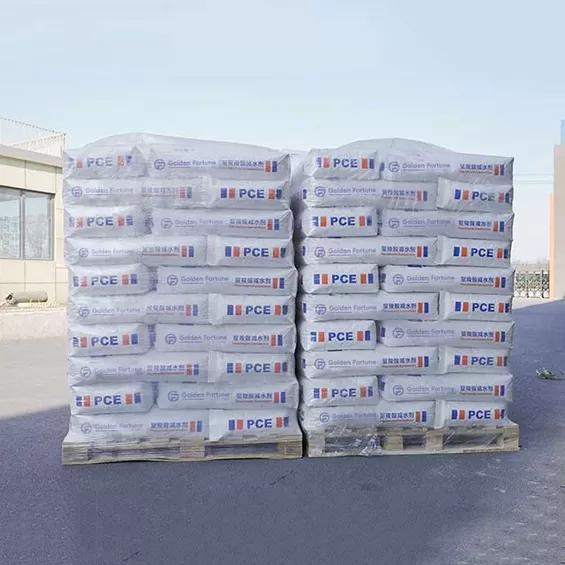
Modern structural civil engineering demands cementitious materials capable of exceeding standard load capacities while resisting extreme environmental chemical attacks. Ground Granulated Blast-Furnace Slag has served as a reliable supplementary cementitious material for decades, providing thermal regulation and chemical resistance. However, traditional grinding regimes yielding Blaine fineness values between 400 and 450 m²/kg leave coarser slag fractions acting merely as semi-reactive aggregate fillers. The development of Ultrafine GGBS transforms this latent hydraulic precursor into a highly active micro-filler and reactive binder, addressing the engineering limitations of conventional slag blends.
Through precise mechanical grinding and advanced air classification, slag particles undergo dramatic size reduction, moving the median particle size into sub-micron and low-micron domains. This shift alters the hydration kinetics within the cement paste, optimizing particle packing, refining capillary porosity, and transforming the interfacial transition zone. Understanding these physicochemical behaviors allows structural engineers, ready-mix producers, and infrastructure authorities to formulate concrete systems with exceptional durability profiles and compressive capacities.
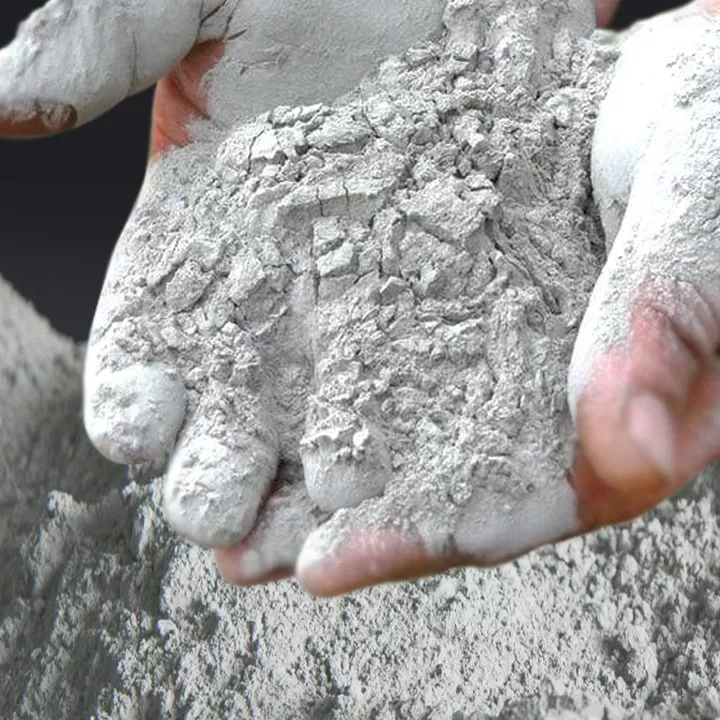
Physicochemical Characteristics and Particle Size Distribution
The performance differential between traditional blast-furnace slag and ultra-fine grades is governed primarily by particle size distribution and specific surface area. Standard slag typically exhibits a Blaine fineness of 350 to 500 m²/kg, with a significant fraction of particles exceeding 30 microns. Processing slag down to an ultrafine classification requires multi-stage high-efficiency air classification systems coupled with specialized vertical roller mills or horizontal stirred media mills, yielding Blaine values typically exceeding 800 to 1,200 m²/kg.
Median Particle Diameter (D50): Standard GGBFS exhibits a D50 between 10 and 15 microns. In contrast, processed micro-slag achieves a D50 below 3.5 microns, ensuring complete volumetric participation in early-stage hydration reactions.
Top Particle Cutoff (D95): Coarse slag frequently contains particles extending up to 45 microns. Specialized ultrafine production protocols enforce a strict D95 cutoff below 10 to 12 microns, eliminating interstitial voids between larger cement grains.
Glass Phase Reactivity: Rapid water quenching of molten iron blast-furnace slag produces a vitrified, amorphous aluminosilicate structure exceeding 90% glass content. Micro-milling increases the accessibility of these depolymerized silicate and aluminate networks, accelerating dissolution rates upon exposure to alkaline pore solutions.
Specific Gravity and Bulk Density: Maintaining a typical specific gravity of 2.85 to 2.95 g/cm³, the ultra-fine variant yields greater paste volume per metric ton compared to ordinary Portland cement, which possesses a specific gravity of approximately 3.15 g/cm³.
Precision manufacturing operations, such as those maintained by Golden Fortune, utilize closed-circuit grinding circuits integrated with dynamic dynamic-vane classifiers to stabilize these narrow particle size distributions. Eliminating oversized agglomerates and controlling the slope of the Rosin-Rammler-Sperling-Bennett (RRSB) distribution curve ensures predictable water demand and consistent reactivity across diverse concrete batching environments.
Hydration Kinetics and Interfacial Microstructure Densification
The hydration of Portland cement releases substantial quantities of calcium hydroxide (portlandite, CH), which contributes marginally to long-term strength and represents the most vulnerable phase within hardened paste when exposed to acidic or sulfate environments. Introducing Ultrafine GGBS creates a dual-action mechanism: physical nucleation acceleration and vigorous secondary pozzolanic and latent hydraulic reactions.
Upon blending with water and Portland cement, the ultrafine slag particles act as heterogeneous nucleation sites, dispersing clinker grains and precipitating early hydration products throughout the matrix rather than concentrating them on clinker surfaces. Calcium hydroxide liberated by the hydration of tricalcium silicate (C3S) and dicalcium silicate (C2S) destabilizes the glass structure of the slag. The high surface energy of the micro-particles drastically shortens the induction period historically associated with slag hydration.
The active dissolution of silicate and aluminate species from the slag reacts with the dissolved calcium hydroxide to form secondary, high-density Calcium-Silicate-Hydrate (C-S-H) gels alongside Calcium-Aluminate-Silicate-Hydrate (C-A-S-H) phases. These secondary gels possess a lower calcium-to-silicon (Ca/Si) ratio compared to primary cement hydration products. This reduced Ca/Si structure provides superior structural stability, enhanced alkali-binding capacities, and greater packing density at the nanostructural scale.
Refinement of the Interfacial Transition Zone (ITZ)
In standard structural concrete, the interfacial transition zone around coarse aggregates represents the primary path of shear failure and ionic transport. The ITZ typically exhibits a thickness of 20 to 50 microns, characterized by high porosity and large, oriented crystals of calcium hydroxide. Because standard slag and cement particles cannot physically pack closely to aggregate surfaces—a phenomenon known as the wall effect—the ITZ remains structurally weak.
Sub-micron slag particles bypass this geometric constraint. They migrate into the microscopic fissures and surface irregularities of aggregate boundaries, creating a uniform, dense microstructural framework. As the pozzolanic reaction progresses, large CH crystals are systematically consumed and replaced by tortuous, interwoven networks of C-S-H gel. Mercury intrusion porosimetry consistently demonstrates that this migration compresses the ITZ boundary down to less than 5 microns, fundamentally eliminating the mechanical contrast between the paste and the aggregate phases.
Rheological Behavior, Packing Models, and Admixture Compatibility
Incorporating fine powders into a cementitious suspension directly impacts the yield stress and plastic viscosity of the fresh mix. The immense specific surface area of fine minerals generally increases water demand due to the wetting requirements of the exposed surface. The incorporation of Ultrafine GGBS presents unique rheological phenomena governed by the balance between packing density optimization and colloidal interparticle friction.
Applying the Modified Andreasen & Andersen (A&A) particle packing model reveals that Portland cement alone leaves significant sub-sieve void spaces between 0.1 and 5 microns. By introducing ultra-fine particles engineered to populate this missing dimensional band, entrapped water is liberated from interparticle voids into the free-fluid bulk phase. This physical displacement can offset the wetting demand when the system is dispersed with appropriate polycarboxylate ether (PCE) superplasticizers.
PCE polymers achieve dispersion via steric hindrance, extending comb-like polyethylene glycol side chains into the aqueous medium. Slag particles exhibit a more balanced surface charge distribution than clinker phases (which display sharply opposing charges between C3A/C4AF and C3S/C2S). Consequently, the competitive adsorption of PCE molecules proceeds uniformly over slag-cement suspensions. Optimizing the carboxylate density and side-chain length of the superplasticizer permits the production of high-performance mixes displaying high slump retention and low plastic viscosity without exhibiting dynamic segregation.
Permeability Mitigation and Long-Term Durability Mechanics
Durability performance in civil infrastructure is ultimately determined by the ease with which moisture, dissolved salts, and gases diffuse through the capillary pore network. Concrete durability degrades under three principal environmental vectors: chloride penetration inducing rebar corrosion, external chemical attack via sulfates, and alkali-aggregate reactivity.
Sub-micron slag systems alter transport mechanics by increasing capillary pore tortuosity and reducing critical pore thresholds. Progressive hydration subdivides large capillary channels (>50 nm) into isolated gel pores (<10 nm), significantly reducing fluid permeability and electrical conductivity values.
Chloride Ingress and Marine Durability
In marine and coastal splash-zone installations, chloride ion ingress initiates depassivation of reinforcing steel. Ultrafine GGBS mitigates chloride migration via two synergistic mechanisms:
Physical Pore Disruption: Rapid C-A-S-H formation densifies the cement matrix, increasing the tortuosity factor and suppressing bulk diffusion rates tested under ASTM C1202 (Rapid Chloride Permeability Test) to levels below 500 Coulombs.
Chemical Chloride Binding: The alumina content within the slag glass structure contributes reactive phases that interact with penetrating chloride ions, synthesizing Friedel’s salt (calcium chloroaluminate). This conversion immobilizes free chloride ions within the solid paste structure, delaying their arrival at the steel surface.
Sulfate Attack and Acid Resistance
External sulfate attacks initiate catastrophic internal expansion through the formation of ettringite and thaumasite from residual calcium hydroxide and monosulfate phases. The inclusion of ultrafine micro-slag drastically depletes the free calcium hydroxide repository through pozzolanic conversion, leaving insufficient calcium ions to drive thaumasite or secondary ettringite expansion. The resulting low-permeability skin layers inhibit the deep penetration of external magnesium, sodium, or calcium sulfates.
Alkali-Silica Reaction (ASR) Suppression
Aggregates containing reactive amorphous silica undergo expansive gel formation when exposed to high-alkali pore solutions. The incorporation of ultrafine ground slag prevents ASR expansion by binding alkali metal ions (Na+ and K+) directly within the low Ca/Si ratio C-S-H gel matrices. This entrapment reduces the hydroxide ion concentration (pH) of the pore solution below the critical threshold required to dissolve reactive aggregate silica.
Industrial Applications in Modern Construction Engineering
The superior mechanical properties and microstructural density provided by fine-milled slag position it as a critical component in specialized engineering applications where standard blends are insufficient.
Ultra-High-Performance Concrete (UHPC)
UHPC formulations typically require compressive strengths surpassing 150 MPa alongside ductile post-cracking tensile capacity. Attaining these parameters necessitates discarding coarse aggregates, lowering the water-binder ratio below 0.20, and implementing micro-filler matrices. Historically, silica fume has dominated this application. However, incorporating Ultrafine GGBS offers superior workability profiles, lower superplasticizer dosage demands, and enhanced long-term strength development without imparting the extreme stickiness associated with silica fume additions.
Deep-Subsurface Micro-Grouting
Geotechnical stabilization, dam curtain repairs, and fractured bedrock grouting require grouts capable of penetrating narrow rock fissures (<100 microns). Conventional cement grouts bridge and aggregate over fine apertures, leading to incomplete penetration. Micro-milled slag grouts deliver the required fluidity, minimal bleeding, and penetration capability, setting into rock foundations with low matrix permeability.
Mass Concrete Pours and Thermal Control
Bridge piers, raft foundations, and gravity dam monoliths face severe thermal cracking during early curing stages due to the exothermic nature of clinker hydration. Substituting high percentages of Portland cement with standard slag delays heat release; combining it with fine-milled slag allows engineers to maintain high replacement volumes while maintaining early stripping strengths, stabilizing the core-to-surface temperature differentials within project limits.
Comparative Performance Metrics
Evaluating cementitious materials across varied mechanical and chemical baselines clarifies the performance advantages of specialized slag formulations relative to alternative supplementary cementitious materials.
| Performance Property | Standard GGBFS | Silica Fume | Ultrafine GGBS |
|---|---|---|---|
| Blaine Fineness (m²/kg) | 380 – 450 | 15,000 – 25,000 (BET) | 800 – 1,200 |
| D50 Particle Size (μm) | 10.0 – 14.0 | 0.1 – 0.2 | 2.5 – 3.8 |
| Superplasticizer Demand | Baseline (Low) | Extremely High (+30-50%) | Moderate (+5-15%) |
| Early-Age Strength (3-7 Days) | Moderate / Delayed | High | High |
| Chloride Resistance | Good | Superior | Superior |
| ASR Mitigation Mechanism | Alkali dilution | Rapid alkali absorption | Alkali binding & pore refinement |
Quality Control Parameters and Procurement Standards
Specifying micro-slag requires adherence to strict quality control benchmarks that diverge from conventional standards such as ASTM C989 or EN 15167. Standard sieve residue tests (e.g., wet sieving through a 45-micron mesh) are insufficient for verifying high-fineness powders.
Procurement teams must enforce laser diffraction particle size analysis according to ISO 13320, setting strict upper parameters for D95 and D50 values. Monitoring the activity index at 7, 28, and 90 days establishes the latent hydraulic strength contributions under normalized water-to-binder ratios. Reliable material suppliers like Golden Fortune maintain rigorous operational controls over raw blast-furnace slag feedstocks, verifying low moisture levels, steady glass-phase purity, and trace chloride/sulfide limits prior to comminution.
Batch-to-batch consistency in particle size distribution prevents field variations in workability, setting times, and superplasticizer efficiency. Engineering specifications should stipulate continuous quality testing regimes encompassing X-ray fluorescence (XRF) to monitor active oxides (SiO2, Al2O3, CaO, MgO) and X-ray diffraction (XRD) to ensure amorphous glass content remains consistently above 85%.
Frequently Asked Questions
How does micro-slag influence the heat of hydration in mass concrete?
Micro-milled slag alters hydration kinetics without increasing peak adiabatic temperatures to the levels produced by pure Portland cement. Although the initial rate of heat liberation is faster than that of standard slag due to the elevated surface area, the total cumulative heat generated over the primary hydration window remains significantly lower than clinker hydration. This behavior enables mass concrete elements to balance early-age compressive strength development with controlled thermal gradients.
Can this mineral admixture fully replace silica fume in UHPC formulations?
It can replace all or part of the silica fume in Ultra-High-Performance Concrete mixtures. Because its particle size occupies the range between Portland cement and colloidal silica fume, it provides similar packing density improvements. The morphology and surface chemistry of the slag require lower dosages of polycarboxylate ether superplasticizers, substantially reducing the high plastic viscosity typical of silica-fume-dominated UHPC mixes while maintaining compressive strengths above 150 MPa.
What is the typical dosage range for structural concrete applications?
Replacement dosages vary based on the performance objectives of the concrete mix. For standard high-performance infrastructure, typical replacement levels range between 10% and 30% by total weight of cementitious material. When applied in specialized systems like low-permeability grouts, marine capping layers, or self-consolidating architectural elements, replacement levels may reach up to 40% or 50%, provided proper curing conditions are maintained.
How sensitive are mixes containing micro-slag to ambient curing conditions?
Due to its high specific surface area and rapid secondary pozzolanic reactions, concrete containing this fine admixture requires diligent curing. Inadequate moisture retention can lead to plastic shrinkage, as the rapid early reactions consume internal pore water. Implementing immediate wet curing, continuous moisture misting, or applying high-efficiency curing membranes prevents desiccation and preserves microstructural integrity at the surface.
How does the setting time compare to traditional GGBFS concrete?
Standard slag typically extends both initial and final setting times by several hours due to the slow dissolution rate of coarse slag particles in the presence of calcium hydroxide. Because of the accelerated dissolution kinetics and higher surface energy of fine-milled slag, setting times align more closely with standard Portland cement mixes, preventing setting delays while maintaining long-term strength gain.
What testing methods best verify the fineness of these sub-micron powders?
Traditional air permeability (Blaine) tests become unreliable at values exceeding 600 m²/kg due to particle bed compaction issues and airflow channeling. The industry standard methodology relies on laser diffraction particle size analysis (ISO 13320) carried out in dry or wet dispersion modes. This delivers an accurate particle size distribution curve, establishing explicit D10, D50, and D90 metrics that accurately define material quality.
Engineering Support and Technical Procurement
Successfully implementing micro-slag systems requires precise material selection, targeted mix designs, and consistent raw material supply. Golden Fortune provides high-purity, air-classified slag formulations engineered to meet the demanding requirements of global infrastructure, marine civil works, and precast concrete manufacturing.
Engineers, batching plant managers, and procurement specialists are invited to request comprehensive technical data sheets, particle distribution curves, and sample material lots for laboratory trial evaluations. Submit your structural design specifications and performance criteria to our technical engineering division to receive tailored mix-optimization guidance, compliance documentation, and procurement schedules for your upcoming infrastructure projects.