Ready‑mixed concrete (rmc concrete) has become the backbone of modern infrastructure, yet its environmental footprint and long‑term durability remain critical concerns for specifiers and contractors. Integrating ground granulated blast furnace slag (GGBS) into rmc concrete addresses both issues without compromising mechanical performance. This article draws on materials science, field data, and international standards to explain how GGBS transforms ordinary mixes into high‑performance, sustainable solutions.
1. Hydration synergy: why GGBS refines rmc concrete at the micro level
The latent hydraulic nature of GGBS means it reacts with calcium hydroxide—a by‑product of Portland cement hydration—to form additional calcium‑silicate‑hydrate (C‑S‑H). This densifies the matrix of rmc concrete, reducing capillary porosity. Studies using mercury intrusion porosimetry show that a 50 % GGBS replacement can cut permeable voids by more than 30 % after 90 days.
1.1 Moderating heat of hydration
Mass concrete placements suffer from thermal cracking when temperature gradients exceed 20 °C. GGBS significantly lowers the peak hydration temperature. For a typical C30/37 rmc concrete mix, replacing 50 % of Portland cement with GGBS reduces the adiabatic temperature rise by approximately 40 %—a decisive advantage for thick foundations and mat slabs.
1.2 Workability retention without retarders
The smooth, glassy surface of GGBS particles improves the rheology of fresh concrete. Slump loss over 90 minutes is often 25 % lower compared to straight Portland mixes, allowing longer transport times and greater placement flexibility—particularly valuable for projects relying on central‑mixed rmc concrete supply.
2. Durability metrics: quantified resistance
Infrastructure owners increasingly specify performance‑based durability. GGBS‑enriched rmc concrete consistently surpasses ordinary mixes in standard tests:
Chloride migration coefficient (NT BUILD 492): at 50 % GGBS, values drop below 4 × 10⁻¹² m²/s after 28 days, compared to 8–10 for plain CEM I.
Sulfate expansion (ASTM C1012): after 6 months, expansion remains under 0.03 % even in Class 3 exposure, thanks to the lower C₃A content and refined pore structure.
Electrical resistivity: exceeds 200 Ω·m at 90 days (vs. 50–80 Ω·m for OPC), indicating low corrosion risk.
These figures are not laboratory curiosities; they translate directly into longer service life and reduced maintenance intervals for bridges, tunnels, and marine structures.
3. Application‑specific mix designs
No single rmc concrete recipe fits every exposure class. The table below outlines proven combinations used in European and Asian markets, many of which incorporate Golden Fortune’s ultrafine GGBS to boost early reactivity.
High‑rise cores and columns (C50/60): 40 % GGBS + 1.2 % superplasticiser – achieves 12 hour stripping strength > 15 MPa.
Marine foundations (C40/50, XS3): 60 % GGBS – 56‑day chloride diffusion coefficient below 2 × 10⁻¹² m²/s.
Mass concrete for dams (C25/30): 65 % GGBS – temperature rise controlled under 18 °C.
Precast segments (C45/55): 35 % GGBS + steam curing – 16 h strength > 25 MPa.
Each design has been validated through trial batches and full‑scale pumping tests, ensuring that rmc concrete with GGBS meets both fresh and hardened targets.
4. Solving three chronic industry pains with GGBS
4.1 Delayed ettringite formation (DEF)
Heat‑cured precast elements sometimes suffer DEF, leading to expansion and cracking. By reducing the aluminate and sulfate concentrations in the pore solution, GGBS mitigates this risk. Trials at a German precast plant showed zero DEF cases after switching to 40 % GGBS in their rmc concrete mix, despite curing at 65 °C.
4.2 Alkali‑silica reaction (ASR)
ASR‑induced damage shortens the life of pavements and dams. GGBS dilutes the alkali content and binds alkalis in the C‑S‑H structure. Accelerated mortar bar tests (ASTM C1260) confirm that 50 % GGBS keeps expansion below 0.10 % even with highly reactive aggregates.
4.3 Carbon footprint compliance
With environmental product declarations (EPD) becoming mandatory for public tenders, low‑carbon concrete is no longer optional. A typical C30/37 rmc concrete containing 50 % GGBS exhibits an embodied carbon (A1–A3) of ~140 kg CO₂/m³, compared to ~280 kg CO₂/m³ for pure CEM I. This immediately helps projects achieve credits under BREEAM or LEED.
5. Sourcing and quality assurance: the Golden Fortune difference
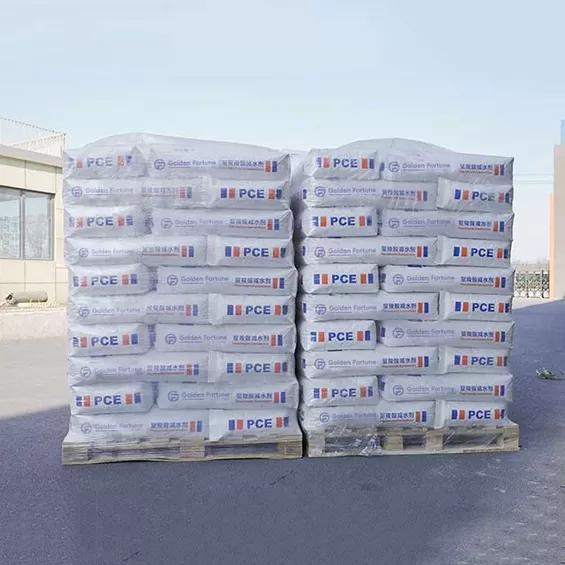
Consistent performance of rmc concrete relies on a stable GGBS supply. Golden Fortune provides ultrafine GGBS with a controlled specific surface area of 800–900 m²/kg (Blaine) and a guaranteed 28‑day activity index > 105 % (EN 196‑1). Every batch is certified to EN 15167‑1 and ASTM C989 Grade 120, ensuring compatibility with modern admixture systems.
For ready‑mix producers, this consistency translates to lower variance in slump and strength. A year‑long study involving three rmc concrete plants in Southeast Asia showed that using Golden Fortune GGBS reduced the coefficient of variation for 28‑day strength from 12 % to 7 %.
6. Cost and logistics: debunking myths
Although GGBS itself is often cost‑neutral or slightly cheaper than cement, the true savings come from extended service life and reduced binder content. For instance, a marine mix achieving 50‑year design life with 60 % GGBS can be designed with a lower total binder (380 kg/m³) than an equivalent OPC mix (420 kg/m³) because the efficiency factor (k‑value) per EN 206 allows GGBS to be considered part of the cementitious contribution. rmc concrete producers who optimise their mix designs with Golden Fortune materials report 5–8 % lower material costs while meeting the same strength and durability targets.
7. Future‑proofing through standards and circular economy
European standard EN 197‑5 now explicitly permits CEM II/C‑M and CEM VI cements with GGBS contents up to 65 %. In parallel, the ASTM C595‑23 revision widened the scope for Type IS(<70) cements. These regulatory shifts remove technical barriers and encourage wider adoption of GGBS in rmc concrete. Furthermore, using a 100 % industrial by‑product like GGBS aligns with circular economy principles, as it valorises blast‑furnace slag that would otherwise be landfilled.
Frequently Asked Questions
Q1: What exactly is rmc concrete, and how is it different from site‑mixed concrete?
A1: rmc concrete (ready‑mixed concrete) is manufactured in a batching plant according to a precise mix design and then delivered to the construction site in a rotating drum mixer truck. Unlike site‑mixed concrete, it offers consistent quality, reduced wastage, and lower noise/dust on site. With GGBS integration, rmc concrete also delivers superior durability and sustainability.
Q2: What replacement levels of GGBS are typical in rmc concrete for structural use?
A2: Typically 30 % to 65 % by mass of total cementitious material. For internal superstructures, 35–50 % is common; for marine or sulfate‑rich environments, 50–70 % is often specified. Higher replacement levels require attention to curing and early‑age strength development—this is where ultrafine GGBS from suppliers like Golden Fortune helps maintain 24‑hour strengths above 10 MPa.
Q3: Does GGBS affect the setting time of rmc concrete?
A3: Yes, initial and final setting times may be extended by 30–90 minutes at 50 % replacement, depending on temperature and cement type. This can be advantageous in hot weather concreting. For cold weather, accelerators or lower replacement levels (≤30 %) can be used. The key is to conduct trial mixes with the actual materials.
Q4: Is Golden Fortune GGBS certified to international standards?
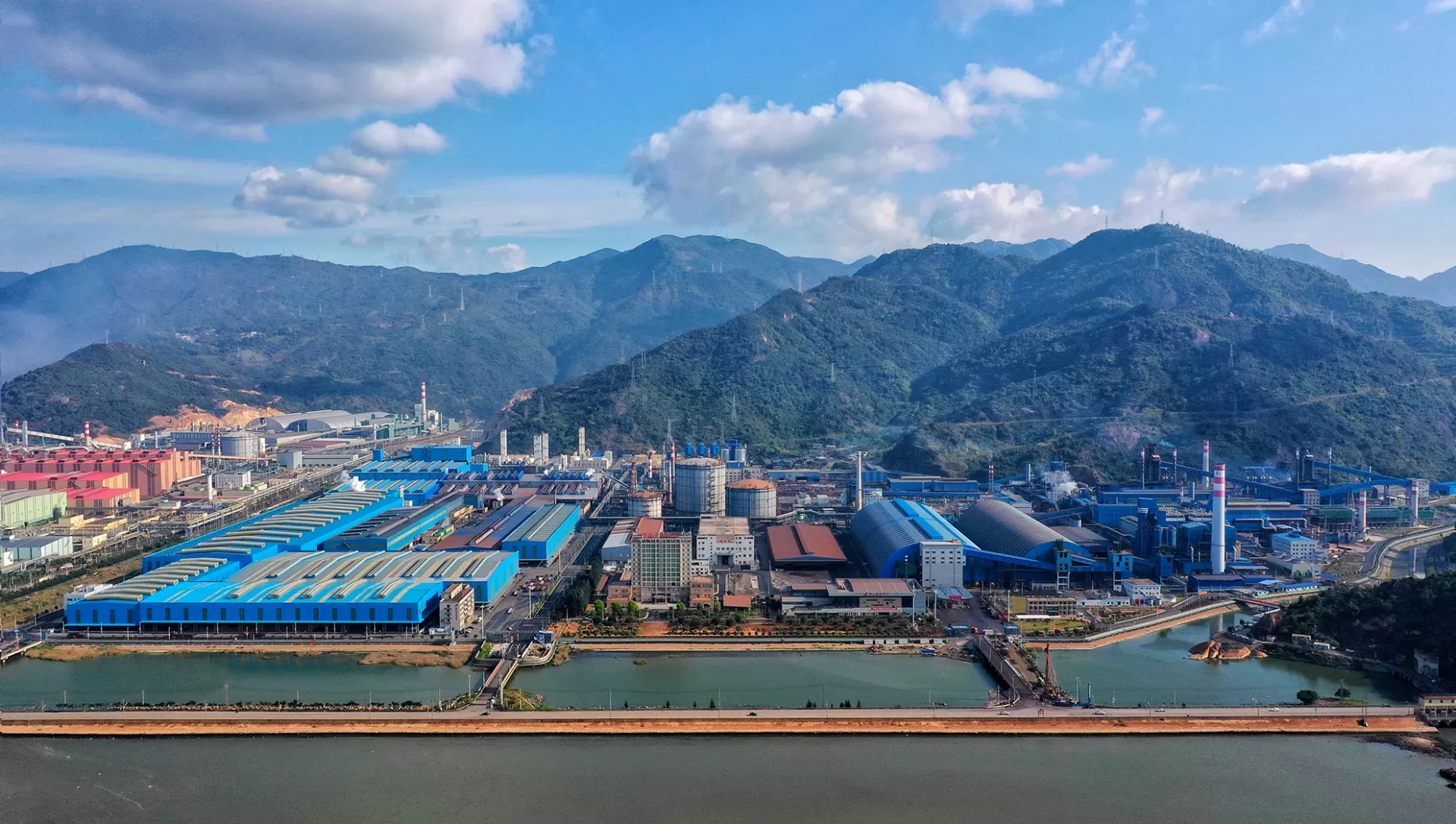
A4: Absolutely. Golden Fortune’s GGBS complies with EN 15167‑1, ASTM C989 Grade 120, and JIS A 6206. It is produced in a facility with ISO 9001 and ISO 14001 certifications. Each shipment includes a mill certificate showing chemical composition, fineness, and strength activity index.
Q5: Can rmc concrete with high GGBS content achieve early strength for fast‑track construction?
A5: Yes. With ultrafine GGBS (e.g., from Golden Fortune) and optimized admixtures, 16‑hour strengths above 20 MPa are achievable, allowing early formwork removal. For very high early strength demands, a ternary blend with a small percentage of silica fume or a higher C₃A cement can be designed without compromising long‑term durability.
Q6: How does using GGBS in rmc concrete contribute to green building certifications?
A6: GGBS is a recycled material that replaces clinker, directly reducing embodied carbon. In LEED v4.1, it contributes to “Building Product Disclosure and Optimization – Sourcing of Raw Materials.” In BREEAM, it improves the “Life Cycle Impacts” (Mat 01) score. Many projects using 50 % GGBS in rmc concrete achieve an exemplary performance credit in the materials category.
Q7: What quality tests should be performed on rmc concrete containing GGBS?
A7: In addition to standard slump and cube tests, it is recommended to monitor temperature rise in mass elements, perform rapid chloride permeability (ASTM C1202) at 56 days, and verify the actual GGBS content through XRF analysis of hardened concrete if disputes arise. Most reputable rmc concrete suppliers offer these as optional extras.
For specifiers and contractors aiming to balance performance, cost, and certification requirements, modern rmc concrete with GGBS is no longer an alternative—it is the engineering baseline. With reliable partners such as Golden Fortune supplying consistent ultrafine slag, the industry can confidently build structures that last longer and weigh lighter on the planet.