In the demanding world of modern construction, standard concrete often fails to meet the requirements for mega-structures and extreme environments. Engineers and architects constantly seek materials that provide higher compressive strength and longevity. This search invariably leads to the inclusion of micro silica fume in the mix design.
This ultra-fine powder acts as a supercharger for cementitious systems. It transforms ordinary mixtures into high-performance composites capable of withstanding massive loads and aggressive chemical attacks. Companies like Golden Fortune play a pivotal role in supplying these essential additives to the global market.
Whether you are building a marine bridge, a skyscraper, or a dam, understanding the properties of micro silica fume is critical. It does not just fill gaps; it chemically alters the microstructure of the concrete. This article explores the mechanics, benefits, and applications of this powerful material.
What is Micro Silica Fume?
To use it effectively, we must first understand what micro silica fume actually is. It is a by-product of producing silicon metal or ferrosilicon alloys. This process happens in electric arc furnaces at incredibly high temperatures.
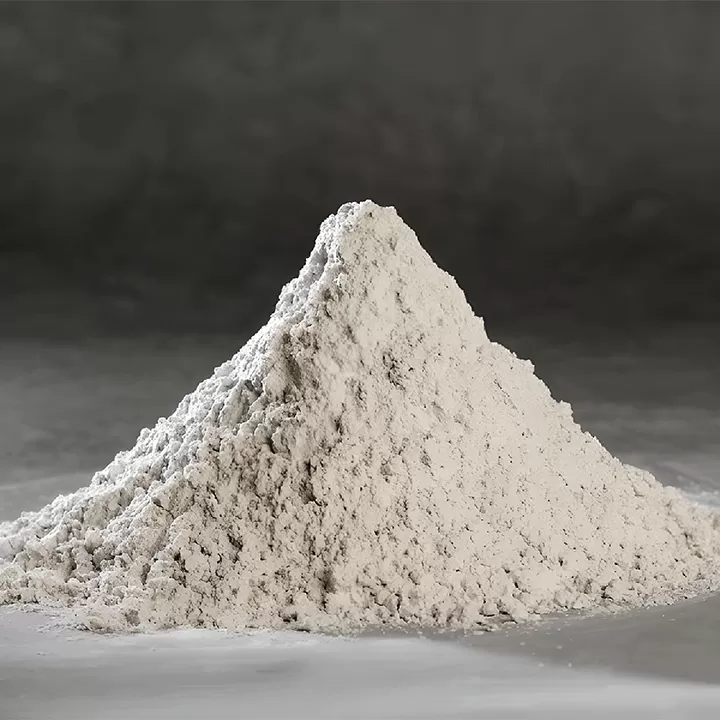
As the quartz reduces to silicon, SiO gas creates vapor. This vapor rises, oxidizes, and cools rapidly to form tiny spherical particles. These particles are collected in baghouse filters. The result is micro silica fume, an amorphous silicon dioxide powder.
Key physical characteristics include:
- Extremely fine particle size (averaging 0.15 microns).
- High surface area (15,000 to 30,000 m²/kg).
- Spherical shape which aids in packing density.
- Grey to off-white color depending on carbon content.
Because the particles are approximately 100 times smaller than a grain of cement, micro silica fume can enter spaces that cement cannot. This physical reality is the foundation of its performance.
The Pozzolanic Reaction Mechanism
The magic of micro silica fume lies in its chemistry. When Portland cement hydrates, it produces two main things: Calcium Silicate Hydrate (C-S-H) gel and Calcium Hydroxide (CH). The C-S-H gel provides strength.
However, Calcium Hydroxide is a weak link. It is soluble and prone to leaching. When you add micro silica fume to the mix, it reacts with this weak Calcium Hydroxide. This is known as the pozzolanic reaction.
This reaction converts the weak CH into more strong C-S-H gel. essentially, micro silica fume consumes the waste product of cement hydration and turns it into the binding agent. This results in a denser, stronger, and more uniform binder matrix.
Synergy Between GGBS and Micro Silica Fume
In the international construction sector, combining different Supplementary Cementitious Materials (SCMs) is common practice. Ground Granulated Blast-furnace Slag (GGBS) and micro silica fume are often used together in "triple blends" (Cement + GGBS + Silica Fume).
While micro silica fume provides high early strength and impermeability, GGBS contributes to lower heat of hydration and long-term durability. Golden Fortune understands this synergy well, supplying materials that complement each other for optimal structural integrity.
The benefits of this combination include:
- Better workability retention compared to using silica fume alone.
- Reduction in peak temperature during curing, preventing thermal cracks.
- Superior resistance to sulfate and chloride attacks.
- Enhanced aesthetic finish due to the lighter color of GGBS balancing the dark fume.
High-Strength Concrete Applications
If a project requires concrete with compressive strength exceeding 60 MPa (8700 psi), micro silica fume is almost always required. In High-Performance Concrete (HPC), the reduction of the water-to-cement ratio is essential.
The presence of micro silica fume allows for a stronger bond between the cement paste and the aggregate. This area, known as the Interfacial Transition Zone (ITZ), is typically the weakest point in concrete.
By densifying the ITZ, micro silica fume ensures that the concrete fails through the aggregate rather than around it. This leads to massive gains in strength. Skyscrapers like the Burj Khalifa rely on such formulations to support their immense weight.
Impermeability and Marine Construction
Water is the enemy of reinforced concrete. When water penetrates the surface, it brings salts and chemicals that rust the steel bars. Rust expands, cracking the concrete from the inside. Micro silica fume is the best defense against this.
Because the particles are so small, they physically block the microscopic pores in the concrete. This "filler effect" drastically reduces permeability. The concrete becomes watertight.
For marine structures like sea walls, piers, and offshore platforms, micro silica fume is indispensable. It prevents chloride ions from seawater from reaching the steel reinforcement. This extends the service life of the structure by decades.
Impact on Shotcrete (Sprayed Concrete)
Shotcrete is widely used in tunneling and mining. A major cost in shotcrete applications is "rebound"—the amount of material that bounces off the wall and falls to the floor. Adding micro silica fume significantly reduces rebound.
The material increases the cohesiveness of the wet mix. It creates a stickier paste that adheres better to vertical and overhead surfaces. This efficiency saves money on materials and cleanup labor.
Furthermore, micro silica fume allows for thicker layers to be sprayed in a single pass. This speeds up the lining process in tunnels, which is crucial for project timelines and safety.
Abrasion and Chemical Resistance
Industrial floors and hydraulic structures face constant wear and tear. Water rushing over a spillway or forklifts driving on a warehouse floor can grind down standard concrete. Micro silica fume makes the surface extremely hard and abrasion-resistant.
In chemical plants, floors endure spills of acids and aggressive solvents. The dense matrix created by micro silica fume slows down the ingress of these chemicals. While not a replacement for protective coatings in extreme cases, it provides a robust secondary line of defense.
Suppliers like Golden Fortune ensure that the quality of the fume meets international standards (like ASTM C1240 or EN 13263), ensuring consistent performance in these critical environments.
Handling, Mixing, and Dosage
Using micro silica fume requires specific procedures. Because it is so fine, it can be difficult to disperse evenly. It is often available in two forms: undensified and densified.
Densified micro silica fume is easier to transport and handle as it produces less dust. However, it requires thorough mixing to break down the agglomerates. High-shear mixing is recommended to ensure full dispersion.
Typical dosage rates vary based on the goal:
- For improved durability: 5% to 10% by weight of cement.
- For high strength: 8% to 15% by weight of cement.
- For shotcrete: 8% to 12% by weight of cement.
Water demand increases when using micro silica fume due to the high surface area. Therefore, the use of superplasticizers (water-reducing admixtures) is almost always necessary to maintain workability.
Curing Requirements
One challenge with micro silica fume concrete is its sensitivity to plastic shrinkage cracking. Since the concrete is so dense, there is very little "bleed water" that rises to the surface.
Without bleed water, the surface dries out quickly if exposed to wind or sun. This causes rapid cracking before the concrete sets. Contractors must begin curing immediately after finishing the surface.
Using curing compounds, wet burlap, or misting is essential. Proper curing ensures that the potential of the micro silica fume is fully realized and the surface remains crack-free.
Environmental and Sustainability Aspects
Using industrial by-products like micro silica fume contributes to sustainability. It utilizes waste material from the silicon industry that might otherwise be landfilled.
More importantly, it extends the lifespan of structures. A bridge that lasts 100 years instead of 50 years reduces the environmental impact of reconstruction. The durability provided by micro silica fume aligns with the goals of green building certifications.
Additionally, by enabling higher strength, engineers can design thinner columns and beams. This reduction in the total volume of concrete reduces the overall carbon footprint of the building.
The inclusion of micro silica fume in concrete production is a standard for high-quality infrastructure. Its ability to enhance strength, reduce permeability, and improve chemical resistance makes it invaluable.
From protecting steel in marine environments to facilitating the construction of super-tall buildings, this material pushes the boundaries of what is possible. It works in perfect harmony with other additives like GGBS to create superior composite materials.
For reliable sourcing and technical expertise, industry professionals turn to trusted partners like Golden Fortune. By choosing high-grade micro silica fume, you ensure the safety, longevity, and efficiency of your construction projects.