When heavy rotating equipment, bridge bearings, or pre‑stressed tendons require a load‑bearing medium that can withstand vibration, static loads, and chemical exposure, cementitious grout remains the industry’s preferred solution. Unlike ordinary concrete or sand‑cement mixes, engineered cementitious grout offers controlled expansion, high early strength, and exceptional flow characteristics that fill complex voids without segregation. This article provides a deep technical analysis of material composition, application protocols, and quality assurance measures that ensure long‑term performance in industrial and civil engineering projects.
1. Composition and Fundamental Engineering Properties
1.1 Binder Systems and Aggregate Selection
High‑performance cementitious grout is formulated with Portland cement, supplementary cementitious materials (such as fly ash or ground granulated blast‑furnace slag), and carefully graded fine aggregates. The maximum particle size is typically kept below 2–4 mm to allow penetration into narrow gaps (often 25–50 mm). To achieve the specified flowability without increasing the water‑to‑cement ratio, modern grouts incorporate polycarboxylate‑based superplasticizers and shrinkage‑compensating agents. The result is a fluid material that maintains stability and develops compressive strengths exceeding 70 MPa at 28 days.
1.2 Controlled Expansion and Dimensional Stability
One of the critical challenges with ordinary cement mixes is drying shrinkage, which can leave gaps under baseplates. Cementitious grout counteracts this through gas‑producing or crystalline expansion additives. These create a slight, restrained expansion (typically 0.1–0.4%) in the plastic and early hardening stages, ensuring intimate contact between the grout and the steel plate. Long‑term dimensional stability is further enhanced by minimizing the water content and using shrinkage‑reducing admixtures, which lower capillary tension during drying.
2. Critical Applications for Cementitious Grout
2.1 Precision Equipment and Machinery Baseplates
In power plants, steel mills, and manufacturing facilities, turbines, compressors, and rolling mills are mounted on massive soleplates. These require a perfectly level and rigid support that can transfer dynamic loads to the foundation. Non‑shrink cementitious grout is pumped or poured beneath the plates, filling every irregularity. The high modulus of elasticity (above 30 GPa) ensures minimal deflection under operational loads, maintaining alignment and preventing fatigue failures.
2.2 Post‑Tensioning Tendon Duct Filling
For bridge construction and building floor slabs, bonded post‑tensioning systems rely on grout to fill the ducts surrounding steel strands. Here, the grout must provide corrosion protection and fully encapsulate the tendons. Specialized cementitious grout for post‑tensioning exhibits low bleed (less than 0.3% according to ASTM C940) and high resistance to freeze‑thaw cycles. The fluidity must be maintained for the entire injection process, often exceeding 30 minutes, without segregation.
2.3 Anchoring and Dowelling
Dowels, rock bolts, and anchor bolts in concrete or masonry require a material that develops high bond strength quickly. Cementitious grout is preferred over resin‑based systems in elevated temperatures or where long‑term creep resistance is critical. The alkaline environment of the grout also passivates the steel reinforcement, offering dual protection.
3. Technical Specifications and Performance Standards
Engineers specify cementitious grout based on several key parameters derived from international standards such as ASTM C1107 (for packaged dry, hydraulic‑cement grout) or EN 1504‑6 (for anchoring products). The table below outlines typical requirements:
Flowability: Initial flow of 24–30 seconds (flow cone method) or minimum 300 mm spread (flow table).
Compressive strength: Minimum 35 MPa at 1 day, 55 MPa at 7 days, and 70 MPa at 28 days for high‑performance grades.
Vertical expansion: Restrained expansion between 0.1% and 0.4% at 3–7 days.
Setting time: Initial set not less than 2 hours, final set within 6 hours (depending on ambient temperature).
Chloride ion content: ≤ 0.05% to protect embedded steel.
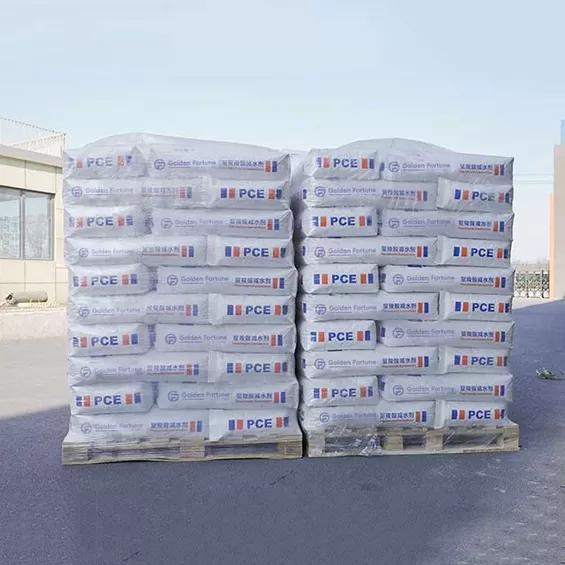
When sourcing materials, it is essential to verify that the manufacturer provides certified mill test reports and batch‑to‑batch consistency. Golden Fortune offers a range of cementitious grout products that comply with these rigorous standards, backed by technical support for mix optimization.
4. Optimizing Mix Designs for Extreme Fluidity and Strength
4.1 Water Content and Superplasticizer Dosage
The water‑to‑cement ratio is the most influential factor in grout performance. While adding water improves flow, it drastically reduces strength and increases shrinkage and bleeding. High‑range water reducers allow a low w/c (0.30–0.35) while maintaining a self‑levelling consistency. Field personnel must be trained to use only the recommended amount of water specified by the manufacturer—adding extra water on site is a common cause of failures in cementitious grout installations.
4.2 Use of Supplementary Cementitious Materials
Blending with silica fume or fly ash improves particle packing and reduces permeability. Silica fume, in particular, reacts with calcium hydroxide to form additional C‑S‑H gel, enhancing bond strength to steel and existing concrete. However, the increased surface area requires higher superplasticizer dosages. Ternary blends (cement + fly ash + silica fume) offer an excellent balance of flow, strength, and durability.
5. Placement Techniques and Common Pitfalls
5.1 Formwork and Leak Prevention
Because cementitious grout is highly fluid, even small gaps in formwork can lead to material loss and honeycombing. Forms must be rigid, leak‑proof, and sealed at the base with foam tape or caulk. For deep sections, head boxes or tremie pipes are used to place the grout from the lowest point, allowing air to escape as the level rises.
5.2 Temperature and Curing Conditions
Temperature extremes affect setting time and strength development. In hot weather (> 30°C), chilled mixing water and shading of formwork are necessary to avoid flash set. In cold weather (< 5°C), heated water and insulated enclosures maintain hydration. After placement, curing compounds or wet burlap must be applied immediately to prevent plastic shrinkage cracking—a frequent issue with thin grout layers exposed to wind.
6. Quality Control and Field Testing
To verify that the delivered cementitious grout meets project specifications, the following tests are commonly performed on site:
Flow cone test (ASTM C939): Measures efflux time to ensure consistent fluidity before and after placement.
Slump flow or mini‑slump: Quick indicator of spread diameter for non‑pumped applications.
Moulded cubes or cylinders: Cured alongside the work to verify compressive strength at 1, 3, 7, and 28 days.
Vertical expansion (ASTM C1090): Monitors expansion in a restrained prism to confirm shrinkage compensation.
Proper sampling and testing ensure that any deviation in mix proportion or material quality is caught before the grout hardens. Manufacturers such as Golden Fortune provide detailed technical datasheets and on‑site assistance to help contractors implement these quality controls effectively.
7. Sustainability and Life‑Cycle Benefits
Compared to epoxy‑based systems, cementitious grout has a lower carbon footprint because it utilises cement and industrial by‑products. Its high durability reduces the need for repeated repairs, thereby conserving materials and labour over the structure’s life. Additionally, the inorganic nature of cementitious materials makes them fire‑resistant and free from volatile organic compounds (VOCs), contributing to healthier work environments during installation.
Frequently Asked Questions (FAQ)
Q1: What is the main difference between cementitious grout and epoxy
grout?
A1: Cementitious grout is water‑based,
inorganic, and offers excellent bond to concrete and steel, with high
temperature resistance and breathability. Epoxy grout is polymer‑based, provides
higher chemical resistance, and is used where aggressive acids or solvents are
present, but it is more expensive and requires stringent surface
preparation.
Q2: Can cementitious grout be used in underwater
applications?
A2: Yes, special anti‑washout formulations of
cementitious grout are designed for underwater placement. They
contain viscosity‑modifying agents that resist dilution and segregation,
allowing successful grouting of marine structures and submerged anchors.
Q3: How long after placement can equipment be loaded?
A3:
Light loading (e.g., alignment adjustments) can typically begin after 24 hours
if the grout has reached at least 20 MPa. Full dynamic loading should wait until
the grout attains its specified 28‑day strength. Always refer to the
manufacturer’s technical data for specific recommendations.
Q4: What causes bleeding in cementitious grout and how can it be
prevented?
A4: Bleeding occurs when excess water rises to the
surface due to a high w/c ratio or insufficient fines. To prevent it, use
properly graded aggregates, incorporate fines (silica fume or fly ash), and
strictly limit mixing water to the manufacturer’s guidelines. Using a
superplasticizer instead of additional water maintains flow without
bleeding.
Q5: Is it necessary to use a bonding agent before placing
cementitious grout on old concrete?
A5: For thin layers (< 50
mm), a bonding agent or a neat cement slurry is often recommended to enhance
adhesion. However, for thicker sections, saturating the existing concrete
surface with clean water (saturated surface dry condition) may suffice, as the
cementitious grout itself contains hydraulic cement that can
bond mechanically. Always follow the project specification.
Q6: How is the expansion of cementitious grout
controlled?
A6: Expansion is achieved through gas‑forming agents
(like aluminum powder) or expansive additives (calcium sulfoaluminate). The
amount is calibrated by the manufacturer to produce slight expansion while the
grout is plastic, offsetting subsequent drying shrinkage. Restrained expansion
tests confirm the correct dosage.
Q7: Where can I obtain technical support for large‑volume grouting
projects?
A7: Experienced suppliers like Golden
Fortune offer pre‑project consultations, on‑site trials, and
troubleshooting to ensure successful placement of cementitious grout in critical applications. Contact
their engineering team for mix designs tailored to your specific conditions.