Across modern construction, the term “white powder in concrete” often refers to ground granulated blast furnace slag (GGBS or GGBFS)—a high-performance supplementary cementitious material that has become indispensable for engineers demanding durability, sustainability, and long-term structural integrity. While ordinary Portland cement (OPC) remains the primary binder, the intelligent integration of this fine, off-white powder transforms concrete into a material capable of withstanding aggressive marine environments, sulfate-rich soils, and thermal cracking risks. This article provides a technical exploration of the properties, applications, and engineering rationale behind specifying white powder in concrete, with a focus on quality assurance and performance optimization.
1. Defining the Material: What Is This White Powder in Concrete?
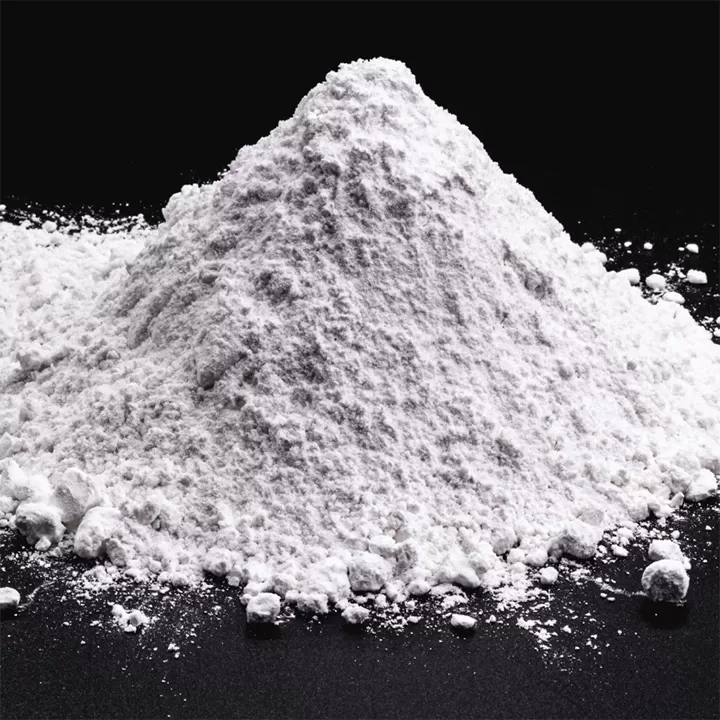
The white powder in concrete that industry professionals refer to is typically ground granulated blast furnace slag—a byproduct of iron production, rapidly quenched to form a glassy, latent hydraulic material. When milled to a controlled fineness (specific surface area >400 m²/kg by Blaine), it appears as a fine, off-white to light-gray powder. Unlike inert fillers, GGBS reacts chemically with the calcium hydroxide released during OPC hydration, producing additional calcium silicate hydrate (C-S-H) gel—the primary binding phase that gives concrete its strength and impermeability. This secondary reaction, known as the pozzolanic or latent hydraulic reaction, fundamentally alters the pore structure and long-term performance of the hardened composite.
Key technical parameters that define high-quality white powder in concrete include:
Fineness: Higher Blaine values (500–600 m²/kg for ultra-fine grades) accelerate reactivity and early strength development.
Glass content: ≥90% ensures maximum latent hydraulic activity.
Reactivity index: ASTM C989 grades (100 or 120) guarantee consistent performance in concrete mixes.
Chemical composition: Controlled levels of CaO, SiO₂, Al₂O₃, and MgO to ensure compatibility with cements and admixtures.
These characteristics directly influence the material’s ability to deliver the durability enhancements expected from modern high-performance concrete.
2. Microstructural Engineering: Why GGBS Outperforms Plain OPC
When white powder in concrete is used as a partial replacement for Portland cement (typically 30–70% by mass), it modifies the microstructure in ways that cannot be achieved with OPC alone. Quantitative analysis using mercury intrusion porosimetry and scanning electron microscopy reveals a finer and more disconnected capillary pore network. This refinement is due to the conversion of portlandite (calcium hydroxide) into additional C-S-H, which occupies pore spaces and reduces permeability.
2.1 Chloride Ingress and Corrosion Protection
One of the most critical durability threats to reinforced concrete is chloride-induced corrosion. Data from the Portland Cement Association shows that concrete containing 50% GGBS can reduce chloride diffusion coefficients by up to 80% compared to OPC-only mixes. Rapid chloride permeability test (RCPT) values frequently drop below 1000 coulombs, classifying the material as “very low” chloride ion penetrability. For infrastructure exposed to deicing salts or seawater, specifying white powder in concrete is therefore a proven strategy to extend service life from 50 to well over 100 years.
2.2 Sulfate Attack and Alkali-Silica Reaction Mitigation
GGBS-based binders exhibit exceptional resistance to external sulfate attack. The reduction in portlandite content and the formation of a denser matrix limit the formation of expansive ettringite and gypsum. Additionally, the lower pore solution alkalinity and the binding of alkalis within the C-S-H structure suppress alkali-silica reaction (ASR), even when reactive aggregates are present. Many transportation agencies now mandate GGBS blends for bridge substructures and tunnel segments where sulfate exposure is a concern.
2.3 Thermal Control in Mass Concrete
The heat of hydration of GGBS is significantly lower than that of OPC. At a 50% replacement level, the peak temperature rise during curing can be reduced by 30–40%, minimizing the risk of thermal cracking in mass foundations, dams, and wind turbine bases. This thermal advantage often eliminates the need for expensive cooling pipe systems, translating into direct cost savings and simpler construction logistics.
3. Application-Driven Performance: Case Studies and Technical Specifications
The versatility of white powder in concrete extends across virtually all sectors of heavy civil and commercial construction. Below are typical application areas where GGBS-based binders have become the standard.
Marine and coastal structures: Ports, jetties, and offshore platforms benefit from the combined chloride and sulfate resistance. Projects such as the Thames Tideway Tunnel in London specified 70% GGBS blends to achieve a 120-year design life.
Mass concrete foundations: Large-volume pours for bridge piers, gravity dams, and high-rise raft foundations utilize GGBS to control temperature rise and reduce cracking risk.
Precast and prestressed concrete: With optimized curing, GGBS enhances surface finish, reduces efflorescence, and provides superior long-term dimensional stability—critical for tunnel segments and architectural elements.
Sustainable infrastructure: GGBS typically has an embodied carbon footprint 85–90% lower than OPC. Using white powder in concrete allows projects to achieve LEED v4 credits, BREEAM ratings, and comply with increasingly stringent carbon regulations.
4. Industry Pain Points and Quality Assurance Solutions
Despite its well-documented benefits, some concrete producers and contractors hesitate to adopt high levels of GGBS due to concerns about consistency, setting times, and early-age strength. These challenges are manageable through proper material selection and mix design optimization.
4.1 Variability in SCM Quality
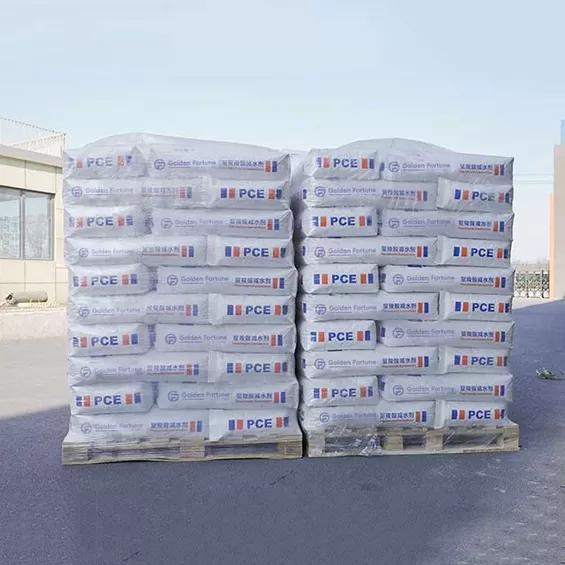
Not all GGBS is created equal. Variability in fineness, glass content, and chemical composition can lead to unpredictable workability and strength development. This is why partnering with specialized suppliers such as Golden Fortune is critical. Their ultra-fine GGBS (UFGGBS) is manufactured under strict ISO-certified quality control, ensuring consistent reactivity, high glass content, and reliable performance across every shipment.
4.2 Extended Setting Times and Early Strength
Higher replacement levels can prolong initial set, particularly in cooler climates. However, this can be effectively counteracted by using ultra-fine GGBS (fineness >600 m²/kg), which accelerates the pozzolanic reaction. Modern polycarboxylate superplasticizers and non-chloride accelerators further allow precise control over rheology and early strength. For precast operations, combination blends with 20–35% GGBS provide a balance of rapid demolding and long-term durability.
4.3 Color Consistency and Aesthetic Requirements
For architectural concrete, the natural off-white color of high-quality GGBS contributes to a lighter, more uniform appearance compared to traditional gray concrete. This is particularly advantageous for exposed facades, pavements, and urban furniture. When consistency in appearance is required, selecting a reliable source of white powder in concrete ensures batch-to-batch uniformity.
5. The Role of Advanced GGBS in Meeting Future Construction Demands
The construction industry is undergoing a paradigm shift toward carbon neutrality and circular economy principles. As a co-product of steelmaking, GGBS embodies the principles of resource efficiency. When used as a primary component of white powder in concrete, it diverts industrial byproducts from landfills while delivering superior engineering properties.
Market leaders such as Golden Fortune are advancing the material’s capabilities by offering ultra-fine GGBS that achieves:
28-day activity indices exceeding 120% (ASTM C989 Grade 120), enabling higher replacement levels without sacrificing early strength.
Reduced water demand, improving workability and allowing lower water-to-cement ratios.
Enhanced finishability and reduced bleeding, critical for flatwork and high-quality exposed surfaces.
By integrating such high-grade materials, cement producers and ready-mix suppliers can confidently market concrete that meets the most stringent durability specifications while drastically reducing environmental impact.
6. Engineering Resilience with the Right White Powder
In summary, the strategic use of white powder in concrete—specifically high-quality ground granulated blast furnace slag—represents one of the most effective ways to achieve durable, sustainable, and cost-efficient infrastructure. The technical evidence is clear: GGBS refines the pore structure, lowers permeability, resists chemical attack, and controls thermal cracking. These attributes are not merely theoretical; they are validated by decades of field performance in marine structures, bridges, tunnels, and mass concrete elements worldwide. For engineers and specifiers, the decision to adopt GGBS is a decision to prioritize long-term resilience. Working with established suppliers ensures that the quality of the white powder in concrete is consistent, traceable, and optimized for modern high-performance applications.
Frequently Asked Questions (FAQ)
Q1: What exactly is the white powder added to concrete, and why is it used?
A1: The white powder commonly added to concrete is ground granulated blast furnace slag (GGBS), a byproduct of iron manufacturing. It is used as a partial replacement for Portland cement to improve long-term durability, reduce permeability, lower heat of hydration, and significantly decrease the carbon footprint of concrete.
Q2: Does using white powder in concrete affect its strength?
A2: Yes, but positively. While early-age strength (1–3 days) may be slightly lower at high replacement levels, the 28-day strength is typically comparable to or higher than OPC concrete. By 56 to 90 days, GGBS concrete often exceeds the strength of plain OPC mixes due to the continued pozzolanic reaction. Ultra-fine GGBS grades can even achieve rapid early strength development.
Q3: Can white powder in concrete be used for all types of construction projects?
A3: Yes, GGBS is suitable for a wide range of applications including mass concrete foundations, marine structures, precast elements, pavements, and high-rise buildings. It is particularly recommended for environments where sulfate attack, chloride ingress, or thermal cracking are concerns. The replacement level is adjusted based on project requirements.
Q4: How do I ensure the quality and consistency of GGBS for my concrete mixes?
A4: Choose suppliers that provide certified GGBS meeting ASTM C989 (Grade 100 or 120) or EN 15167 standards. Reputable suppliers like Golden Fortune offer ultra-fine GGBS with rigorous quality control, including fineness, glass content, and reactivity index documentation, ensuring batch-to-batch reliability.
Q5: Does white powder in concrete help with sustainable construction certifications?
A5: Absolutely. GGBS has an embodied carbon footprint that is roughly 85–90% lower than ordinary Portland cement. Using GGBS in concrete contributes to LEED v4 credits (Materials and Resources), BREEAM ratings, and compliance with environmental product declaration (EPD) requirements, making it a key material for green building projects.
Q6: Will using GGBS change the final color of the concrete?
A6: High-quality GGBS produces a lighter, more uniform off-white to light-gray finish compared to traditional OPC concrete. This can be advantageous for architectural applications, though the exact color depends on the replacement level and the cement used. For color-critical projects, pre-construction mock-ups are recommended.