Modern structural engineering demands construction materials that withstand aggressive environmental conditions while maintaining structural integrity over service lifespans exceeding a century. Standard Portland cement concrete, though versatile, possesses inherent microstructural limitations, including capillary porosity and soluble hydration products. To mitigate these deficiencies, the integration of supplementary cementitious materials has become standard practice. Specifically, the use of silica fume has transitioned from a specialized additive to a mainstream engineering solution for projects requiring ultra-high strength, low permeability, and exceptional chemical resistance.
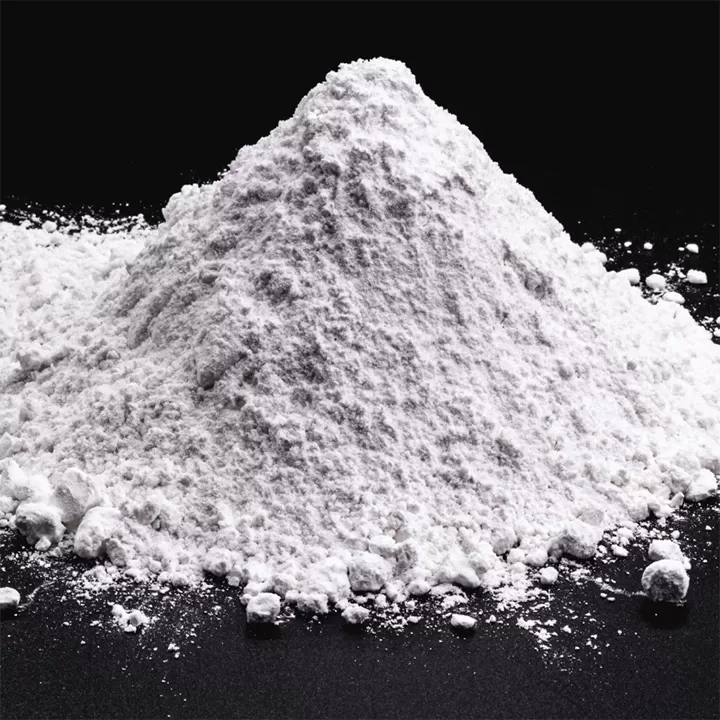
Silica fume, also known as microsilica, is a byproduct of the reduction of high-purity quartz with coal in electric arc furnaces during the manufacture of silicon and ferrosilicon alloys. This process yields an amorphous silica gas that rapidly condenses into spherical particles with an average diameter of 0.1 to 0.15 micrometers. These ultra-fine particles are approximately one-hundredth the size of a typical cement grain. Industrial materials providers, such as Golden Fortune, supply highly refined mineral admixtures that allow concrete specifiers to control hydration kinetics and refine the pore structure of cementitious matrices.
Microstructural Mechanisms: Physical and Pozzolanic Actions
The performance enhancements achieved through the incorporation of microsilica are governed by two distinct mechanisms operating at the nano and micro-structural levels: the physical filler effect and the chemical pozzolanic reaction.
The Physical Filler Effect
In standard concrete mixtures, the spatial arrangement of cement grains leaves microscopic voids, even after thorough compaction. The extreme fineness of silica fume allows these particles to distribute themselves within the interstitial spaces between cement grains. By filling these voids, the mineral admixture increases the packing density of the fresh paste. This physical packing displaces entrapped water, refining the capillary pore structure before hydration chemistry fully initiates. The reduction of these voids diminishes the pathways available for moisture and aggressive ions to migrate through the hardened matrix.
The Pozzolanic Reaction Chemistry
When Portland cement hydrates, it produces calcium silicate hydrate (C-S-H) gel—the primary binding phase responsible for strength—and calcium hydroxide, also known as portlandite. Calcium hydroxide constitutes up to 25 percent of the hydrated cement paste volume but contributes negligibly to mechanical strength. Furthermore, portlandite is highly soluble and prone to leaching, which creates pathways for acidic attack and chemical degradation.
The chemical reaction proceeds as follows:
- Primary Hydration: Alite and Belite (cement minerals) react with water to yield C-S-H gel and Calcium Hydroxide.
- Pozzolanic Reactivity: Amorphous silicon dioxide reacts with the generated Calcium Hydroxide and water to produce secondary, high-density Calcium Silicate Hydrate gel.
This conversion is vital for durability. The amorphous silicon dioxide reacts with the weak calcium hydroxide crystals to form additional C-S-H gel. This chemical transformation converts a soluble, mechanically weak phase into a highly stable, load-bearing binder, significantly densifying the overall matrix.
Modifying the Interfacial Transition Zone
The weakest region within conventional concrete is the interfacial transition zone (ITZ), a thin shell of paste surrounding each aggregate particle. In standard concrete, water films accumulate around aggregates during mixing and bleeding, leading to a localized increase in the water-to-cement ratio. Consequently, the ITZ typically exhibits higher porosity, larger crystalline structures of portlandite, and a high concentration of microcracks.
With the introduction of ultra-fine particles, the migration of free water toward the aggregate surfaces is restricted. The use of silica fume reduces the thickness of the ITZ and alters its mineralogical composition. The large, oriented calcium hydroxide crystals that usually populate this zone are consumed by the pozzolanic reaction and replaced by dense, isotropic C-S-H gel. The resulting homogenization of the concrete microstructure leads to a substantial increase in compressive strength and bond strength between the paste and the aggregates.
Influence on Fresh Concrete Rheology
Incorporating sub-micron particles alters the physical behavior of concrete in its plastic state. Understanding these rheological adjustments is necessary for successful field placement and finishing.
Water Demand and Workability
Because of its immense specific surface area—typically ranging from 15,000 to 30,000 square meters per kilogram—silica fume increases the water requirement of concrete mixtures. If water content is kept constant, the addition of microsilica results in a dry, highly cohesive mix with low slump. To maintain workability without compromising the water-to-binder ratio, the inclusion of a high-range water-reducing admixture, such as a polycarboxylate ether superplasticizer, is required. The combined formulation of superplasticizers and microsilica allows the production of highly flowable, self-consolidating concrete with low water-to-binder ratios.
Bleeding and Cohesion
Fresh concrete containing microsilica exhibits high cohesion, which drastically reduces bleeding and segregation. Because the fine particles bind the mixing water and block capillary channels, free water cannot easily migrate to the concrete surface. While this prevents the formation of weak, water-rich surface layers, it also presents challenges. The lack of bleed water increases the vulnerability of the fresh surface to rapid drying, necessitating immediate curing measures to prevent plastic shrinkage cracking under dry or windy ambient conditions.
Durability Performance in Harsh Environments
The structural survival of concrete in aggressive environments depends on its transport properties—specifically, its resistance to fluid penetration, gas diffusion, and ion migration. The use of silica fume provides performance benefits across several challenging scenarios.
| Exposure Hazard | Degradation Mechanism | Mitigation Method via Silica Fume |
|---|---|---|
| Marine Environments | Chloride ion penetration causing corrosion of embedded steel reinforcement. | Pore refinement reduces chloride diffusion coefficients; increased electrical resistivity slows down electrochemical cell activity. |
| Sulfate Attack | Sulfate ions react with calcium aluminate phases, causing expansive cracking. | Consumes calcium hydroxide and dilutes tricalcium aluminate phases, preventing expansive ettringite formation. |
| Acid Exposure | Acids dissolve calcium hydroxide, leaching out the binder paste. | Converts vulnerable calcium hydroxide into stable calcium silicate hydrate, reducing chemical dissolution rates. |
| Abrasion & Erosion | Mechanical wear from water currents, debris, or heavy vehicular traffic. | Improves aggregate-paste bond and overall compressive strength, increasing wear resistance. |
Marine and Chloride-Rich Environments
In coastal structures, bridge decks, and offshore platforms, chloride ions gradually diffuse through the concrete cover until they reach the reinforcing steel. Once the chloride concentration at the steel surface exceeds a threshold level, the passive oxide layer on the steel is destroyed, initiating localized corrosion. The resulting rust expands, inducing internal tensile stresses that lead to cracking, spalling, and eventual structural degradation.
By refining the pore structure and reducing capillary connectivity, the inclusion of high-quality mineral modifiers, such as those supplied by Golden Fortune, yields a matrix that restricts chloride ion diffusion. The rapid chloride permeability test (RCPT) values of microsilica concrete frequently drop from several thousand coulombs (moderate to high permeability) to below one thousand coulombs (very low permeability). Furthermore, the increased electrical resistivity of the concrete paste slows down the flow of corrosion currents between anodic and cathodic regions on the steel reinforcement, even if moisture and oxygen are present.
Mitigating Alkali-Silica Reaction
Alkali-Silica Reaction (ASR) occurs when reactive silica phases within certain aggregates react with the highly alkaline pore solution of the concrete (principally sodium and potassium hydroxides). This reaction forms an expansive alkali-silica gel that absorbs water, swells, and causes map cracking throughout the structure. The pozzolanic reaction of microsilica consumes the alkalis within the pore solution, binding them into the stable C-S-H structure. This alkali binding reduces the pH of the pore fluid, ensuring that the reactive aggregates are not exposed to the high hydroxyl ion concentrations required to trigger the expansive swelling mechanism.
Operational Considerations and Field Application
Achieving the desired durability and mechanical characteristics in the field requires close attention to batching, mixing, and curing protocols. The successful use of silica fume demands strict adherence to standards established by organizations such as the American Concrete Institute (ACI) and ASTM International.
Forms of Silica Fume
To facilitate shipping and handling, silica fume is available in several forms, each possessing distinct processing requirements:
- Undensified: With a bulk density of approximately 200 to 300 kg/m³, this raw form is highly dusty and challenging to handle. It is primarily used in dry-mix preformulations and dry shotcrete bag mixes.
- Densified: Compacting the material increases its bulk density to 500 to 700 kg/m³. This form is easier to transport and discharge. However, it requires sufficient mixing energy in wet batch plants to ensure the agglomerated particles fully disperse throughout the paste.
- Slurry: Dispersing silica fume in water at a 50:50 weight ratio creates a stable suspension. This liquid form is highly compatible with automated batching systems and ensures excellent dispersion, though it requires specialized storage tanks to prevent settlement.
Curing Protocols
As noted, microsilica concrete does not bleed. If the evaporation rate at the surface exceeds the rate at which water can replenish it, plastic shrinkage cracking will develop. Consequently, continuous wet curing must begin immediately after finishing. Specifiers recommend fog spraying, wet burlap coverings, or the application of high-efficiency curing membranes to maintain the hydration process and prevent surface moisture loss.
Synergy in Ternary Cementitious Blends
Modern concrete design frequently moves beyond binary systems (cement plus one mineral admixture) to ternary systems, which combine Portland cement with two distinct materials. For instance, combining the use of silica fume with ground granulated blast-furnace slag (GGBS) or ultra-fine slag provides a balanced performance profile. The ultra-fine slag improves workability, reduces water demand, and provides long-term strength gain, while the microsilica contributes rapid early strength and immediate pore refinement. Advanced mineral materials engineered by Golden Fortune support these high-durability targets, allowing concrete mix designers to balance early-age hydration kinetics with long-term chemical durability.
Commercial and Technical Inquiry
Selecting the precise blend of mineral admixtures, adjusting water-to-binder ratios, and maintaining compatibility with chemical admixtures require deep expertise in materials science. If your organization is designing concrete mixes for marine structures, high-strength precast components, or industrial flooring exposed to aggressive chemicals, our team can assist. We provide detailed material characterization sheets, grading curves, and chemical analysis reports to assist you in formulating durable, high-performance concrete mixtures. Contact our engineering department for comprehensive material specifications and commercial supply options for your upcoming project.
Frequently Asked Questions
Q1: What is the typical replacement level of silica fume in concrete mixes?
A1: The typical replacement level ranges between 5% and 12% by weight of the total cementitious materials. Lower percentages (5% to 7%) are generally used for moderate durability improvement and to control bleeding, while higher percentages (8% to 12%) are selected for high-strength requirements or severe chemical and marine exposure. Exceeding 15% is rare, as it significantly increases water demand and concrete stickiness, making placement difficult.
Q2: How does the use of silica fume affect steel reinforcement bond strength?
A2: It increases the bond strength between the concrete paste and reinforcing steel. This is achieved by refining the interfacial transition zone around the steel bars. The reduction in water accumulation and the chemical conversion of calcium hydroxide to dense calcium silicate hydrate gel within this zone lead to a more continuous mechanical interlocking between the steel and the surrounding matrix.
Q3: Can silica fume be used in shotcrete applications?
A3: Yes, it is widely utilized in both wet and dry shotcrete. The addition of microsilica dramatically increases the cohesion of the mix, which reduces material rebound from the substrate and allows for thicker single-pass applications on vertical and overhead surfaces. It also decreases the permeability of the placed shotcrete, which is highly beneficial in tunnel linings and rock stabilization.
Q4: How does microsilica modify the heat of hydration in thick concrete elements?
A4: At early ages, silica fume reacts rapidly, which can accelerate the heat generation rate per unit weight compared to Portland cement. However, because it is typically used in combination with other slower-reacting supplementary cementitious materials, such as slag or fly ash, the overall thermal gradient in mass concrete can be managed effectively. Proper mix proportioning is required to balance early-age thermal output with long-term strength objectives.
Q5: What are the differences between densified and undensified silica fume in terms of concrete performance?
A5: Chemically, both forms are identical and can yield equivalent concrete performance. Practically, undensified silica fume disperses more easily in concrete because its individual particles are not pre-compacted. Densified silica fume requires a longer mixing cycle and high-shear mixing action to ensure the dense agglomerates break down completely. If not fully dispersed, undispersed particles may act as aggregate-like defects rather than reactive cementitious sites.