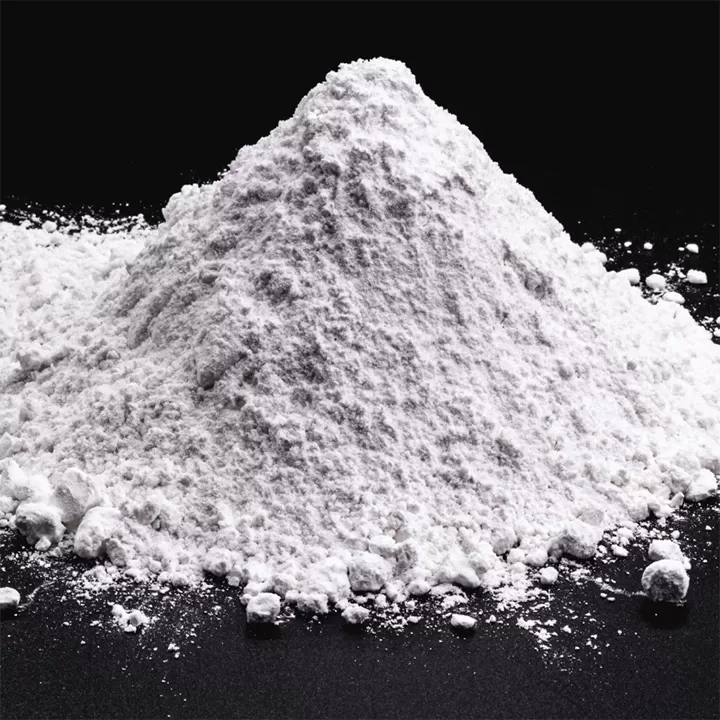
The use of silica in cement extends beyond simple filler functionality. Amorphous silica sources—such as silica fume, condensed silica fume, and finely ground quartz—participate in pozzolanic reactions with calcium hydroxide (CH) liberated during Portland cement hydration. This secondary reaction forms additional calcium silicate hydrate (C-S-H) gel, which refines pore structure and improves mechanical performance. The effectiveness of silica addition depends on its specific surface area, degree of crystallinity, and the timing of its incorporation in the mixing sequence.
Concrete durability in aggressive environments—sulfate attack, chloride ingress, or freeze-thaw cycles—often correlates directly with the permeability of the cement paste matrix. A well-calibrated silica addition reduces the capillary pore network by consuming CH and depositing C-S-H within the interstitial spaces. This article examines the mechanisms, dosage considerations, and practical handling aspects of silica supplementation in cementitious systems, with emphasis on performance metrics that matter to ready-mix producers and precast manufacturers.
1. Pozzolanic Reaction Kinetics and CH Consumption
The primary chemical function of silica in cement is the pozzolanic reaction: SiO₂ (amorphous) + Ca(OH)₂ + H₂O → C-S-H. This reaction occurs at ambient temperatures but accelerates at elevated curing temperatures. The rate of CH consumption influences the alkalinity of the pore solution, which in turn affects the passivation of steel reinforcement and the stability of hydrated phases.
Reaction Rate Dependence on Silica Fineness
The specific surface area (measured by BET or Blaine methods) governs the available reaction sites. Silica fume with a BET surface area of 15–30 m²/g reacts much faster than ground quartz with a Blaine of 400 m²/kg. The early-age reactivity is particularly relevant for high-early-strength applications, where a portion of the cement clinker can be replaced without sacrificing 1-day or 3-day strength. However, excessive fineness increases water demand, necessitating superplasticizer adjustment to maintain workability.
CH Depletion and Its Consequences
As CH is consumed, the pore solution pH may drop slightly, but remains above 12.5 for adequate reinforcement passivation. More importantly, the reduction in CH content lowers the risk of expansive sulfate reactions, since CH is a prerequisite for the formation of secondary ettringite or thaumasite. This makes the use of silica in cement a practical mitigation strategy for sulfate-rich soils or marine environments.
- Optimal replacement level: Typically 5–15% by weight of cementitious material, depending on silica source.
- Heat of hydration: Pozzolanic reactions are exothermic but produce less heat than primary Portland cement hydration, reducing thermal cracking risk in mass concrete.
- Autogenous healing: The additional C-S-H can seal microcracks over time, enhancing self-healing capacity.
2. Particle Size Distribution and Packing Density
The physical effect of silica particles—filling the voids between cement grains—is as important as their chemical reactivity. In a typical cement paste, the water-to-cement (w/c) ratio determines the initial capillary porosity. Introducing fine silica particles reduces the interparticle spacing, allowing a lower w/c ratio for the same workability, or improved workability at the same w/c.
Microfiller and Nucleation Effect
Very fine silica particles (below 1 µm) act as nucleation sites for C-S-H precipitation, accelerating early hydration even before significant pozzolanic reaction occurs. This dual action—physical filling and chemical reaction—explains why the use of silica in cement often yields strength increases that exceed the sum of the two individual effects. The packing model proposed by de Larrard and others shows that optimal particle size distribution should cover the full range from 0.01 µm to 100 µm to achieve maximum density.
Influence on Rheology
High specific surface areas increase the water demand; for every 1% addition of silica fume, the water demand rises by approximately 1–2% without admixture adjustment. Polycarboxylate-based superplasticizers are typically required to maintain a slump of 150–200 mm in self-consolidating concrete. The choice of silica source—densified or undensified—also affects dispersion; undensified silica fume disperses more readily but may create dusting issues.
3. Durability Enhancement Through Pore Refinement
The refined pore structure resulting from silica addition is the main contributor to enhanced durability. Mercury intrusion porosimetry (MIP) studies consistently show a reduction in the median pore diameter from 0.1–0.3 µm (for plain Portland cement) to 0.01–0.05 µm for silica-modified pastes. This shift moves the majority of pores out of the capillary range, reducing the connectivity of the pore network.
Chloride Penetration Resistance
Chloride diffusion coefficients decrease by 60–80% when silica fume replaces 10% of cement. The mechanism involves both physical blocking of diffusion pathways and chemical binding of chlorides by the increased C-S-H content. For marine structures or bridge decks exposed to deicing salts, this translates into extended service life. Rapid chloride permeability tests (RCPT) often yield results below 1000 coulombs for silica-modified mixtures, compared to 3000–4000 coulombs for conventional concrete.
Sulfate Resistance
The pozzolanic consumption of CH reduces the availability of calcium hydroxide required for sulfate attack to form gypsum and ettringite. Additionally, the denser matrix slows the ingress of sulfate ions. Field exposure studies have demonstrated that concrete with silica addition shows minimal expansion after 5 years in sulfate-rich environments, whereas plain concrete may exhibit cracking within 2–3 years.
4. Silica Sources and Their Variability
Not all silica materials perform identically. The use of silica in cement must account for the source's mineralogy, amorphous content, and trace element composition. Common industrial by-products include silica fume (from silicon alloy production), metakaolin (calcined clay), and rice husk ash (from agricultural residue). Each offers a distinct SiO₂ content and reactivity.
- Silica fume: 85–98% amorphous SiO₂, spherical particles, high reactivity.
- Metakaolin: 50–60% reactive SiO₂, plate-like morphology, also contributes alumina for additional phase formation.
- Rice husk ash: 80–90% amorphous SiO₂, porous structure, requires controlled combustion to maintain amorphous character.
- Ground quartz: Crystalline SiO₂, low reactivity at ambient temperature, primarily acts as filler unless finely ground to induce some surface reactivity.
The amorphous content is a key quality indicator; crystalline silica does not participate in pozzolanic reactions appreciably below 100°C. Suppliers like Golden Fortune provide materials with documented amorphous silica content and particle size distribution curves, enabling mix designers to predict performance with accuracy.
5. Practical Considerations in Batching and Mixing
Incorporating silica into a concrete batch requires adjustments to the mixing sequence and water addition. For dry batch plants, pre-blending silica with cement or sand helps achieve uniform distribution. For wet batch plants, adding silica after the initial water and coarse aggregate reduces agglomeration.
Dispersion and Agglomeration
Undensified silica fume has a bulk density of 150–200 kg/m³, which makes it prone to airborne dust and difficult to wet. Densified silica fume (bulk density 500–600 kg/m³) flows more freely but may contain agglomerates that break apart under high-shear mixing. Extended mixing time (60–90 seconds) beyond conventional concrete ensures complete dispersion. Some plants use colloidal silica suspensions to eliminate dust and ensure uniform dispersion at the nanoscale.
Set Time and Early Strength
The pozzolanic reaction is temperature-sensitive; at 20°C, the reaction contributes measurably after 7 days. For applications requiring early formwork removal, a combination of silica with accelerating admixtures (e.g., calcium nitrate) can offset the slower early hydration. Alternatively, steam curing at 60–80°C accelerates the pozzolanic reaction, achieving 28-day strength within 48 hours.
6. Interaction with Other Supplementary Cementitious Materials
Ternary blends—Portland cement plus silica plus fly ash or slag—are increasingly common to balance cost, performance, and sustainability. The use of silica in cement in these systems amplifies the benefits of each component. For instance, the high alumina content of fly ash combined with the high silica content of silica fume promotes the formation of additional aluminate hydrates, which can bind chlorides more effectively.
Synergistic effects also appear in rheology: the spherical morphology of silica fume particles can offset the irregular shape of fly ash, improving flowability. However, the water demand of ternary blends must be carefully balanced; a combined replacement level above 30% often requires higher superplasticizer dosages.
7. Long-Term Performance and Service Life Modeling
Service life models for reinforced concrete structures incorporate the diffusion coefficient, the surface chloride concentration, and the critical chloride threshold. The refinement of pore structure by silica addition reduces the effective diffusion coefficient, which directly extends the predicted corrosion initiation time. Models based on Fick's second law show that a 70% reduction in diffusion coefficient can double the service life from 50 to 100 years for typical cover depths.
Furthermore, the enhanced mechanical properties—higher compressive strength (up to 120 MPa for high-performance concrete) and improved tensile strength—allow thinner structural sections, reducing dead load and material consumption. The long-term creep and shrinkage behavior of silica-modified concrete is generally comparable to or slightly lower than conventional concrete, provided the w/c ratio is controlled.
8. Quality Control and Compliance Testing
Routine quality control for silica-modified concrete includes standard slump, air content, and compressive strength tests. Additional tests that provide insight into the effectiveness of the silica addition:
- Rapid chloride permeability (ASTM C1202): Indicates resistance to ion transport.
- Surface resistivity (AASHTO T 358): Non-destructive method to assess durability.
- Thermogravimetric analysis (TGA): Quantifies CH consumption and C-S-H content in hardened paste.
- Particle size analysis (laser diffraction): Confirms the fineness of incoming silica material.
Golden Fortune provides a certificate of analysis with each shipment, detailing SiO₂ content, moisture, loss on ignition, and Blaine fineness. This documentation supports mix design verification and facilitates regulatory compliance.
Addressing Field Challenges with Silica-Enhanced Concrete
Field experience with silica-modified concrete has identified several practical issues and corresponding solutions:
Plastic Shrinkage Cracking
The reduced bleeding in silica-modified concrete means that evaporation from the surface can lead to plastic shrinkage cracks more readily. Immediate application of evaporation retarders or fog misting immediately after finishing minimizes this risk.
Inconsistent Color
Silica fume can produce a darker, more uniform color compared to plain concrete, which is generally acceptable for structural applications. For architectural finishes, pigment adjustment or surface treatments are recommended.
Frost Resistance
The low permeability of silica-modified concrete provides excellent frost resistance; however, air entrainment is still required for freeze-thaw exposure. The air-void system should be maintained with an air content of 5–7% for moderate exposure.
Optimization Framework for Silica Incorporation
A systematic approach to design silica-modified mixtures involves the following steps:
- Define performance targets (strength, durability, workability) based on project specifications.
- Select the silica source with appropriate fineness and amorphous content.
- Conduct a water demand assessment at various replacement levels using the selected superplasticizer.
- Prepare trial batches and measure fresh properties (slump, air, unit weight).
- Cast specimens for compressive strength at 1, 3, 7, 28, and 56 days.
- Perform durability tests (RCPT, sulfate exposure) if required.
- Determine the optimal replacement level that meets all criteria with the lowest cement factor.
This iterative process ensures that the use of silica in cement yields tangible benefits without compromising constructability. Detailed records of each step support quality assurance and can be referenced for future projects.
Frequently Asked Questions About the Use of Silica in Cement
Q1: What is the typical replacement level for silica fume in concrete?
A1: For general purpose concrete, 5–8% by weight of cement is common. For high-performance concrete (80–120 MPa), levels up to 15% may be used. Replacement levels above 15% show diminishing returns in strength and may increase water demand significantly.
Q2: Does the use of silica in cement affect the setting time?
A2: The initial and final setting times may be slightly extended (30–60 minutes) compared to plain cement, because the pozzolanic reaction proceeds more slowly than the direct hydration of clinker. Accelerators can be added to normalize setting when rapid formwork removal is needed.
Q3: Can I use silica in cement with other supplementary materials like fly ash or slag?
A3: Yes, ternary and quaternary blends are widely used. The combination can yield synergistic effects on both strength and durability. However, the total replacement level should be designed considering the specific characteristics of each material; a combined replacement of 20–30% is a practical starting point.
Q4: How does silica addition influence the resistance to alkali-silica reaction (ASR)?
A4: The use of silica in cement—especially amorphous silica fume—has been shown to mitigate ASR expansion in reactive aggregates. The mechanism involves pozzolanic consumption of alkalies and the densification of the paste, which reduces the availability of water for the expansive reaction. Proper dosages (8–10% silica fume) can effectively control ASR.
Q5: What testing methods are recommended to verify the quality of silica materials?
A5: Key tests include the determination of amorphous SiO₂ content (by X-ray diffraction), loss on ignition (to assess organic impurities), specific surface area (BET or Blaine), and particle size distribution (laser diffraction). For quality control in ready-mix plants, the simple density and moisture tests are also useful.
Q6: Is there any risk of reduced workability with silica addition?
A6: Yes, due to the high surface area, the water demand increases. This is typically compensated by using a high-range water reducer (superplasticizer). With proper admixture adjustment, workability can be maintained at levels comparable to conventional concrete.
Q7: How does silica-modified concrete perform under high-temperature exposure, such as fire?
A7: Silica-modified concrete exhibits lower permeability and higher strength, which generally improves fire resistance. However, the dense microstructure may lead to spalling at very high temperatures due to the buildup of pore pressure. Adding polypropylene fibers can mitigate spalling risk by providing a path for vapor release.
For technical assistance with mix design, material specifications, or to request product data sheets, please contact the technical services team at Golden Fortune. Provide details of your project requirements (target strength, exposure class, and available materials) to receive a customized recommendation for silica incorporation.