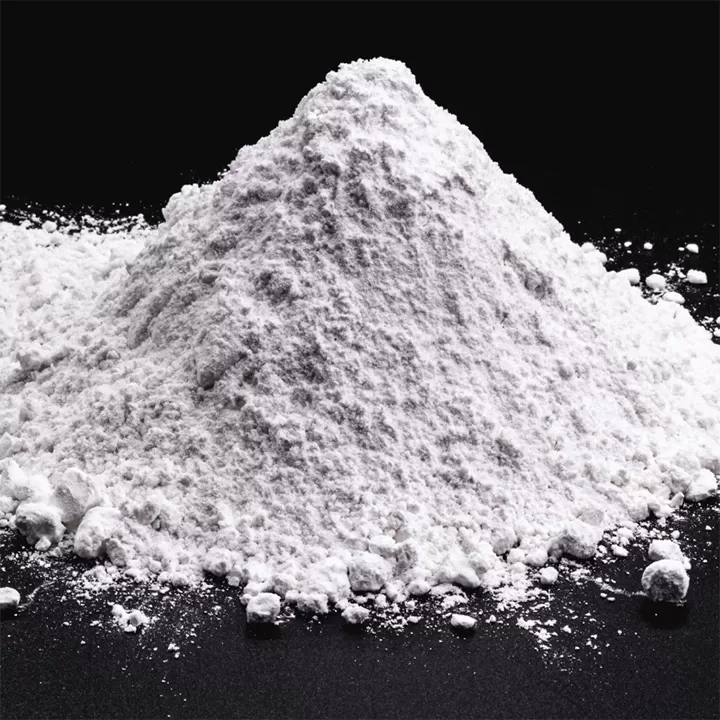
Silica fume, an amorphous polymorph of silicon dioxide, has evolved from an industrial byproduct into a highly valued mineral admixture. Generated during the reduction of high-purity quartz with coal in electric arc furnaces during silicon and ferrosilicon alloy production, this ultra-fine powder consists of spherical particles with an average diameter of 0.15 micrometers. Because these particles are approximately one-hundredth the size of average cement grains, they possess an extremely high specific surface area, typically ranging between 15,000 and 30,000 square meters per kilogram.
When integrated into cementitious systems, this material acts both physically and chemically. The physical mechanism involves particle packing, where the micro-fine spheres fill the voids between larger cement grains. Chemically, the amorphous silicon dioxide reacts with calcium hydroxide—a byproduct of Portland cement hydration—to produce additional calcium silicate hydrate (C-S-H) gel, which is the primary source of strength in concrete. Understanding the diverse uses of silica fume is vital for structural engineers, material specifiers, and industrial producers aiming to achieve superior durability and mechanical properties. As a global supplier of advanced cementitious materials, Golden Fortune provides high-quality mineral components designed to meet stringent international standards for complex construction projects.
Microstructural Modification of Concrete Matrices
The addition of microsilica alters the internal architecture of the concrete matrix, specifically targeting the interfacial transition zone (ITZ). In conventional concrete, the ITZ—the thin region surrounding aggregate particles—is often characterized by a high water-to-cement ratio, large oriented crystals of calcium hydroxide, and high porosity. This zone represents the weakest link in the concrete microstructure, serving as the primary pathway for crack propagation and chemical ingress.
Incorporating microsilica directly addresses this microstructural vulnerability through several simultaneous processes:
- Pore Refinement: The physical filler effect subdivides large capillary pores into microscopic, disconnected pore networks, drastically reducing water absorption and permeability.
- Chemical Stabilization: The pozzolanic reaction consumes highly soluble calcium hydroxide crystals, converting them into stable, insoluble C-S-H gel, which reinforces the paste-aggregate bond.
- Bleeding Control: The high specific surface area of the particles binds free water within the fresh mix, preventing water migration to the surface, which minimizes bleed channels and plastic shrinkage cracking.
This systematic microstructural refinement explains why the industrial uses of silica fume have become standard practice in high-stress civil engineering applications where structural longevity is a primary requirement.
High-Performance and Ultra-High-Performance Concrete
High-Performance Concrete (HPC) and Ultra-High-Performance Concrete (UHPC) rely on precise particle packing models to achieve exceptional compressive and flexural strength. While standard concrete typically exhibits compressive strengths between 30 and 50 MPa, HPC formulated with microsilica easily exceeds 100 MPa, and UHPC can surpass 150 to 200 MPa.
Compressive and Flexural Strength Enhancement
The mechanical performance of concrete is limited by the density of its binder matrix. By utilizing microsilica, the packing density is brought closer to theoretical limits. The refined aggregate-paste interface allows for efficient stress transfer throughout the concrete bulk, preventing premature localized failures. Structural designers leverage these high-strength properties to specify smaller column cross-sections in high-rise buildings, which increases usable floor space and reduces the dead load of the structure.
Modulus of Elasticity and Creep Reduction
In addition to compressive strength, the modulus of elasticity is significantly improved. This increased stiffness is accompanied by a substantial reduction in long-term creep and drying shrinkage. The dense C-S-H matrix resists deformation under sustained structural loads, ensuring the dimensional stability of precast elements, prestressed concrete girders, and long-span bridge decks.
Marine Infrastructure and Durability in Hostile Environments
Marine structures, such as offshore platforms, bridge piers, seawalls, and port facilities, face continuous chemical attack. The primary mechanism of deterioration in these environments is chloride-induced corrosion of reinforcing steel, followed by sulfate attacks that disintegrate the cement paste.
The primary defensive barrier against these mechanisms is low permeability, which is where the specific uses of silica fume offer protection. Chloride ions migrate through concrete pores via diffusion. By blocking these pathways, the chloride diffusion coefficient is reduced by several orders of magnitude. This significantly delays the time required for chlorides to reach the reinforcing steel, preventing the onset of rust and subsequent concrete spalling.
| Concrete Formulation Type | Chloride Permeability (Coulombs - ASTM C1202) | Primary Degradation Resistance |
|---|---|---|
| Standard Portland Cement Concrete | 4,000 - 6,000 (High) | Low resistance to marine environments; rapid carbonation. |
| Concrete with Fly Ash (20%) | 1,500 - 2,500 (Moderate) | Moderate chemical resistance; slow early strength development. |
| Silica Fume Modified Concrete (8-10%) | 100 - 1,000 (Very Low to Negligible) | Exceptional resistance to chloride ingress, sulfate attack, and acidic runoff. |
Sulfate resistance is similarly improved. Sulfate ions in seawater and soil react with aluminate phases in cement to form expansive ettringite, which causes internal cracking. Pozzolanic reactions consume the calcium hydroxide necessary for these destructive expansive reactions, ensuring the long-term integrity of submerged structures.
Shotcrete and Underground Stabilization
Shotcrete, or pneumatically applied concrete, is widely used for ground support in tunneling, mining, and slope stabilization. The application process requires the wet or dry mix to adhere immediately to vertical and overhead rock faces without sagging, sloughing, or excessive material loss due to rebound.
Integrating microsilica into shotcrete mixtures alters their rheological behavior. The high surface area of the particles increases the internal cohesion of the wet mix. This elevated cohesion provides several practical performance benefits:
- Reduction in Rebound: Rebound chamber testing demonstrates that material waste is reduced from upwards of 30% down to single-digit percentages, representing significant material savings during large-scale tunnel lining operations.
- Increased Single-Pass Thickness: Operators can apply thicker layers of shotcrete in a single pass—often up to 150 mm or more on vertical walls—without structural slumping, accelerating construction timelines.
- Enhanced Adhesion: The bond strength between the shotcrete layer and the uneven rock or old concrete substrate is dramatically increased, reducing the likelihood of delamination under hydro-static pressure.
These rheological modifications make the material indispensable for modern underground civil works where speed, safety, and structural integrity are paramount parameters.
Refractory Materials and High-Temperature Applications
Beyond civil engineering, the industrial uses of silica fume extend into the production of high-temperature refractory castables used in iron and steel manufacturing, glassmaking, and petrochemical refining. Refractories must maintain physical integrity and volume stability at temperatures often exceeding 1500°C.
In low-cement and ultra-low-cement castables, microsilica acts as a multi-functional component:
Particle Packing and Water Reduction
The spherical morphology of the particles allows them to act as microscopic ball bearings within the fresh refractory castable mix. This improves the flowability and placement characteristics of the material while reducing the total water demand. Minimizing the initial water content is critical because any excess water must be evaporated during the initial heating cycle, which can leave behind voids that weaken the refractory structure.
High-Temperature Phase Transformation
During the sintering process at elevated temperatures, the amorphous silica reacts with alumina present in the mix to form mullite ($3Al_2O_3 \cdot 2SiO_2$), a highly stable crystalline mineral phase. Mullite exhibits low thermal expansion, high creep resistance under load, and excellent resistance to thermal shock and chemical slag erosion. Consequently, refractories formulated with this compound demonstrate extended service lifetimes in harsh metallurgical furnaces.
Synergistic Binder Formulations
In modern concrete design, supplementary cementitious materials (SCMs) are rarely used in isolation. Combining different mineral admixtures in binary, ternary, or quaternary binder systems allows engineers to balance early-age and long-term properties. A common industrial pairing involves combining silica fume with Ground Granulated Blast Furnace Slag (GGBS).
While microsilica is highly reactive and contributes significantly to early-age strength development (within the first 3 to 7 days) and rapid pore refinement, GGBS hydrates more slowly, offering continuous strength gain, lower hydration heat, and enhanced chemical resistance over 28, 56, and 90 days. Golden Fortune specializes in supplying optimized mineral components that allow producers to design ternary blends tailored to specific project requirements. These blended systems mitigate the rapid heat generation associated with pure Portland cement, preventing thermal cracking in mass concrete placements such as dam foundations and thick raft slabs.
Alkali-Silica Reaction Mitigation
Alkali-Silica Reaction (ASR) occurs when reactive silica phases within certain aggregates react with the highly alkaline pore solution of the concrete, forming an expansive gel that causes severe cracking over time. Ternary blends utilizing GGBS and microsilica mitigate ASR by securing the alkalies within the refined C-S-H structure, reducing the overall pH of the pore solution and preventing the formation of expansive gels.
Industrial Supply and Technical Specifications
To ensure consistent performance in demanding applications, the chemical and physical characteristics of microsilica must be closely monitored. International standards, such as ASTM C1240 and EN 13263, establish strict limits on key parameters:
- Silicon Dioxide ($SiO_2$) Content: Typically specified to be at least 85% to ensure sufficient pozzolanic activity. Higher-grade products often reach 90% to 95% purity.
- Loss on Ignition (LOI): Generally limited to under 3.0% or 4.0% to minimize the presence of unburnt carbon, which can adsorb concrete admixtures (such as air-entraining agents) and negatively affect workability and air void systems.
- Moisture Content: Should be kept below 3.0% to prevent agglomeration and ensure free-flowing characteristics during batching and pneumatic conveying.
- Specific Surface Area: Measured via nitrogen adsorption (BET method), ensuring the high fineness required for rapid chemical reactivity and effective particle packing.
Selecting a reliable supplier capable of providing consistent raw materials backed by comprehensive quality control documentation is a prerequisite for executing successful, high-durability projects.
Inquiry and Collaborative Engineering
As construction projects grow in complexity, selecting the appropriate mineral admixtures and optimizing mix designs becomes increasingly critical. Golden Fortune provides technical expertise and high-performance materials to support your industrial projects. Whether you are formulating ultra-high-performance concrete, manufacturing refractory castables, or developing specialized shotcrete for underground infrastructure, our team is ready to assist you with technical data sheets, compliance documentation, and custom packaging solutions.
We invite procurement managers, concrete batch plant operators, and structural engineers to submit an inquiry today. Let us discuss how our materials can help you meet the mechanical, durability, and chemical resistance requirements of your specific application.
Frequently Asked Questions
Q1: What is the primary difference between silica fume and fly ash?
A1: While both are pozzolanic materials, they differ significantly in particle size, reactivity, and mineral composition. Silica fume consists of amorphous silicon dioxide with particle sizes under 0.15 microns and a specific surface area of 15,000 to 30,000 m²/kg, making it highly reactive at early stages. Fly ash, a byproduct of coal combustion, has larger spherical particles (typically 10 to 50 microns) with a lower surface area, reacting more slowly and contributing primarily to long-term strength and workability improvements.
Q2: Does the addition of microsilica affect the workability of fresh concrete?
A2: Yes. Due to its extremely high specific surface area, microsilica increases the water demand of the concrete mix. To maintain workability and slump without adding excess water (which would compromise strength), it is standard practice to formulate these mixes with high-range water reducers (HRWR), such as polycarboxylate-based superplasticizers. This combination allows for low water-binder ratios while retaining excellent placement characteristics.
Q3: How does microsilica contribute to protecting reinforcing steel in concrete?
A3: It protects steel reinforcement by refining the concrete's pore structure, which dramatically reduces permeability. This physical barrier blocks the penetration of moisture, oxygen, and corrosive agents like chloride ions. By maintaining a highly dense microstructure, the passivation layer on the steel surface remains intact, preventing corrosion and subsequent concrete deterioration.
Q4: What are the typical storage and handling requirements for this material?
A4: It is available in two forms: undensified (ideal for refractory dry mixes due to easier dispersion) and densified (compacted into larger agglomerates for easier bulk transport and reduced dusting in concrete batch plants). It should be stored in dry, moisture-free environments, such as sealed silos or moisture-resistant big bags, to prevent pre-hydration and agglomeration, ensuring free-flowing handling during batching operations.
Q5: Can silica fume be used in mass concrete structures like dams?
A5: Yes, but its usage must be carefully planned. Because of its high reactivity, it can accelerate early heat of hydration. For mass concrete structures where thermal cracking is a concern, it is typically combined with slower-reacting materials like GGBS in ternary blends. This approach helps control the rate of heat generation while still achieving the desired long-term strength and low permeability required for massive water-retaining structures.