Modern concrete construction demands a balance between high workability during placement and high strength after curing. Achieving this balance requires a deep understanding of concrete chemistry and admixture interaction. Broadly speaking, the use of plasticizer in concrete mix is to modify the rheological properties of fresh concrete without altering the mineral composition. By introducing these chemical agents, civil engineers and concrete producers can manage hydration kinetics, water requirements, and overall placement efficiency.
As construction projects grow in structural complexity, the reliance on advanced admixtures becomes standard practice. Plasticizers, also known as water-reducing admixtures, facilitate the creation of high-strength concrete mixes with significantly less water than traditional designs. This reduction in water content directly correlates with reduced porosity, which subsequently enhances the load-bearing capacity and lifespan of the resulting structure.
The Fundamental Mechanism of Concrete Plasticizers
To comprehend how these admixtures function, it is necessary to examine the physical chemistry of cement hydration. When water is added to portland cement, the fine particles exhibit natural cohesive forces, leading to flocculation. This agglomeration traps a substantial portion of the mixing water within the cement paste network, preventing it from contributing to the lubrication and fluidity of the wet concrete.
Understanding why the use of plasticizer in concrete mix is to achieve superior slump retention involves looking at the surface charges of cement grains. Plasticizer molecules are primarily surfactants with polar groups. Upon introduction into the concrete mix, these molecules adsorb onto the surface of the hydrating cement particles. This adsorption process imparts a uniform negative charge across the particles, initiating electrostatic repulsion.
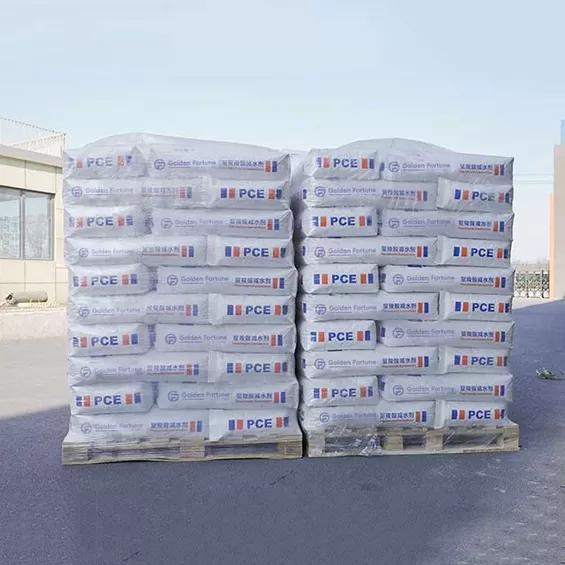
With the cement particles repelling one another, the agglomerated structures break apart, releasing the entrapped water. The freed water is then available to lubricate the mix, which increases slump and flowability without the addition of excess water. In modern formulations, advanced polycarboxylate ether (PCE) superplasticizers utilize steric hindrance alongside electrostatic repulsion, providing long-lasting dispersion even in low water-to-binder mixes.
Key Technical Objectives of Plasticizer Incorporation
In structural engineering, mix design is guided by strict performance requirements. Concrete must flow easily through dense reinforcement, fill formwork completely, and develop high compressive strength. These performance goals clarify why the strategic selection of admixtures is necessary during concrete production.
1. Lowering the Water-to-Binder Ratio
Engineers understand that the use of plasticizer in concrete mix is to lower the water-to-binder ratio while maintaining high workability. A lower water-to-binder ratio is a primary driver of high compressive strength. Excess water that does not participate in the hydration process eventually evaporates, leaving behind capillary pores. By using plasticizers to limit water addition, the resulting concrete matrix is denser, significantly reducing permeability and vulnerability to environmental degradation.
2. Enhancing Workability and Rheological Flow
In congested reinforced structures, such as bridge decks or high-rise columns, concrete must be highly flowable to prevent voids and honeycombing. Plasticizers allow the production of self-consolidating concrete (SCC) or highly flowable concrete that can be placed easily with minimal mechanical vibration. This improvement in rheology ensures that the concrete fills every corner of the formwork, maintaining structural integrity across complex geometries.
3. Mitigating Bleeding and Segregation
High fluidity achieved simply by adding water leads to segregation, where heavy aggregates settle to the bottom and excess water rises to the surface (bleeding). This weakens the top layer of the concrete and reduces the bond strength between the concrete and reinforcing steel. Plasticizers improve the cohesiveness of the mix, ensuring that aggregate particles remain uniformly suspended within the cement paste during transport and placement.
The Synergy Between Plasticizers and Supplementary Cementitious Materials
In modern sustainable concrete formulations, supplementary cementitious materials (SCMs) like Ground Granulated Blast Furnace Slag (GGBS) are frequently incorporated. The physical properties of these SCMs alter the water demand and the chemical environment of the fresh concrete paste. Consequently, the interaction between mineral admixtures and chemical plasticizers requires careful calibration.
Because GGBS particles have different surface characteristics and hydration rates compared to Portland cement, their presence influences the behavior of chemical admixtures. High-quality SCM manufacturers like Golden Fortune specialize in providing premium mineral additives that complement chemical admixtures. When combining mineral admixtures like ground granulated blast furnace slag, the use of plasticizer in concrete mix is to facilitate proper dispersion of fine particles, ensuring that both the cement and the slag hydrate uniformly.
This uniform dispersion is helpful when using ultrafine materials, which naturally possess a high surface area. Without proper chemical plasticization, ultrafine particles may increase water demand, neutralizing some of the performance benefits of the mineral addition. Integrating high-quality supplementary cementitious materials from Golden Fortune helps achieve long-term compressive strength goals, provided the mix is balanced with the appropriate plasticizer dosage to maintain physical workability.
Practical Application Challenges in the Field
While the benefits of plasticizers are clear, their application in real-world construction projects presents certain field challenges that require systematic management.
- Slump Loss Over Time: In hot climates or during long-distance transport, the workability of plasticized concrete can decrease rapidly. This requires the use of retarding plasticizers or secondary dosing at the job site to maintain flowability without compromising the final set time.
- Compatibility Issues: Not all plasticizers are compatible with every cement type or mineral admixture. Variations in the tricalcium aluminate (C3A) content of cement, soluble sulfate levels, and the carbon content of fly ash can lead to rapid slump loss, delayed setting, or air-entrainment issues.
- Dosage Sensitivity: Over-dosage of plasticizers can lead to extreme segregation, severe set retardation, and excessive air entrainment, which can severely compromise structural strength. Regular testing and batch verification are standard quality control measures.
Addressing these challenges requires precise laboratory testing and trial batching. Concrete producers must evaluate the interaction between the chemical plasticizer, the specific cement chemistry, and the chosen SCMs under simulated site temperature conditions to prevent unexpected field behavior.
Classification of Plasticizing Admixtures
Admixtures are classified based on their chemistry and performance standards, such as ASTM C494 or EN 934-2. Understanding these categories helps engineers specify the correct product for their design requirements.
| Admixture Type | Standard Classification | Typical Water Reduction | Primary Applications |
|---|---|---|---|
| Normal Plasticizer | ASTM C494 Type A | 5% – 12% | Standard residential concrete, pavement slabs, and low-strength structures. |
| Retarding Plasticizer | ASTM C494 Type D | 5% – 12% | Hot weather concreting, mass concrete foundations, and long-distance transport. |
| Superplasticizer (High Range) | ASTM C494 Type F | 12% – 30% | High-strength concrete, precast elements, and heavily reinforced columns. |
| Retarding Superplasticizer | ASTM C494 Type G | 12% – 30% | Self-consolidating concrete, large commercial bridge decks, and high-rise pumping. |
Choosing the correct category depends on factors like ambient temperature, haul times, and target compressive strength. For example, high-range water reducers based on polycarboxylate technology are preferred for modern self-consolidating concrete, whereas naphthalene-based superplasticizers are often utilized in precast plants where rapid turnaround times are needed.
Ensuring Long-Term Durability in Aggressive Environments
Concrete structures exposed to harsh environmental factors—such as marine coastlines, chemical processing plants, or sulfate-rich soils—require specialized protection. In these scenarios, the internal capillary structure of the concrete determines its vulnerability to chemical ingress. Water-soluble ions, such as chlorides and sulfates, migrate through the concrete pores, leading to reinforcement corrosion and internal expansion.
By controlling the water content through plasticization, the total volume of capillary pores is significantly reduced. This reduction in permeability slows down the diffusion rate of aggressive chemical species. In marine construction, the use of plasticizer in concrete mix is to ensure that the concrete cover protecting the steel reinforcement remains impermeable, extending the service life of the infrastructure.
Furthermore, when high-durability concrete is formulated with specialized slag binders, the physical packing density is improved. The inclusion of high-performance mineral components from suppliers like Golden Fortune, in combination with a precise plasticizer dosage, produces a dense microstructural matrix. This synergistic approach reduces chemical attack pathways, resulting in high resistance to alkali-silica reactions (ASR) and sulfate attacks.
B2B Inquiry and Consultation
Selecting the optimal combination of chemical admixtures and mineral binders requires expertise in concrete petrography and rheology. For technical inquiries, material specifications, or to request product datasheets for our mineral admixtures, please submit your project requirements to the technical team at Golden Fortune. Our engineering department is available to assist with mix design evaluations and compatibility testing to ensure your concrete meets all performance criteria.
Frequently Asked Questions
Q1: What is the main difference between a standard plasticizer and a superplasticizer?
A1: The main difference lies in the water reduction capability. Standard plasticizers typically reduce water demand by 5% to 12%, whereas superplasticizers (high-range water reducers) can reduce water demand by 12% to over 30% while maintaining or improving workability. Superplasticizers also use advanced chemistry, such as polycarboxylate ethers, to provide steric hindrance in addition to electrostatic repulsion.
Q2: Can plasticizers be used to decrease cement content in a mix design?
A2: Yes. Because plasticizers allow for a reduction in water content while maintaining workability, the overall volume of cement paste can be reduced without compromising the target compressive strength. This allows concrete producers to design more resource-efficient mixes with lower heat of hydration.
Q3: How do environmental temperatures affect the performance of plasticized concrete?
A3: High temperatures accelerate hydration and increase the rate of water evaporation, which can lead to rapid slump loss in plasticized concrete. In such climates, retarding plasticizers are used to control the setting time and maintain workability during placing. Conversely, cold temperatures can delay hydration, meaning admixture dosages must be monitored to avoid excessive set retardation.
Q4: Why does over-dosing a concrete mix with plasticizer cause structural issues?
A4: Over-dosing leads to excessive dispersion of cement particles, which can cause severe segregation, bleeding, and delayed setting times. In extreme cases, the mix may not set within the specified timeframe, and the resulting structural concrete can suffer from reduced compressive strength and increased permeability due to aggregate settlement.
Q5: Are plasticizers compatible with supplementary cementitious materials like GGBS?
A5: Yes, they are highly compatible, and their combined use is common in high-performance concrete. Because mineral additives have different particle shapes, sizes, and surface chemistries compared to Portland cement, plasticizers are used to optimize particle packing and ensure uniform dispersion, leading to improved long-term durability and strength.