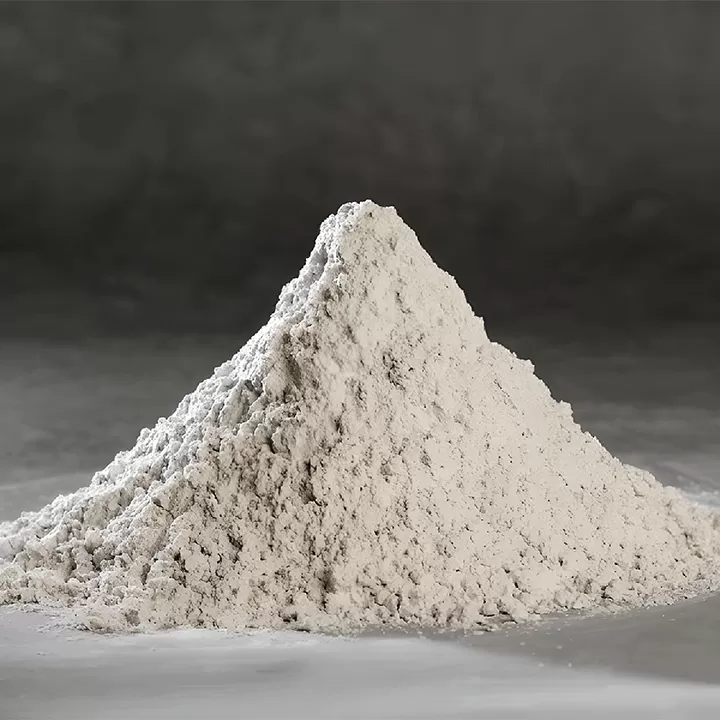
Ordinary Portland Cement (OPC) is the primary hydraulic binder utilized in global infrastructure. Its ability to undergo hydration and form a stable, load-bearing matrix makes it indispensable for structural concrete formulations. While alternative binders have emerged, the standard use of opc cement serves as the primary benchmark for compressive strength development, predictability, and structural compliance. Understanding the mineralogical composition and hydration characteristics of this material is vital for civil engineers and concrete technologists aiming to achieve predictable structural performance.
In large-scale engineering projects, standard cement formulations are frequently modified using mineral additions to control heat generation and enhance durability. Materials engineered by suppliers like Golden Fortune provide the necessary chemical properties to complement traditional binders, ensuring that concrete structures can withstand adverse environmental conditions over their intended service life.
Chemical Composition and Mineralogical Phases of OPC
The mechanical performance of OPC depends on its clinker mineralogy. Portland clinker is produced by calcining calcareous and argillaceous materials at temperatures exceeding 1400 degrees Celsius, resulting in four primary mineral phases:
- Tricalcium Silicate (Alite - C3S): Typically constituting 50% to 70% of the cement clinker, alite hydrates rapidly to provide early-stage mechanical strength, specifically within the first seven days of curing.
- Dicalcium Silicate (Belite - C2S): Representing 15% to 30% of the clinker, belite hydrates at a slower rate, contributing significantly to the long-term strength gain observed after 28 days.
- Tricalcium Aluminate (C3A): Making up 5% to 10% of the composition, C3A reacts almost instantaneously with water. It generates high heat during early hydration, and its reaction is managed by adding gypsum to prevent flash setting.
- Tetracalcium Aluminoferrite (C4AF): Comprising 5% to 15% of the clinker, C4AF acts as a flux during the manufacturing kiln process, contributing to the characteristic grey color of Portland cement while playing a minor role in strength development.
Upon mixing with water, these phases initiate a series of exothermic chemical reactions. The silicates ($C_3S$ and $C_2S$) react to produce Calcium Silicate Hydrate (C-S-H) gel and Calcium Hydroxide ($Ca(OH)_2$, also known as Portlandite). The C-S-H gel is the primary source of strength and density within the hardened paste, whereas Portlandite is highly soluble and contributes to the alkalinity of the concrete, offering passivation to embedded steel reinforcements.
Major Engineering Applications and Structural Scenarios
The selection of concrete binders is determined by the specific requirements of the civil structure, environmental exposures, and construction scheduling. Different applications demand variations in early strength gain, permeability, and thermal output.
Structural Foundations and Substructures
Deep foundations, raft slabs, and retaining walls experience high structural loading. These components require concrete mixtures that reach high compressive strengths to support vertical loads. While OPC provides the necessary mechanical baseline, mass concrete pours in foundations present a high probability of thermal stress, requiring careful monitoring of the binder proportioning to control internal temperatures.
Precast Concrete Component Manufacturing
In prefabrication yards, production efficiency depends on rapid formwork turnaround times. The use of opc cement in high-early-strength applications is preferred here, as it allows rapid demolding and handling of prestressed concrete beams, columns, and hollow-core slabs within 24 to 48 hours of casting.
High-Rise Framed Structures
Superstructures require rapid strength development as construction progresses vertically. High-performance concrete containing OPC and silica fume or slag is pumped to extreme heights, requiring controlled rheology, low viscosity, and rapid setting times to ensure continuous placement and structural uniformity.
Inherent Structural Constraints and Durability Vulnerabilities
Despite its reliable load-bearing capabilities, relying solely on OPC in concrete design presents several engineering concerns, particularly in demanding exposure conditions.
The exothermic nature of the hydration reaction poses significant challenges in thick concrete sections. As the hydration of alite and aluminate phases progresses, internal temperatures can exceed 70 degrees Celsius. When the temperature differential between the core and the exterior surface of the concrete element exceeds 20 degrees Celsius, thermal tensile stresses develop, leading to macro-cracking. These thermal cracks compromise structural continuity and act as pathways for aggressive chemical agents.
Chemical vulnerability is another limitation. The Portlandite ($Ca(OH)_2$) formed during hydration is susceptible to acid attack and carbonation. In marine or high-sulfate soil environments, external sulfate ions react with Portlandite and monosulfate phases to form ettringite and gypsum. This secondary ettringite formation causes volumetric expansion, leading to internal micro-cracking, spalling, and loss of structural cohesion. These factors limit the single-source use of opc cement in mass concrete and marine infrastructure.
Modifying Cement Matrix Performance with Mineral Admixtures
To mitigate the limitations associated with rapid hydration and high porosity, modern concrete specifications frequently require the incorporation of Ground Granulated Blast-Furnace Slag (GGBS) or other supplementary cementitious materials. When blended with Portland cement, slag reacts with the byproduct Portlandite in a secondary pozzolanic reaction to form additional, high-density C-S-H gel.
This process refines the pore structure of the hardened paste, reducing permeability and limiting the ingress of chloride ions and sulfates. Furthermore, replacing a portion of the cement clinker with slag lowers the total heat generated during hydration. Blending agents from Golden Fortune help refine the pore structure, offering enhanced resistance to chemical attack while maintaining long-term mechanical strength. Integrating these materials into concrete mix designs allows engineers to implement blending protocols that adjust the use of opc cement with slag to mitigate thermal cracking in deep foundations and marine substructures.
Standardization, Classification, and Quality Parameters
Civil engineering specifications regulate hydraulic binders to ensure structural safety and consistency. The physical and chemical requirements of Portland cement are classified under major international frameworks, including ASTM C150 and EN 197-1.
| Cement Standard | Type/Classification | Primary Application Profile | Key Performance Characteristics |
|---|---|---|---|
| ASTM C150 | Type I | General Construction | Standard hydration profile, high early-strength development. |
| ASTM C150 | Type II | Moderate Sulfate Exposure | Lower C3A content to control moderate chemical attack. |
| ASTM C150 | Type III | High-Early Strength | High fineness for rapid structural loading and precast use. |
| ASTM C150 | Type IV | Low Heat of Hydration | Formulated for mass concrete to avoid thermal cracking. |
| ASTM C150 | Type V | High Sulfate Resistance | Minimal C3A content for severe marine and ground conditions. |
| EN 197-1 | CEM I | Portland Cement | Contains at least 95% clinker, suitable for rapid curing. |
Evaluating quality control parameters governing the use of opc cement under ASTM C150 requires continuous testing of specific physical properties. Fineness, measured via the Blaine air permeability test, dictates the hydration rate; finer cements hydrate faster, increasing early strength but raising water demand. Soundness is evaluated using autoclave expansion tests to prevent delayed expansion caused by excess free lime or magnesia. Setting times are determined using the Vicat needle apparatus to establish initial and final setting thresholds, providing necessary windows for mixing, transport, placement, and finishing.
Strategic Procurement and Supply Chain Integrity for Industrial Projects
Large-scale commercial construction projects depend on consistent material supply chains. Minor variations in chemical composition or loss-on-ignition (LOI) values can alter concrete workability, slump retention, and setting characteristics. Industrial buyers must source binders and supplementary materials from suppliers capable of maintaining rigorous quality controls across multiple production batches.
Sourcing high-grade slag from Golden Fortune ensures that infrastructure projects maintain compliance with modern durability guidelines. High-purity mineral admixtures help lower the clinker factor in commercial concrete, helping structural engineers achieve the desired balance between early-age load capacity and long-term chemical durability in aggressive marine or industrial environments.
Commercial Concrete Mix Inquiries
Engineering projects require tailored binder formulations to meet design service lives. For detailed product specifications, chemical analysis reports, or to coordinate bulk procurement of supplementary cementitious materials to enhance your concrete mix designs, please submit your specifications through our dedicated inquiry portal. Our structural materials specialists will provide comprehensive data sheets and configuration support tailored to your project requirements.
Frequently Asked Questions (FAQ)
Q1: What is the primary difference between OPC and Portland Pozzolana Cement (PPC)?
A1: OPC consists almost entirely of Portland clinker and gypsum, providing rapid early strength gain and high heat of hydration. PPC incorporates pozzolanic materials, such as fly ash or volcanic ash, which react with the hydration byproducts of the cement clinker. PPC exhibits slower early strength gain and a lower rate of hydration heat development, but it produces a denser matrix with lower permeability over long curing durations.
Q2: How does the heat of hydration affect thick concrete pours using OPC?
A2: When OPC hydrates in mass concrete pours, such as thick foundation slabs or bridge piers, the heat generated cannot easily dissipate from the core. This creates a thermal gradient between the interior and the exterior of the concrete. If this gradient exceeds safe limits, thermal tensile stresses will cause cracking, which compromises the physical integrity of the structure and increases its susceptibility to chemical ingress.
Q3: Can OPC withstand marine or high-sulfate environments?
A3: Standard OPC (Type I) is vulnerable to marine and sulfate environments because its high tricalcium aluminate ($C_3A$) content reacts with seawater or soil sulfates to form expansive ettringite, leading to cracking. For marine environments, sulfate-resisting cement (Type V) or OPC blended with Ground Granulated Blast-Furnace Slag (GGBS) is required to reduce permeability and restrict sulfate reactions.
Q4: What role does Blaine fineness play in the performance of OPC?
A4: Blaine fineness measures the specific surface area of the cement particles. Higher fineness increases the surface area exposed to water, which accelerates the hydration reaction, leading to faster setting times and higher early strength. However, higher fineness also increases the overall water demand of the concrete mix and can lead to higher early shrinkage and cracking if not properly managed.
Q5: How should bulk OPC be stored to prevent pre-hydration?
A5: Bulk OPC must be stored in airtight, weatherproof silos that protect the material from atmospheric moisture. Moisture exposure initiates pre-hydration on the surface of the cement particles, reducing their binding capacity, increasing setting times, and lowering the final compressive strength of the concrete. Silos should be regularly inspected for condensation and cleared of consolidated material build-up.