The integration of ultra-fine mineral additives and modified blast furnace slag derivatives into hydraulic cement matrixes requires precise quantitative control. In modern concrete engineering, small-volume additions of highly reactive mineral powders dramatically alter the physical and chemical evolution of the binder system. Specifying a Dosage Range: 0.5–5% of total cementitious content represents a targeted strategy to modify nucleation dynamics, manage rheology, and refine pore structures without altering the fundamental mix balance of primary cementitious components.
Incorporating reactive additives within this specific low-percentage window serves purposes distinct from high-volume cement replacement. Rather than functioning purely as bulk supplementary cementitious materials (SCMs), components blended within this range act as physical seed sites and chemical catalysts. Achieving consistent outcomes across batching plants requires understanding how microscopic inclusions govern macro-level performance.

Hydration Kinetics and Nucleation Mechanics
Adding reactive mineral fine fractions at a Dosage Range: 0.5–5% of total cementitious content alters early-age hydration through physical surface effects. When Portland cement comes into contact with water, dissolution of tricalcium silicate (C3S) releases calcium and silicate ions into the pore solution. The rate of calcium silicate hydrate (C-S-H) gel formation depends directly on available nucleation sites where solid phases can precipitate.
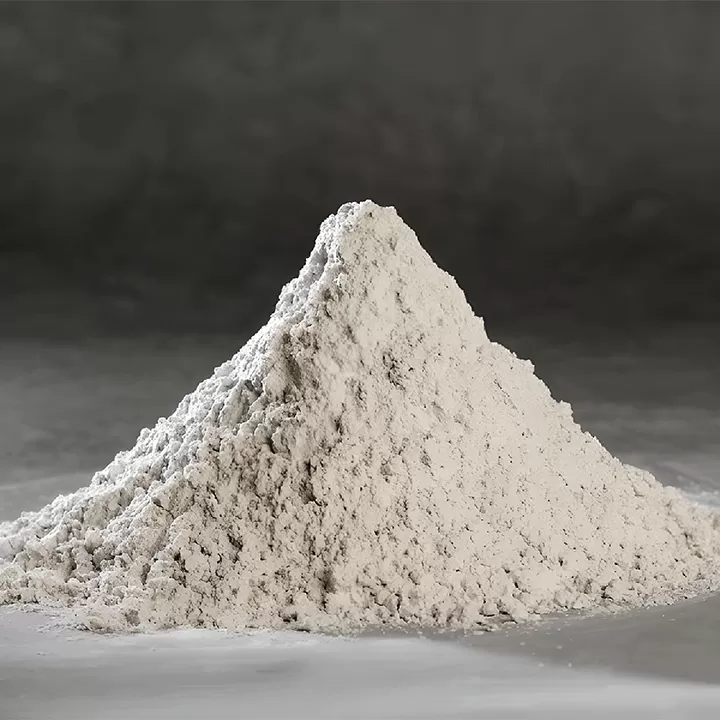
Ultra-fine slag fractions processed by Golden Fortune provide high specific surface areas (Blaine fineness exceeding 600 m²/kg) that act as heterogeneous nucleation seeds. These micro-particles lower the energy barrier required for C-S-H phase nucleation. As a result, the induction period of hydration shortens, accelerating the onset of the acceleration period without generating extreme exothermic temperature spikes.
Accelerated Ion Precipitation: High surface area minerals absorb free calcium ions, encouraging rapid precipitation of early-stage hydrates.
Heat Generation Management: Low inclusion rates prevent thermal stress while boosting initial mechanical strength development.
Ettringite Morphology Control: Micro-dosing influences initial sulfoaluminate reaction paths, contributing to early matrix densification.
Rheological Behavior and Particle Packing Geometry
Fresh concrete performance relies on the spatial distribution of solids within the liquid phase. Introducing specialized mineral additions within a Dosage Range: 0.5–5% of total cementitious content affects both yield stress and plastic viscosity. The mechanism relies on filling the voids present between larger cement grains, an effect governed by packing fraction mathematics.
Standard Portland cement particles typically range from 1 to 100 micrometers. When specialized mineral powders featuring sub-micron or narrow particle size distributions are added, they occupy interstitial spaces previously filled only by water. This displacement releases trapped water back into the suspension, enhancing fluidity without requiring extra mixing water.
Golden Fortune manufactures fine-ground mineral materials engineered to maintain strict particle size distribution metrics. This consistency ensures that mix designs utilizing a low dosage range maintain predictable slump retention, reduced bleeding, and stable thixotropic properties during pumping operations.
Integration within High-Performance and Dry-Mix Mortar Formulations
Industrial applications for ultra-low mineral inclusion span several specialized construction segments. While high-volume slag replacement (30% to 70%) remains standard for mass concrete, low-dosage inclusion offers unique advantages in controlled binder formulations.
Self-Consolidating Concrete (SCC)
In self-consolidating mixes, segregation resistance depends on high matrix stability. Introducing an additive in a Dosage Range: 0.5–5% of total cementitious content increases the low-shear rate viscosity of the paste. This micro-structural adjustment prevents coarse aggregate settlement during transport and placement, maintaining high flowability through dense reinforcement grids.
Dry-Mix Repair Mortars and Tile Adhesives
Pre-packaged mortar products demand precise setting profiles and high bond strength. Adding fine mineral modifiers within the 0.5% to 5% window improves cohesiveness, reduces surface dusting, and enhances trowelability. The fine particles increase contact area at the substrate interface, directly improving mechanical interlocking strength.
Ultra-High-Performance Concrete (UHPC)
UHPC formulations require maximum packing density and minimal water-binder ratios. Micro-additives applied within this percentage range fill ultra-fine voids, working in synergy with polycarboxylate ether (PCE) superplasticizers to achieve fluid workability at water-cement ratios below 0.20.
Compatibility with Chemical Admixtures
The performance of a binder matrix containing a Dosage Range: 0.5–5% of total cementitious content depends heavily on interactions with organic chemical admixtures. Polycarboxylate ether dispersants function by steric hindrance, adsorbing onto cement particle surfaces to prevent flocculation.
Fine mineral additives display different surface charges and adsorption capacities compared to standard Portland cement clinker phases. High-fineness slag materials absorb a portion of free water and superplasticizer molecules. Mix adjustments must account for this interaction to prevent unexpected loss of slump or excessive retardation.
Conducting ambient and temperature-controlled saturation point tests determines the optimum superplasticizer demand. When balanced correctly, the combination of high-efficiency dispersants and micro-dose mineral additions yields superior rheological stability across variable ambient temperatures.
Microstructure Densification and Long-Term Durability
The structural life of concrete structures depends on resistance to fluid ingress. Transport mechanisms such as capillary absorption, permeability, and ionic diffusion are controlled by the pore network architecture within the hardened cement paste.
Secondary pozzolanic and hydraulic reactions driven by fine mineral additives consume free calcium hydroxide—a soluble, mechanically weak hydration byproduct—converting it into stable C-S-H gel. Even when operating within a Dosage Range: 0.5–5% of total cementitious content, the refined pore structure visibly alters long-term performance indicators.
Capillary Pore Refinement: Micro-fillers segment continuous capillary channels, reducing overall water absorption rates.
Chloride Ion Migration Resistance: Densified interfacial transition zones (ITZ) around aggregates impede the ingress of aggressive chloride ions.
Sulfate Attack Mitigation: Consuming free portlandite reduces the formation of expansive gypsum and secondary ettringite when exposed to aggressive groundwater.
Supplying consistent, ultra-pure mineral fractions, Golden Fortune enables concrete producers to meet stringent durability specifications for marine structures, highway infrastructure, and underground foundations.

Quality Control and Mixing Protocols
Achieving predictable results when dosing materials at small percentages relative to total binder weight requires precise operational controls. Minor variations in batching accuracy lead to noticeable shifts in fresh and hardened concrete properties.
Automated batching systems must be calibrated to handle low-mass additions accurately. Dry blending the micro-additive with primary cementitious materials prior to adding water ensures uniform dispersion throughout the batch. Inadequate mixing time can cause localized clustering of fine particles, which reduces workability and creates unhydrated pockets within the matrix.
Frequently Asked Questions
Q1: Why use a Dosage Range: 0.5–5% of total cementitious content
instead of higher replacement rates?
A1: Low dosage inclusion
focuses on physical nucleation, micro-filling, and early hydration acceleration
rather than bulk cement replacement. It offers targeted performance
modifications such as improved workability, cohesion, and early strength without
significantly delaying setting times or altering heat generation profiles
associated with high SCM replacement rates.
Q2: How does this low dosage range affect early-age compressive
strength?
A2: Fine mineral additives within this dosage range
accelerate early hydration kinetics by providing additional nucleation surfaces
for C-S-H gel precipitation. This mechanism typically results in higher 1-day
and 3-day compressive strengths compared to plain Portland cement mixes.
Q3: Does using a dosage in the 0.5% to 5% window increase
superplasticizer demand?
A3: Extremely fine mineral powders have
high surface areas, which can slightly increase water and superplasticizer
demand. However, because the physical filling effect releases entrapped water
from the cement particle network, the net effect on workability is often neutral
or positive when combined with polycarboxylate ether admixtures.
Q4: What batching procedures ensure uniform dispersion of
low-percentage mineral additives?
A4: Dry mixing the micro-additive
with the primary cement and aggregates before introducing water guarantees
optimal spatial distribution. Utilizing high-shear mixers or extending dry
mixing cycles by 15 to 30 seconds prevents agglomeration of fine particles.
Q5: Can this dosage strategy be applied to precast concrete
manufacturing?
A5: Yes. Precast operations benefit from early
strength development and improved surface finish. The accelerated early
hydration allows for faster formwork stripping times, optimizing production
cycles without requiring steam curing.
Request Technical Specifications and Mix Design Support
Formulating high-performance concrete systems requires raw materials processed to exact tolerances. Golden Fortune provides high-grade mineral additives tailored for specialized cementitious applications. For detailed material data sheets, mix design optimization support, or bulk supply inquiries, contact our engineering team to discuss your project requirements.