The progression of modern structural engineering demands binders capable of exceeding the physical and thermodynamic boundaries of ordinary Portland cement. While standard supplementary cementitious materials provide baseline improvements in cost efficiency and embodied carbon, dense infrastructure environments require a far higher threshold of mechanical and durability performance. In response to these demands, the integration of Ultrafine GGBFS has emerged as a fundamental milestone in microstructural engineering, providing concrete technologists with unprecedented control over hydration kinetics, interfacial transition zone porosity, and ultimate compressive resistance.
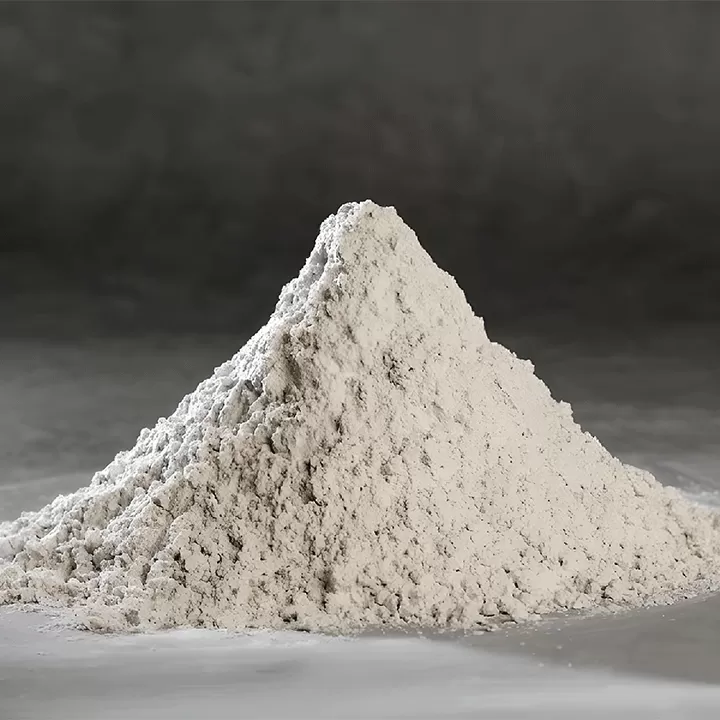
Unlike standard granulated blast furnace slag, which is generally milled to a Blaine fineness between 350 and 450 m²/kg, ultrafine variations undergo specialized classification to achieve surface areas typically exceeding 800 to 1,200 m²/kg. This geometrical transformation substantially elevates chemical reactivity. By transitioning the particle size distribution into a sub-sieve regime where median diameters fall well below five microns, the material shifts from being a moderately reactive latent hydraulic component to an active kinetic participant during early-stage cement hydration.
Particle Size Distribution and Hydration Reaction Kinetics
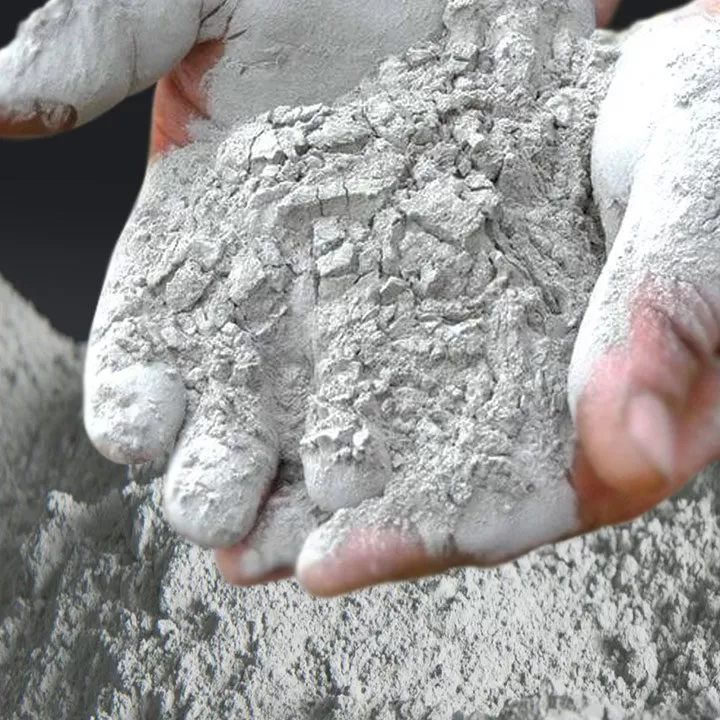
The mechanical performance of mineral admixtures rests on two pillars: physical packing density and chemical reactivity. Standard slag relies heavily on the alkaline activation provided by calcium hydroxide released during primary clinker hydration. Because the particles are relatively coarse, this secondary reaction is diffusion-controlled and proceeds slowly over weeks or months. When the material is processed to ultrafine dimensions, the specific surface area escalates exponentially, shifting the kinetic regime toward immediate surface reaction.
Blaine Fineness vs. Micromorphological Grading
Evaluating an advanced mineral additive solely through the lens of air-permeability Blaine surface area provides an incomplete picture of material behavior. Laser diffraction analysis reveals that the true functional value lies in the steepness of the particle size distribution curve, particularly the d10, d50, and d90 parameters. In optimal formulations, the d50 remains between 2.5 and 4.0 microns, with a d95 strictly controlled below 10 microns.
- Micro-Seeding Effect: The abundance of sub-micron particles provides expansive nucleation sites across the interstitial space, accelerating the crystallization of calcium silicate hydrate phases directly from the pore fluid.
- Interparticle Packing Efficiency: The microscopic grains locate themselves within the interstitial voids between Portland cement grains, displacing trapped water into the bulk paste and enhancing initial suspension fluidics.
- Hydration Velocity: With a substantially elevated reaction boundary, the dissolution of the glassy aluminosilicate network commences within hours rather than days, resolving early-age strength deficits historically associated with conventional ground slag.
Secondary C-S-H Gel Densification
Primary Portland cement hydration yields calcium silicate hydrate (C-S-H) along with free calcium hydroxide, structurally designated as portlandite. Portlandite manifests as large, hexagonal plate-like crystals that exhibit minimal shear resistance and high solubility under acidic or aqueous exposure. The introduction of Ultrafine GGBFS systematically alters this mineralogical equilibrium.
The vitreous silica and alumina within the ultrafine slag react aggressively with the liberated calcium hydroxide, converting low-strength portlandite into high-density, secondary C-S-H and calcium aluminosilicate hydrate (C-A-S-H) gel structures. This reaction drastically refines the paste matrix. Mercury intrusion porosimetry indicates that capillary voids larger than 50 nanometers are largely eliminated, replaced by sub-gel pores that preclude bulk fluid transport.
Interfacial Transition Zone Densification and Permeability Suppression
In standard structural concrete, the interfacial transition zone (ITZ)—the narrow boundary layer surrounding coarse aggregate particles—represents the mechanical weak link. Bleeding water accumulates under aggregate surfaces during compaction, establishing a localized zone with an elevated water-to-cementitious ratio, coarse porosity, and an overabundance of aligned portlandite crystals. This continuous network dictates the macro-permeability of the composite.
Because of its micro-dimensional scale, the ultrafine material migrates directly into these boundary regions. The fine particulates eliminate localized bleed-water channels and consume portlandite at the exact interface. The resulting ITZ achieves a degree of structural homogeneity that mirrors the bulk paste, transforming aggregate boundaries from high-permeability pathways into contiguous load-bearing networks.
Chloride Ion Immobilization and Diffusion Resistance
Marine civil works and coastal bridge substructures face continuous chemical attack driven by chloride diffusion. Once free chloride ions traverse the concrete cover and reach reinforcing steel, passivity breakdown initiates accelerated cross-sectional loss. The transport rate of these corrosive species is governed directly by the tortuosity of the capillary matrix.
The structural refinement achieved through ultrafine additions introduces severe constriction throughout the transport pathways. Physical pore diameter reduction is matched by enhanced chemical binding capacity. The heightened alumina content present in the slag glass structure integrates chlorides into complex double salts, primarily Friedel's salt. This dual mechanism—physical tortuosity coupled with chemical binding—drops the apparent chloride diffusion coefficient to fractions of values observed in conventional clinker mixes.
Mitigation of Internal Expansion Reactions
Long-term degradation driven by external sulfates or alkali-silica reactions (ASR) stems from fluid penetration interacting with reactive aggregates or aluminate phases. In high-sulfate soils and marine environments, secondary ettringite formation and thaumasite formation induce devastating internal expansion forces.
- Sulfate Resistance: By converting calcium hydroxide into stable silicate hydrates, the chemical base required for gypsum and secondary ettringite precipitation is removed from the system.
- Alkali Complexation: The low basicity ratio of the supplementary material enables the C-S-H gel to absorb and lock alkali ions (sodium and potassium) within its nanostructure, preventing them from attacking reactive siliceous minerals in aggregates.
- Thermal Stress Regulation: Mass concrete placements benefit from the modulated heat liberation profile. While early reactivity is higher than standard slag, the cumulative thermal output remains significantly below pure Portland cement formulations, suppressing thermal contraction micro-fissuring.
Rheological Behavior and Superplasticizer Compatibility
The introduction of powders possessing surface areas above 800 m²/kg naturally challenges the rheological balance of wet concrete mixes. High specific surface areas consume free mixing water to wet particulate surfaces, which can substantially decrease workability if the chemical admixture balance is miscalculated. Industrial processors such as Golden Fortune employ closed-circuit classification technologies that produce spherical-to-sub-angular grain shapes, minimizing mechanical friction between particles during shear deformation.
Electrostatic and steric interactions must be carefully managed using third- and fourth-generation polycarboxylate ether (PCE) superplasticizers. Polymers featuring high-density grafting architectures and medium-to-long side chains provide optimal steric dispersion. When the superplasticizer dosage is accurately calibrated, the micro-packing of the ultrafine grains frees void-entrapped water, producing concrete formulations that display exceptional flowability, self-leveling characteristics, and high resistance to static segregation.
Specialized High-Performance Structural Applications
The physical-chemical attributes of this material have established its necessity across diverse engineering sectors where failures in material continuity cannot be tolerated.
Ultra-High-Performance Concrete (UHPC)
In UHPC production, coarse aggregate is deliberately excluded, leaving mechanical integrity dependent upon packing density optimization from the micro-scale to the macro-scale. Historically, silica fume has served as the default micro-filler. However, silica fume introduces significant operational challenges, including intense rheological stickiness, high water demands, and elevated admixture saturation dosages. When deployed within these ultra-dense particle matrices, the particulate matrix of Ultrafine GGBFS fills the voids between unhydrated cement particles and quartz powders smoothly, delivering compressive strengths surpassing 150 MPa without generating unmanageable paste viscosity.
Micro-Fine Grouting and Geotechnical Seepage Cut-Offs
Standard cement slurries cannot penetrate soil formations or fine rock fissures featuring aperture widths below 100 microns due to grain bridging and filter-cake formation. Chemical grouts, while possessing low viscosity, raise permanent environmental concerns regarding ground and water table contamination.
Grouting slurries formulated with sub-five-micron blast furnace slag flow effortlessly into microscopic ground fractures, crystalline fault systems, and fine-grain soils. Once in place, hydration produces an impermeable, chemically inert subterranean barrier ideal for dam foundation stabilization, underground tunnel sealing, and hazardous plume containment.
Mass Pour Marine Foundations
Deep-water bridge piers, offshore wind turbine gravity foundations, and submerged drydock structures involve high volume pours where core heat management and hyper-durability must be realized simultaneously. Utilizing the mineral admixture allows project engineers to replace up to 60-70% of high-heat Portland clinker without compromising 28-day and 56-day target design strengths, ensuring permanent protection against aggressive salt-water leaching.
Manufacturing Specifications and Quality Control Criteria
Not all blast furnace residues can yield functional ultrafine binders. The starting raw material must comprise rapidly water-quenched, high-glass vitreous slag. The vitrification degree must verify above 90% via X-ray diffraction analysis to ensure an inherently reactive chemical network.
Through rigorous batch testing, Golden Fortune guarantees consistent glass content, tight basicity ratios—governed by the combined percentages of calcium and magnesium oxides over silicon and aluminum oxides—and low loss on ignition (LOI). Grinding procedures must preserve particle integrity while avoiding thermal dehydration of moisture-sensitive phases. The final supply must consistently satisfy strict international criteria, such as ASTM C989 Grade 120 or EN 15167 parameters, verified across every physical production lot.
Frequently Asked Questions
How does Ultrafine GGBFS differ from standard slag cement?
The primary distinction lies in particle size distribution and reaction dynamics. Conventional slag cement displays a Blaine fineness of 350 to 450 m²/kg and hydrates slowly, often requiring extended wet-curing to reach acceptable early mechanical strengths. In contrast, ultrafine variations feature Blaine values over 800 m²/kg, with median particle sizes around 3 to 4 microns. This increased fineness accelerates hydraulic and pozzolanic reactions, delivering high early compressive values alongside superior capillary pore refinement.
Can this material fully replace silica fume in high-strength concrete mixes?
In many high-performance and UHPC systems, it can replace silica fume either partially or entirely. While providing equivalent or superior micro-pore filling and portlandite-binding performance, it imparts lower yield stress and plastic viscosity to the fresh paste. This results in concrete that is easier to pump, place, and finish, while avoiding the extreme admixture dosages often demanded by silica fume mixes.
What impact does high fineness have on early-age shrinkage and cracking?
High-fineness mineral additions increase the rate of autogenous shrinkage if water-to-binder ratios fall below 0.30 without internal curing mechanisms. However, the total system shrinkage is counterbalanced by the reduced water demand achieved via optimized packing density. In typical high-performance mixes, the elimination of thermal cracking through lower clinker content outweighs autogenous contraction stresses, yielding a sound, crack-free matrix.
What is the typical replacement ratio relative to Portland cement?
Optimal replacement levels depend on specific project objectives. In standard high-performance concrete targeting enhanced chemical resistance and strength, replacement rates generally range from 15% to 35% of total binder mass. For mass concrete foundations or specialized grouting slurries requiring minimal heat of hydration and deep permeation, replacement levels can be engineered upwards of 50% to 70%.
How does the material perform in low-temperature curing environments?
Like all latent hydraulic binders, reaction rates decrease at temperatures below 10°C. However, because its specific surface area is substantially larger than that of ordinary slag, it retains higher kinetic reactivity under cooler conditions. In cold environments, the use of modest chemical activation (such as soluble silicates, sulfates, or temperature-controlled curing regimes) maintains standard development cycles.
Project Specification and Technical Supply Inquiries
Optimizing high-performance concrete mixtures for critical infrastructure demands absolute raw material consistency, precise particle size distributions, and reliable global distribution logistics. Selecting appropriate binder parameters requires thorough alignment between design targets, rheological limits, and service-life projections.
Project managers, structural engineers, and ready-mix producers seeking batch-certified consignments of Ultrafine GGBFS can coordinate directly with our application engineers. The technical engineering division at Golden Fortune provides comprehensive mix design consultations, detailed material safety and compliance datasheets, and laboratory testing samples tailored to international construction criteria. Submit your project requirements, target strength classes, and exposure parameters to our technical sales desk to receive customized chemical batch data and institutional procurement quotations.