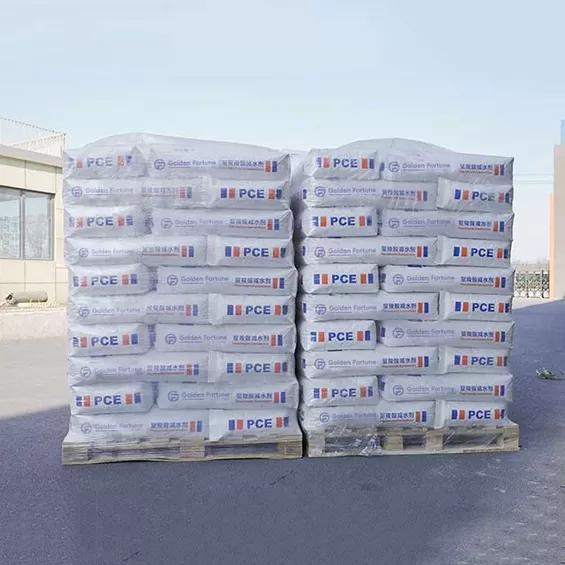
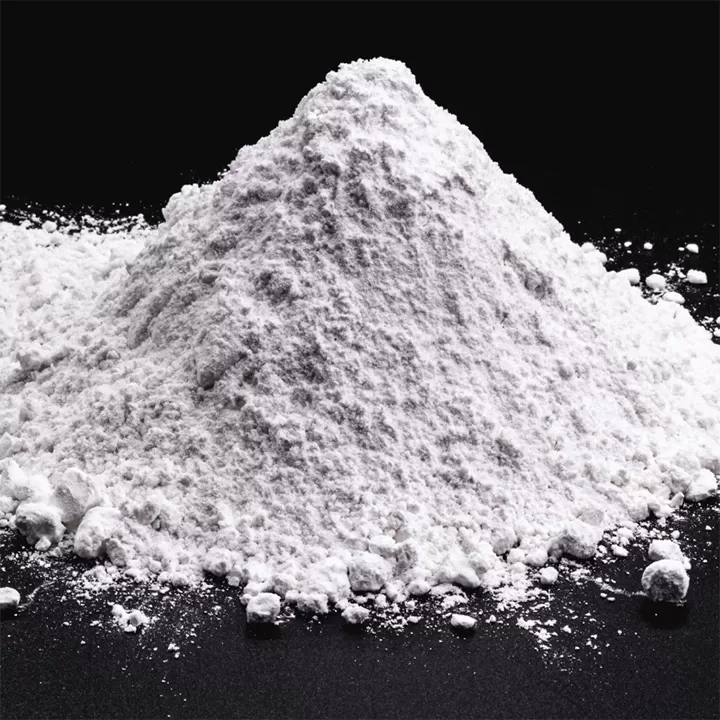
The manufacturing of Ground Granulated Blast Furnace Slag (GGBFS or GGBS) represents a major advancement in industrial ecology. By transforming a byproduct of iron manufacturing into a high-value cementitious material, the construction industry has found a way to enhance concrete durability while reducing its carbon footprint. The process of ggbs production requires precise control over chemical composition, quenching speeds, and grinding fineness. Golden Fortune operates at the intersection of these technical requirements, ensuring that the final output meets international standards for reactivity and particle size distribution.
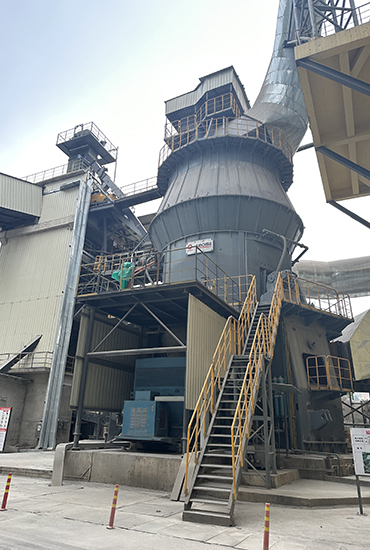
The Genesis of Slag: From Molten Iron to Granulated Raw Material
High-quality GGBS begins in the blast furnace. As iron ore, coke, and limestone flux react at temperatures exceeding 1,500°C, the non-metallic components form a liquid slag that floats atop the molten iron. This slag primarily consists of silicates and aluminosilicates of calcium. To ensure the slag has latent hydraulic properties, it must be rapidly cooled, or quenched, using high-pressure water jets. This process, known as granulation, prevents the formation of a crystalline structure and instead creates a glassy, non-crystalline material with high internal energy.
The glass content of the granulated slag is the primary indicator of its potential reactivity. Industry standards generally require a glass content of at least 90% to ensure that the material will react effectively when combined with water and an activator, such as the calcium hydroxide produced during Portland cement hydration. If the cooling process is too slow, the slag will crystallize into an inert material, rendering it useless for cementitious applications.
Mechanical Processing and Grinding Technology
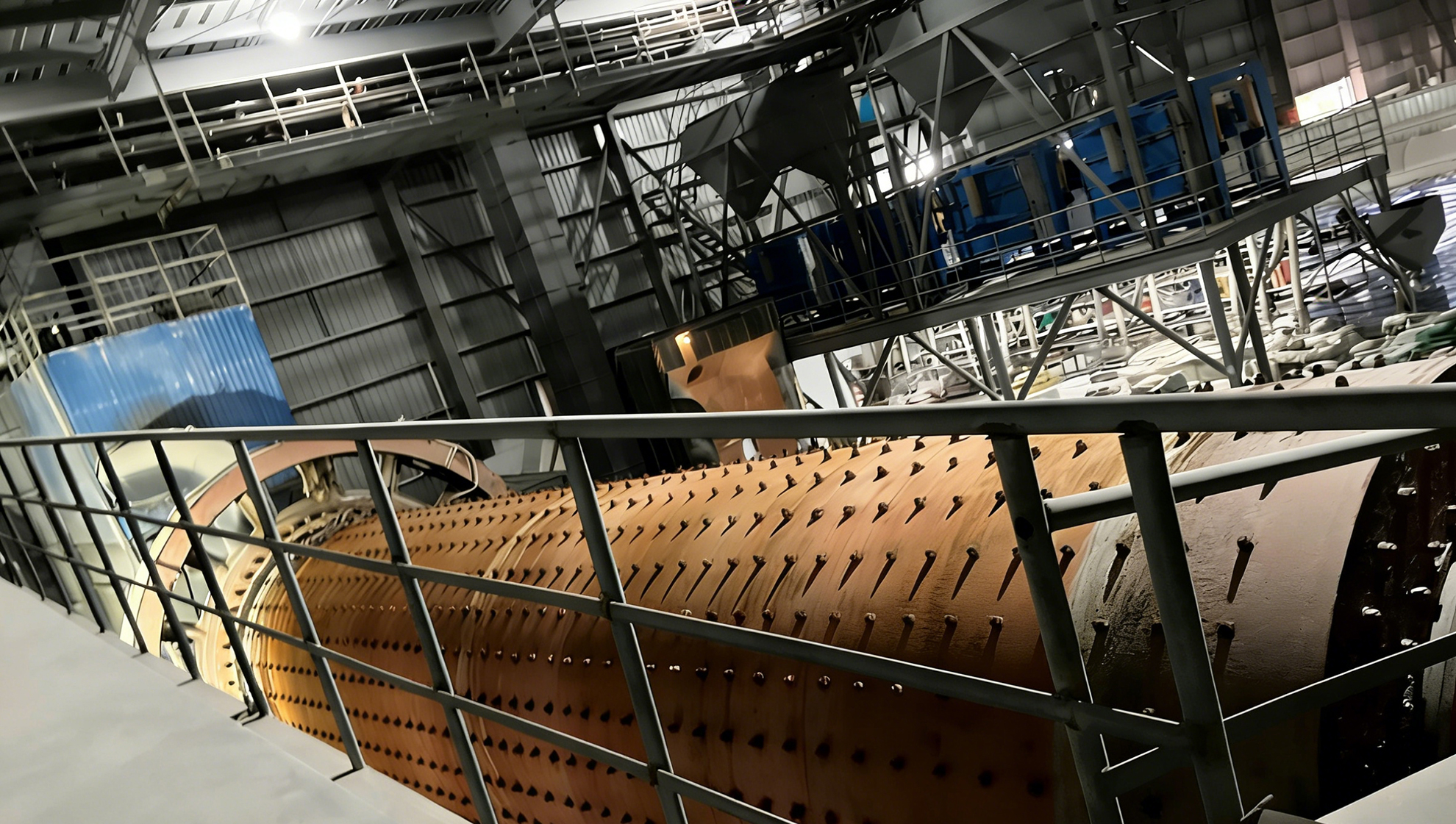
The transition from raw granulated slag to a reactive powder is the most energy-intensive phase of ggbs production. Granulated slag is notoriously abrasive and harder to grind than cement clinker. Achieving the necessary fineness requires specialized milling equipment that can handle high wear while maintaining a consistent particle size distribution (PSD).
Vertical Roller Mills (VRM) vs. Ball Mills
Historically, ball mills were the standard for grinding slag. However, modern facilities have largely transitioned to Vertical Roller Mills. VRMs integrate drying, grinding, and classifying into a single unit. Because granulated slag often contains 10% to 15% moisture, the ability to use hot exhaust gases to dry the material during the grinding process is a major technical advantage. Furthermore, VRMs allow for precise control over the Blaine value—the measure of the specific surface area of the powder. A higher Blaine value typically correlates with higher early-age strength in concrete, although it also increases the water demand of the mix.
Internal Classification: High-efficiency separators within the mill ensure that only particles meeting the micron-scale requirements exit the system, while oversized particles are returned for further grinding.
Energy Management: Modern mills utilize variable frequency drives (VFDs) to optimize the grinding force based on the feed rate and material hardness.
Wear Protection: Given the abrasive nature of slag, the use of high-chromium cast iron liners is necessary to maintain mill uptime and prevent iron contamination of the GGBS.
By optimizing these mechanical parameters, Golden Fortune ensures that the material achieves the specific surface area needed for rapid chemical activation in concrete mixtures.
Chemical Activation and the Hydration Mechanism
GGBS is not a standalone binder in most applications; it is a latent hydraulic material. This means it requires an activator—usually the lime (calcium hydroxide) released during the hydration of Ordinary Portland Cement (OPC). When GGBS is mixed with water and OPC, the alkalinity of the pore solution breaks down the glassy Al-Si-O bonds in the slag. This initiates a secondary reaction that forms calcium silicate hydrate (C-S-H) gel, the same compound responsible for strength in cement, but with a denser microstructure.
The Role of Chemical Moduli
The reactivity of the slag is often predicted using chemical ratios or "moduli." The most common is the basicity index: (CaO + MgO) / (SiO2 + Al2O3). A ratio greater than 1.0 indicates a "basic" slag with high hydraulic potential. The alumina content (Al2O3) also plays a pivotal role in early-age strength development, as it contributes to the formation of calcium aluminosilicate hydrate (C-A-S-H) phases. Understanding these chemical nuances is fundamental to ggbs production, as it allows producers to predict how the slag will behave in different cement blends.
Addressing Industry Pain Points: Moisture and Consistency
One of the most significant challenges in the supply chain is the management of moisture. Raw granulated slag is often stored in open-air stockpiles, where it can absorb rainwater. High moisture levels increase the energy required for drying during the milling process and can lead to "clumping" in storage silos. Producers solve this by utilizing covered storage and automated moisture monitoring systems that adjust the mill's heat input in real-time.
Consistency is another major concern for concrete producers. Variation in the chemical composition of the iron ore or the operation of the blast furnace can result in slag with varying reactivity. To mitigate this, advanced ggbs production facilities employ X-ray fluorescence (XRF) analyzers to monitor the elemental composition of the slag as it arrives. This data allows for the blending of different slag batches to create a uniform final product that meets the specific performance requirements of the end-user.
Applications in High-Performance Concrete
The use of GGBS is favored in projects where durability is as important as structural strength. Because the C-S-H gel produced by slag hydration is finer and more distributed than that of pure OPC, the resulting concrete has a much lower permeability. This provides several technical advantages:
Chloride Resistance: GGBS concrete is highly resistant to the ingress of chloride ions, making it the preferred choice for marine structures, bridges, and coastal infrastructure.
Sulfate Resistance: The reduction in calcium hydroxide and the presence of stable aluminate phases make GGBS concrete less susceptible to sulfate attack in soil and groundwater.
Mitigation of Alkali-Silica Reaction (ASR): Slag helps consume the alkalis that would otherwise react with reactive aggregates, preventing the expansive gels that cause concrete to crack over time.
Low Heat of Hydration: In mass concrete pours, such as dam foundations or large raft slabs, the slower heat release of GGBS prevents thermal cracking, ensuring the structural integrity of the monolith.
These performance benefits demonstrate why the standards for ggbs production must be so stringent. Even minor deviations in fineness or glass content can impact the long-term durability of these massive infrastructure projects.
Environmental Stewardship and the Circular Economy
The environmental profile of GGBS is one of its strongest attributes. The production of one ton of Portland cement releases nearly one ton of CO2 into the atmosphere. In contrast, the processing of slag into GGBS requires significantly less energy and produces a fraction of the emissions. By replacing up to 70% of cement with GGBS in certain applications, the construction industry can significantly lower the embodied carbon of its projects.
Furthermore, the use of slag reduces the need for quarrying limestone, preserving natural landscapes and reducing the environmental impact of cement kilns. Golden Fortune remains committed to these principles of sustainability, recognizing that the efficiency of the grinding process and the quality of the final powder are directly linked to the broader goals of green building and carbon neutrality.
The Technical Future: Ultrafine GGBS
The industry is currently moving toward the production of ultrafine slag, where the particle size is reduced even further to the sub-micron level. Ultrafine GGBS acts as both a chemical binder and a physical filler, packing the voids between larger cement particles. This results in "ultra-high-performance concrete" (UHPC) with compressive strengths that can exceed 150 MPa. Achieving this level of fineness requires advanced classification technology and specialized grinding aids that prevent particle agglomeration during the milling process.
As the demand for more resilient and sustainable infrastructure grows, the importance of ggbs production will only increase. By refining the mechanical and chemical processes involved, manufacturers can provide a material that meets the sophisticated needs of modern structural engineering.
Frequently Asked Questions
Q1: What is the ideal glass content for high-quality GGBS?
A1: For optimal hydraulic reactivity, the glass content should ideally be above 90% and certainly no lower than 85%. This glassy state is achieved through rapid water quenching of the molten slag.
Q2: How does GGBS affect the setting time of concrete?
A2: GGBS generally extends the initial and final setting times of concrete compared to pure Portland cement. This is advantageous in hot weather or for large pours, as it allows more time for placement and finishing, though it may require adjustments in cold weather.
Q3: What is the typical replacement level of GGBS in concrete?
A3: Replacement levels typically range from 30% to 50% for general construction. For specialized applications like marine environments or mass concrete, replacement levels can reach 70% or higher, depending on local building codes and performance requirements.
Q4: Why is the Blaine value so important in the production process?
A4: The Blaine value measures the fineness of the powder. A higher Blaine value increases the surface area available for chemical reaction, leading to faster strength development and a denser concrete matrix.
Q5: Can GGBS be used in sulfate-rich soils?
A5: Yes, GGBS is highly effective in resisting sulfate attack. It reduces the amount of tricalcium aluminate and calcium hydroxide in the concrete, which are the components most vulnerable to reacting with sulfates.
Connect with GGBS Specialists
Optimizing your concrete mix with high-quality supplementary cementitious materials requires a deep understanding of slag chemistry and particle dynamics. Our team provides technical support and high-grade materials for global infrastructure projects. Contact us today to discuss your specific requirements or to submit an inquiry regarding our current production capabilities and technical specifications.