Modern concrete engineering faces two opposing challenges. Infrastructure projects require exceptional early strength and long-term durability. At the same time, environmental regulations demand deep reductions in clinker consumption and carbon intensity. Standard Portland cement cannot solve both challenges alone.
Combining industrial by-products offers a practical way forward. When engineers pair Silica Fume with Ground Granulated Blast-Furnace Slag (GGBFS), the two materials overcome each other's weaknesses. This ternary blend forms a dense, durable matrix that outperforms binary cement mixes.
Looking to source high-grade industrial minerals for high-performance concrete? Golden Fortune supplies rigorously tested Silica Fume and metallurgical additives worldwide. Contact our engineering team today to request samples, bulk pricing, or custom formulation support.
The Material Science: Why Silica Fume Complements GGBFS
To understand why this ternary blend works, you must look at how each material behaves during hydration. Ordinary Portland cement (OPC) hydrates quickly, generating heat and releasing calcium hydroxide, or CH. Silica Fume and GGBFS consume this compound in different ways and at different speeds.
Pozzolanic Reaction of Silica Fume
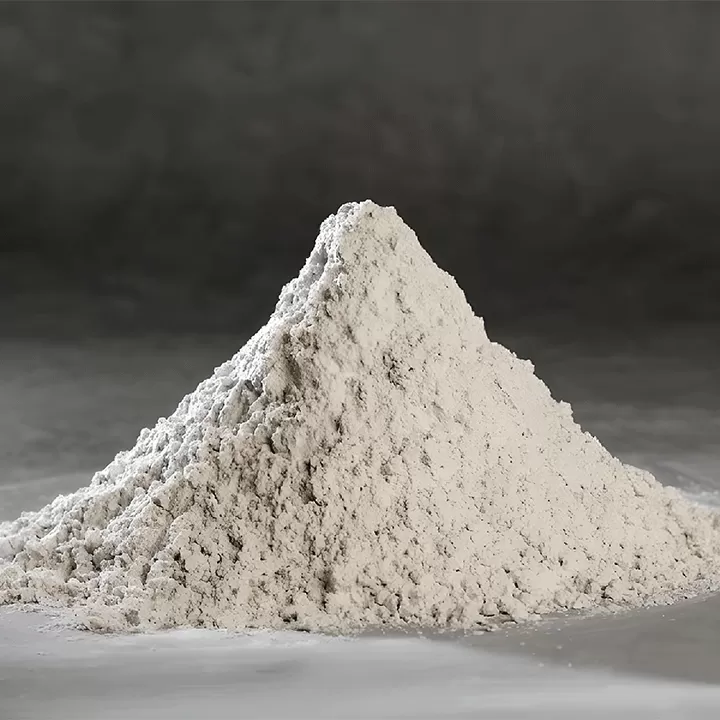
Silica Fume consists of amorphous silicon dioxide (SiO2) collected as a by-product of silicon and ferrosilicon alloy production. These spherical particles average 0.1 to 0.2 microns in diameter—roughly 100 times smaller than standard cement grains.
Because of this high surface area and non-crystalline structure, Silica Fume reacts almost immediately with water and free calcium hydroxide. According to guidelines from the American Concrete Institute, this pozzolanic reaction accelerates within the first 24 to 72 hours:
Ca(OH)2 + SiO2 + H2O → C-S-H (Calcium Silicate Hydrate)
The resulting secondary C-S-H gel fills capillary pores that would otherwise hold water or allow aggressive chemicals to penetrate. This rapid reaction gives ternary concrete its high early strength.
Micro-Filler Effect of Ultra-Fine Particles
Beyond chemical reactivity, Silica Fume acts as an efficient physical filler. Fresh cement pastes contain microscopic voids between irregular clinker particles. Silica Fume particles migrate into these voids, displacing water and packing the matrix more tightly.
This packing action reduces bleeding and segregates fewer aggregate particles. It also densifies the interfacial transition zone (ITZ)—the microscopic region surrounding aggregate stones that typically serves as the weakest link in concrete.
Latent Hydraulic Activity of GGBFS
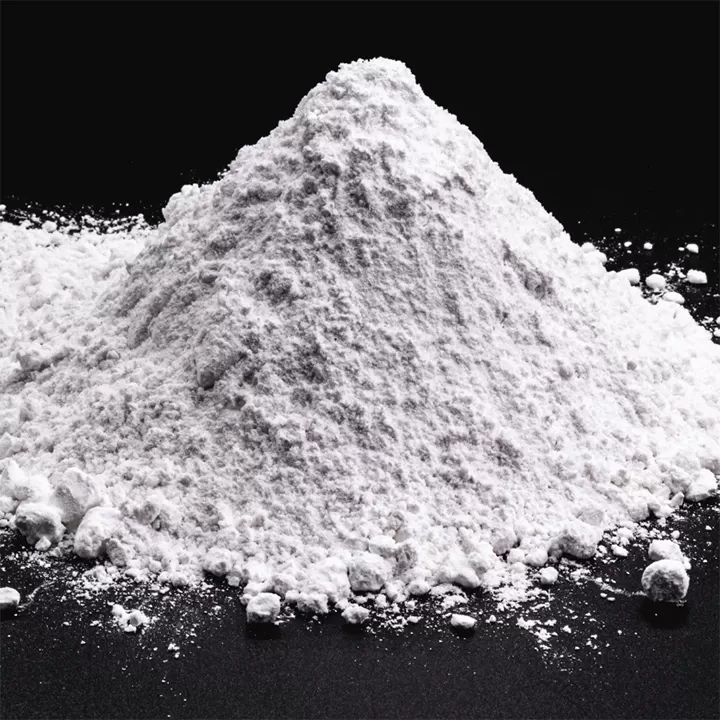
Ground Granulated Blast-Furnace Slag behaves differently than Silica Fume. Quenched rapidly from iron blast furnaces, GGBFS contains calcium oxide, silica, alumina, and magnesia. Unlike natural pozzolans, it possesses latent hydraulic properties.
GGBFS does not rely solely on calcium hydroxide to hydrate. When exposed to an alkaline activator—such as the alkalis and hydroxides released by hydrating Portland cement—GGBFS reacts directly with water to form its own C-S-H and calcium aluminate hydrate phases.
This hydraulic reaction proceeds slowly. Where Silica Fume finishes most of its chemical work within 28 days, GGBFS continues to hydrate for months or even years. The slag continuously densifies the internal microstructure long after construction ends.
Core Performance Advantages of the Ternary System
Using Silica Fume or GGBFS by itself forces engineers to accept trade-offs. Silica Fume increases early strength but reduces flowability and increases costs. GGBFS cuts material costs and improves workability, but it slows early strength development. Combining both materials eliminates these drawbacks.
Balancing Strength Development: Early vs. Ultimate Strength
Slow early-age strength gain limits the use of high-volume GGBFS in fast-track construction projects. Contractors cannot strip formwork or apply post-tensioning when concrete contains 50% slag replacement without waiting days for adequate curing.
Adding Silica Fume solves this issue:
- 1 to 7 Days: Silica Fume reacts rapidly with cement hydration products, restoring early compressive strength to levels matching or exceeding pure OPC mixtures.
- 28 to 90 Days: GGBFS takes over the hydration process. It consumes lingering calcium hydroxide and refines remaining pores, driving ultimate compressive strength higher.
This balanced profile allows precasters and structural contractors to strip forms on schedule while securing superior 90-day core strength.
Workability and Rheology Optimization
Silica Fume possesses an exceptionally high specific surface area (typically 15,000 to 25,000 m2/kg). Adding it to fresh concrete creates high water demand. Without heavy doses of superplasticizer, mix designs become sticky, difficult to pump, and hard to finish.
GGBFS counteracts this stickiness. Slag particles feature a smooth, glassy surface and a particle size distribution similar to or slightly finer than Portland cement. These smooth grains produce a "ball-bearing" effect in fresh paste.
When used together, GGBFS restores workability and slump retention without requiring extreme dosages of polycarboxylate ether (PCE) superplasticizers. The mixture pumps easily, self-consolidates under lower energy, and finishes cleanly.
Controlling Heat of Hydration in Mass Pours
Mass concrete foundations, bridge piers, and dam walls struggle with thermal cracking. High cement contents generate rapid exothermic reactions, driving internal core temperatures far higher than the surface.
GGBFS generates substantially less hydration heat than pure Portland cement. Replacing 40% to 50% of OPC with slag flattens the thermal curve, spreading temperature rise over several days.
Incorporating a modest addition of Silica Fume (4% to 7%) maintains the necessary early mechanical properties at the structural perimeter without causing dangerous core temperature spikes. This balance reduces the risk of thermal cracking in thick sections.
Durability in Aggressive Environments
Modern structures must survive salt water, industrial chemicals, and fluctuating weather. Ternary blends containing Silica Fume and GGBFS provide exceptional protection against these degradation mechanisms.
Chloride Penetration Resistance
Corrosion of steel reinforcement drives most marine concrete failures. Deicing salts and seawater supply chloride ions that penetrate through porous paste, depassivate steel rebar, and initiate pitting corrosion.
The combination of Silica Fume and GGBFS interrupts this process through two complementary mechanisms:
- Pore Refinement: Silica Fume cuts capillary pore connectivity within days. The refined microstructure prevents bulk diffusion of saltwater.
- Aluminate Binding: GGBFS supplies reactive alumina. These aluminates bind free chloride ions into stable Friedel's salt (calcium chloroaluminate), locking them away from the rebar.
According to standard ASTM International testing protocols, such as ASTM C1202 (Rapid Chloride Permeability Test), this ternary system routinely scores in the "Very Low" permeability class (under 1,000 Coulombs).
Mitigating Alkali-Silica Reaction (ASR)
Alkali-Silica Reaction occurs when concrete alkalis (sodium and potassium) react with reactive forms of silica inside aggregate rock. The resulting gel absorbs water, expands, and tears the concrete apart from within.
Silica Fume and GGBFS neutralize ASR risk through distinct chemical pathways:
- Silica Fume consumes free alkalis within the pore solution quickly, dropping the pH before the aggregates can react.
- GGBFS replaces high-alkali cement clinker, reducing the total alkali load in the system.
- The refined pore matrix prevents external moisture from feeding any secondary gels that do form.
Resistance to Sulfate Attack and Industrial Acids
Groundwater containing magnesium or sodium sulfate reacts with free calcium hydroxide and hydrated calcium aluminate to form expansive compounds: ettringite and gypsum. These expansive crystals crack and spall hardened concrete.
The ternary blend protects the matrix effectively. Silica Fume consumes the free calcium hydroxide required to form gypsum. Concurrently, GGBFS dilutes the tricalcium aluminate (C3A) phase of the clinker, eliminating the fuel needed for delayed ettringite formation. Industrial floors, wastewater sumps, and foundation piles cast with this blend resist chemical degradation for decades.
Recommended Proportions and Mix Design Guidelines
Finding the right balance requires evaluating specific project constraints, such as ambient temperature, formwork stripping schedules, and exposure classes. The table below outlines standard proportions for high-performance applications.
| Application Type | Portland Cement (OPC) | GGBFS Content | Silica Fume Content | Target w/cm Ratio |
|---|---|---|---|---|
| Marine & Coastal Infrastructure | 50% – 60% | 30% – 40% | 6% – 8% | 0.32 – 0.38 |
| High-Rise Columns & Shear Walls | 55% – 65% | 25% – 35% | 8% – 10% | 0.28 – 0.34 |
| Mass Concrete Foundations | 40% – 50% | 45% – 55% | 3% – 5% | 0.38 – 0.44 |
| Abrasion-Resistant Industrial Pavements | 60% – 70% | 20% – 30% | 7% – 10% | 0.30 – 0.36 |
Industrial mineral quality directly dictates structural performance. Working with reliable suppliers ensures consistent results. For instance, Golden Fortune provides high-purity undensified and densified Silica Fume with consistent amorphous silicon dioxide levels exceeding 92%, making quality control simple across massive batch volumes.
When working with these blends, observe several practical mixing practices:
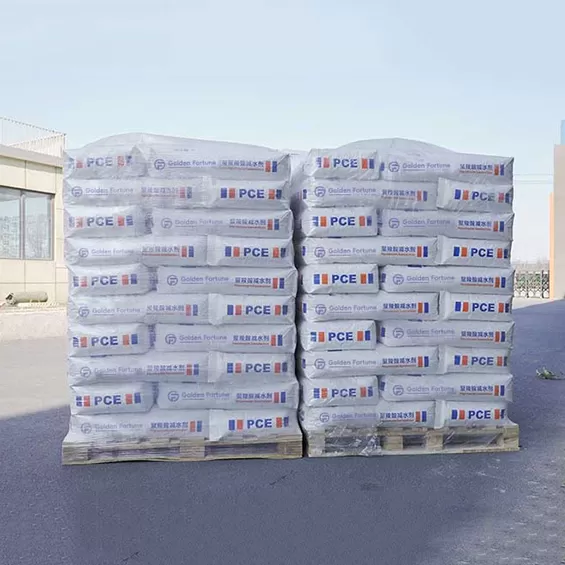
- Chemical Admixture Compatibility: Always run lab trial batches to evaluate superplasticizer compatibility. Polycarboxylate ether (PCE) admixtures work best to disperse the fine particles without causing excessive retardation.
- Mixing Sequence: Add Silica Fume with the coarse aggregates and initial water to disperse agglomerations before charging cement, slag, and chemical admixtures.
- Curing Protocols: Because Silica Fume eliminates bleed
water, fresh concrete is susceptible to plastic shrinkage cracking. Apply
fogging, evaporation retarders, or wet curing immediately following screeding
and floating.
Environmental and Economic Sustainability
Every ton of Portland cement manufactured produces approximately 0.8 to 0.9 tons of carbon dioxide emissions. The concrete industry faces intense regulatory pressure to reduce this embodied carbon profile.
Replacing 30% to 55% of Portland cement with industrial co-products creates immediate environmental gains. Both GGBFS and Silica Fume are secondary materials. Their inclusion diverts industrial waste from landfills while lowering the environmental impact of modern construction.
Long-term lifecycle costs also favor this mix. Although Silica Fume commands a higher initial price per ton than regular cement, its inclusion extends asset service life. Infrastructure built with ternary concrete avoids early repairs, corrosion remediation, and premature decommissioning, saving asset owners money over decades of operation.
Frequently Asked Questions
Q1: Why not use Silica Fume alone without GGBFS?
A1: Using Silica Fume as the sole supplementary cementitious material significantly increases water demand and causes mix stickiness. This often demands high superplasticizer dosages and elevates the risk of autogenous shrinkage cracking. Adding GGBFS moderates rheology, improves workability via its ball-bearing effect, lowers overall mixture cost, and controls autogenous shrinkage.
Q2: What is the optimal replacement level of Silica Fume in ternary cement?
A2: For most structural applications, the optimal replacement level ranges between 5% and 8% by weight of total cementitious materials. Going above 10% typically produces diminishing strength returns while making the fresh concrete harder to place and finish without excessive chemical admixtures.
Q3: How does this ternary blend affect the curing requirements of concrete?
A3: Ternary systems demand disciplined, immediate moist curing. Silica Fume virtually eliminates bleed water at the surface, which accelerates plastic shrinkage cracking under hot, dry, or windy conditions. Begin moist curing or apply chemical curing membranes immediately after final surface finishing, and maintain continuous moist conditions for at least 7 days.
Q4: Can ternary mixes containing Silica Fume and GGBFS achieve high early strength in cold weather?
A4: Yes, provided the mix is adjusted correctly. While GGBFS alone reacts sluggishly in cold conditions, the rapid hydration of Silica Fume accelerates early setting. In low-temperature environments, engineers typically adjust proportions to 5%–8% Silica Fume and cap the GGBFS content at 20%–25%, alongside appropriate accelerators or warm batch water.
Q5: Does this blend affect the air-void system required for freeze-thaw durability?
A5: Yes. The fine particles of Silica Fume and GGBFS adsorb air-entraining admixtures (AEA). This means you generally need a higher dosage of AEA to secure the target air content (typically 5% to 7%). Always run field tests to confirm the spacing factor and specific surface of the entrained air voids under project mixing conditions.
Choose the Right Material Partner for Your Project
Achieving predictable performance with advanced ternary concrete requires consistent raw materials. Impurities, unburned carbon, or variable grain sizes in your mineral admixtures can disrupt water demand, slow setting times, and hurt structural strengths.
At Golden Fortune, we supply high-performance Silica Fume and complementary industrial minerals to concrete producers, precast manufacturers, and major infrastructure contractors worldwide. Our materials comply with ASTM C1240 and EN 13263 standards, ensuring consistent performance from the laboratory to the jobsite.
Ready to optimize your cement formulations, reduce clinker consumption, or engineer high-strength mixes? Submit an inquiry today to request a quote, review our Technical Data Sheets (TDS), or speak directly with our concrete materials specialists.