Specifying binders for ultra-high-performance projects requires a balance between ultimate compressive strength, rheological stability, and strict carbon limits. Ready-mix batching plants and structural engineers face stringent targets under modern environmental frameworks.
At Golden Fortune, we work closely with ready-mix producers and project engineers to optimize high-performance slag-blended systems. Contact our engineering team today to review your raw materials or request a trial formulation for your upcoming structural bids.
Designing high-grade mixes such as C80, C85, and C110 concrete demands precision beyond standard mix methodologies. Incorporating Ground Granulated Blast-Furnace Slag (GGBS) provides a practical route to manage core temperatures, refine pore systems, and hit target strengths reliably.
1. Industry Drivers: Why C80-C110 Concrete Requires GGBS
Developing ultra-high-strength mixes purely on Ordinary Portland Cement (OPC) creates severe structural and chemical vulnerabilities. GGBS transforms these formulations from brittle, high-risk masses into durable, dense matrices.
Decarbonization Pressures and CBAM Compliance
Modern infrastructure requires aggressive carbon accounting. Regulatory mechanisms such as the EU Carbon Border Adjustment Mechanism (CBAM) and regional green building certifications penalize high clinker factors. Replacing 30% to 50% of CEM I with GGBS slashes the embodied carbon of high-grade placements, keeping high-rise and infrastructure tenders viable.
Physical Bottlenecks of Pure OPC Systems
Massive cement contents exceeding 550 kg/m³ trigger severe autogenous shrinkage and excessive peak hydration temperatures. High core temperatures exceeding 70°C lead directly to thermal cracking and potential Delayed Ettringite Formation (DEF). Slag alters hydration kinetics, flattening the heat curve without compromising long-term capacity.
Pore Refinement via Secondary Hydration
GGBS consumes free calcium hydroxide (CH) produced by cement hydration. This reaction generates additional calcium silicate hydrate (C-S-H) gel. As demonstrated in technical guidelines from the American Concrete Institute (ACI 363R), this secondary hydration fills capillary voids, transforming coarse pores into fine, discontinuous gel pores.
2. Raw Material Selection and Technical Criteria
High-strength slag concrete formulation allows virtually zero margin for aggregate inconsistency or low binder activity. Every constituent must satisfy strict physical thresholds.
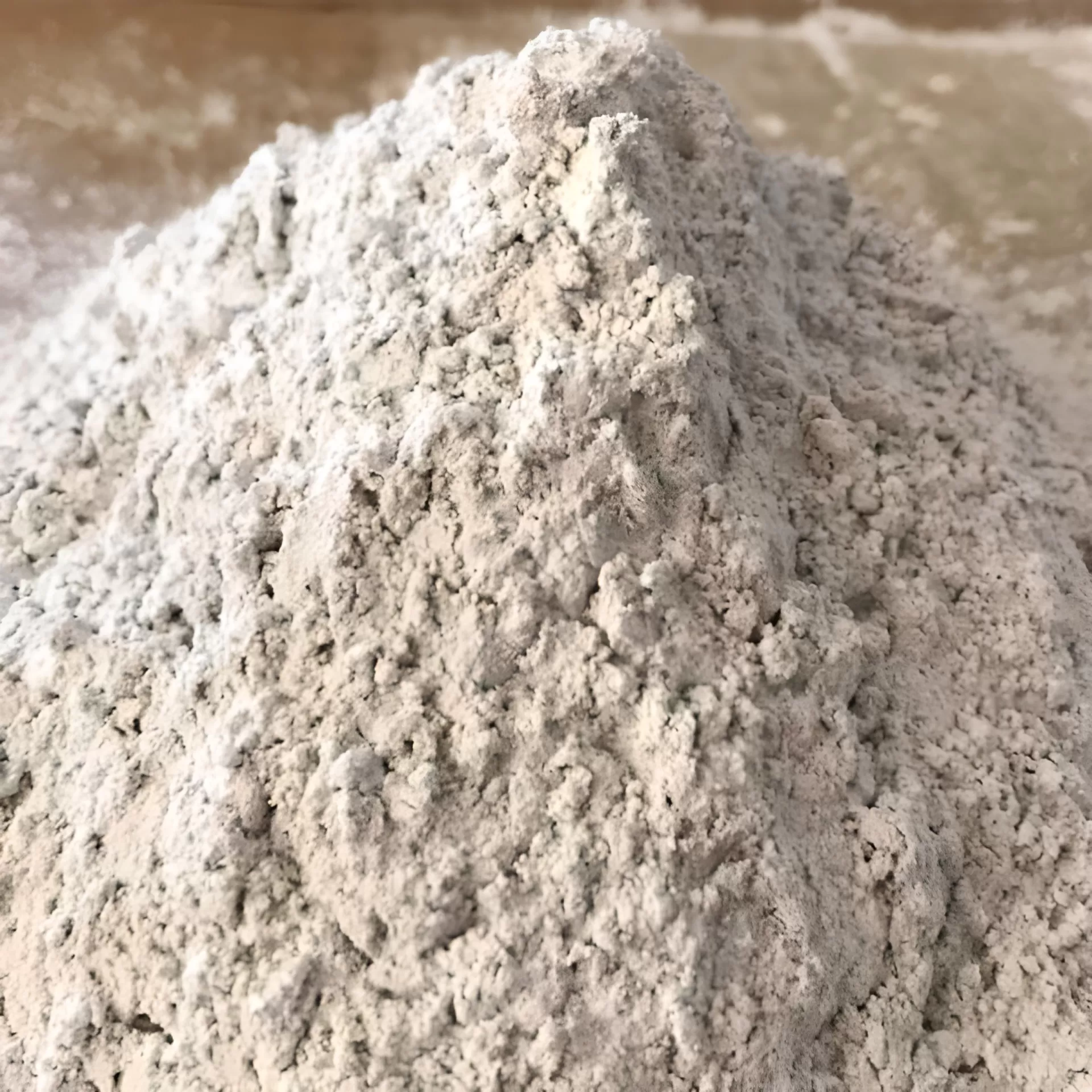
- GGBS Grade and Fineness: Utilize Grade S95 or Grade S105 slag conforming to ASTM C989/C989M. The specific surface area (Blaine fineness) must remain at or above 450 m²/kg. Higher fineness accelerates the secondary pozzolanic reaction, securing the 28-day and 56-day target strengths required for C80/C85/C110 concrete.
- Cementitious Base: Pair GGBS with low-alkali CEM I 52.5R or ASTM Type III cement. A C3A content below 8% prevents rapid early stiffening and controls chemical water demand.
- Supplementary Pozzolans (Silica Fume): For C110 formulations, incorporate undensified or semi-densified silica fume (SiO₂ > 92%). Silica fume serves as an immediate micro-filler, bridging the early strength gap before the GGBS matrix hydrates.
- Aggregates and Particle Packing: Select crushed basalt, diabase, or high-grade granite with an aggregate crushing value (ACV) below 10%. Coarse aggregate nominal top size must not exceed 16 mm (ideally 10 mm to 12.5 mm for C110). Fine aggregates must maintain a fineness modulus of 2.6 to 3.0 with clean, sub-angular particles. Apply the Modified Andreasen packing model (distribution coefficient q = 0.22 to 0.25) to ensure maximum dry density.
- Chemical Admixtures: Use third-generation polycarboxylate ether (PCE) superplasticizers engineered with long side chains. Incorporate specialized viscosity modifying admixtures (VMA) to lower yield stress and prevent paste-aggregate segregation under low water-to-binder ratios.
3. Mix Design Parameters for C80, C85, and C110 Systems
Maintaining an exact water-to-binder (w/b) ratio between 0.20 and 0.26 is non-negotiable for these performance classes. The table below outlines production-tested starting proportions per cubic meter of consolidated concrete.
| Parameter / Material | C80 Concrete | C85 Concrete | C110 Concrete |
|---|---|---|---|
| Target Characteristic Strength (fck, cylinder) | 80 MPa | 85 MPa | 110 MPa |
| Water-to-Binder (w/b) Ratio | 0.25 | 0.23 | 0.20 |
| CEM I 52.5R Cement (kg/m³) | 330 | 340 | 380 |
| GGBS (Blaine ≥ 450 m²/kg) (kg/m³) | 200 (37%) | 190 (34%) | 180 (29%) |
| Silica Fume (kg/m³) | 20 (3%) | 30 (5%) | 60 (10%) |
| Total Binder Content (kg/m³) | 550 | 560 | 620 |
| Effective Water (kg/m³) | 138 | 129 | 124 |
| Fine Aggregate (0-4 mm Sand) (kg/m³) | 710 | 695 | 660 |
| Coarse Aggregate (5-12 mm Basalt) (kg/m³) | 1060 | 1070 | 1080 |
| High-Range PCE Admixture (% by binder wt) | 1.2% | 1.4% | 1.8% |
| Slump-Flow Spread (mm) | 650 - 700 | 680 - 730 | 700 - 750 |
Mix Logic and Binder Interactions
The C80 mix design relies on a binary-plus-trace system where GGBS carries late-stage densification. The C85 concrete formulation increases paste shear strength by stepping up silica fume to 5%. This stabilizes the matrix under heavy aggregate loading.
For C110 compressive strength with GGBS, the formulation shifts to a dense ternary binder. Silica fume accelerates early formation of hydration products, providing mechanical anchorage around coarse aggregates within 48 to 72 hours. Golden Fortune provides precision-ground minerals to stabilize strength distribution across rigorous testing cycles.
4. Performance Optimization: Rheology, Early Strength, and Cracking
High binder loads paired with low mixing water generate high plastic viscosity. Batching plants frequently produce concrete that tests strong in the lab but fails during line pumping or structural placement.
Lowering Dynamic Viscosity and V-Funnel Time
Pumping C80/C85/C110 concrete over high vertical rises demands low plastic viscosity. Standard PCE admixtures disperse particles but can leave the paste sticky, causing long V-funnel discharge times (>15 seconds). Integrate viscosity-reducing polycarboxylates with shorter molecular backbones to reduce yield stress without introducing segregation risks.
Mitigating Early Strength Latency
GGBS delays initial set times, particularly in ambient temperatures below 15°C. To maintain cycle times for vertical formwork stripping:
- Use non-chloride chemical accelerators such as calcium nitrate or sodium thiocyanate at dosages of 0.5% to 1.5% by binder mass.
- Control initial cure temperatures using heated batch water (35°C to 45°C) during winter production.
- Track in-situ maturity using temperature sensors rather than relying solely on ambient cylinder crushes.
Autogenous Shrinkage Control via Internal Curing
At water-to-binder ratios below 0.25, self-desiccation occurs rapidly. Chemical shrinkage pulls internal relative humidity down, inducing micro-cracks before external loads apply. Combat this using pre-wetted Superabsorbent Polymers (SAP) at 0.15% to 0.3% by cement weight, or substitute 10% to 15% of fine aggregates with pre-saturated lightweight aggregates (calcined shale or slate).
5. Quality Assurance, Testing, and Compliance
Validating performance across C80/C85/C110 concrete requires test protocols adapted for delayed hydration kinetics.
Compressive Evaluation Schedules
Specifications governing standard mixes rely heavily on 28-day verification. For slag-rich high-strength systems, establish acceptance parameters at 56 and 90 days. Slag concrete often achieves 15% to 25% of its final strength between 28 and 90 days, avoiding the late-stage strength retrogression common to pure OPC mixes.
Durability and Microstructural Verification
Dense matrices must resist destructive environmental mechanisms. Assess real-world longevity through standardized regimes:
- Rapid Chloride Permeability Test (RCPT): Target values below 800 Coulombs at 56 days per ASTM C1202. The enriched C-S-H phase physically impedes chloride diffusion.
- Microstructural Scanning: Scanning Electron Microscopy (SEM) imaging should display a consolidated Interfacial Transition Zone (ITZ) devoid of massive, oriented Portlandite crystals.
- Maturity Modeling: Apply ASTM C1074 strength-maturity relationships to calibrate early field performance against laboratory cylinder benchmarks.
6. Frequently Asked Questions (FAQ)
Q1: What is the maximum safe replacement rate of GGBS in C110 concrete?
A1: For C110 grades, limit GGBS replacement to 25% to 35% of total binder mass. Higher replacement rates (above 40%) delay early strength development excessively, preventing the early mechanical bridging required to resist extreme internal self-desiccation stresses. Pair the slag with 8% to 10% silica fume to preserve early structural integrity.
Q2: How does GGBS affect formwork stripping times for C80 and C85 elements?
A2: GGBS extends initial and final setting times by roughly 60 to 120 minutes at standard temperatures (20°C). For vertical structural columns, stripping typically proceeds within 24 hours. For suspended slabs or prestressed transfers, stripping may need an extra 12 to 24 hours compared to straight CEM I mixes unless you add non-chloride accelerators or introduce heat curing.
Q3: What adjustments are required when placing C80/C85 concrete in cold weather?
A3: Slag activation slows significantly below 10°C. When casting in cold climates, adjust the binder split by dropping GGBS content by 5% to 10% and increasing CEM I 52.5R accordingly. Maintain batch temperatures above 18°C using heated water, insulate formwork thoroughly, and consider chemical activators such as calcium formate or calcium nitrate.
Q4: Why does high-strength slag concrete show low early-age electrical resistivity?
A4: In the initial 7 to 14 days, unreacted slag leaves higher pore fluid conductivity than an OPC mix with silica fume. Once the secondary pozzolanic reaction takes hold between 28 and 56 days, pore connectivity collapses. Electrical resistivity rises rapidly, yielding exceptionally low RCPT Coulomb values over the life of the structure.
Q5: How can batch plants manage high paste stickiness during pumping?
A5: High stickiness results from high binder volumes combined with low water contents. Avoid simply adding water, as this compromises target compressive strengths. Instead, lower the paste volume by optimizing the aggregate gradation curve, substitute a portion of fine sand with fly ash or limestone powder to alter grain morphology, and switch to a targeted low-viscosity PCE admixture.
7. Scale Your High-Performance Concrete Operations
Formulating C80/C85/C110 concrete using GGBS demands rigorous control over material quality, water-to-binder limits, and particle packing dynamics. When executed correctly, these formulations deliver exceptional compressive performance, easy placement, and a substantially reduced environmental footprint.
Golden Fortune supplies consistent raw materials and actionable mix optimization services tailored to competitive commercial construction. Connect with our technical team today to request structural mix designs, schedule laboratory batch trials, or source reliable supplementary cementitious materials for your next project.