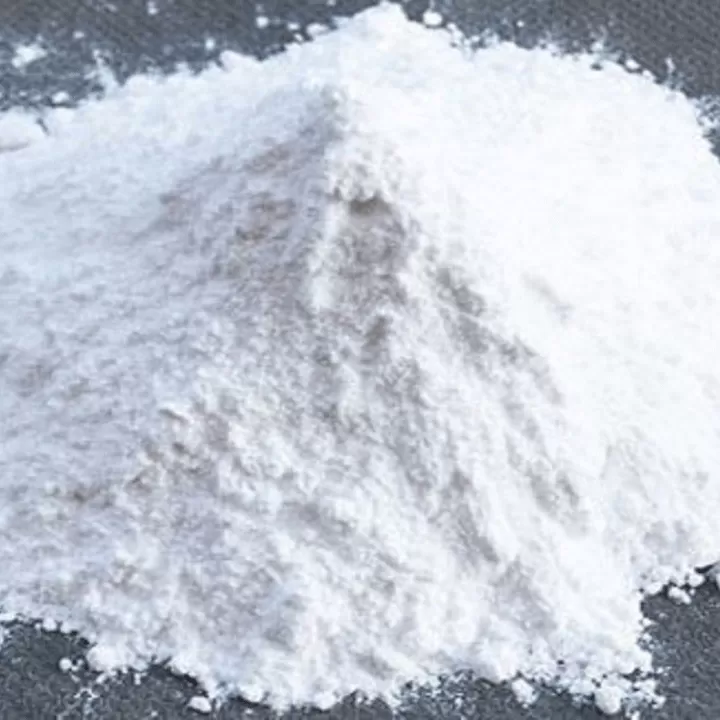
The cement industry faces two converging pressures: reducing clinker factor and maintaining concrete performance under aggressive exposure. A by product of cement—specifically ground granulated blast furnace slag (GGBFS), pulverized fuel ash, or condensed silica fume—offers a direct route to modify the hydration kinetics and durability characteristics of blended systems. Unlike inert fillers, these materials participate in pozzolanic or latent hydraulic reactions, converting portlandite into additional calcium silicate hydrate (C-S-H).
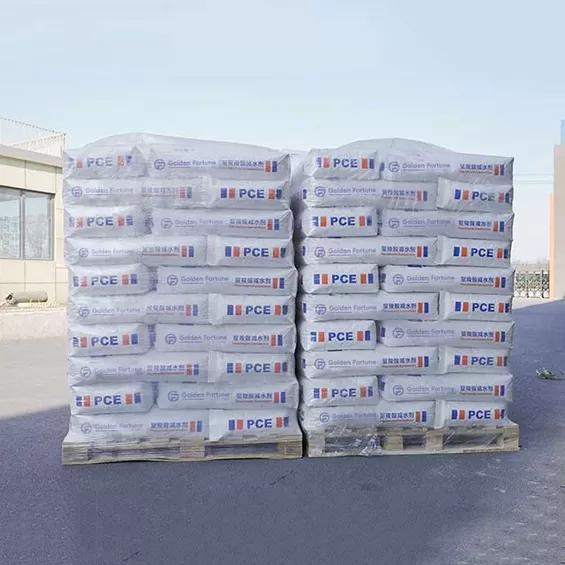
Suppliers such as Golden Fortune provide ultrafine GGBFS grades that exceed EN 15167-1 requirements. This analysis covers the reaction mechanisms, performance thresholds, and specification considerations when substituting clinker with a by product of cement in ready-mix and precast operations.
Reaction Pathways: Latent Hydraulic Versus Pozzolanic Behavior
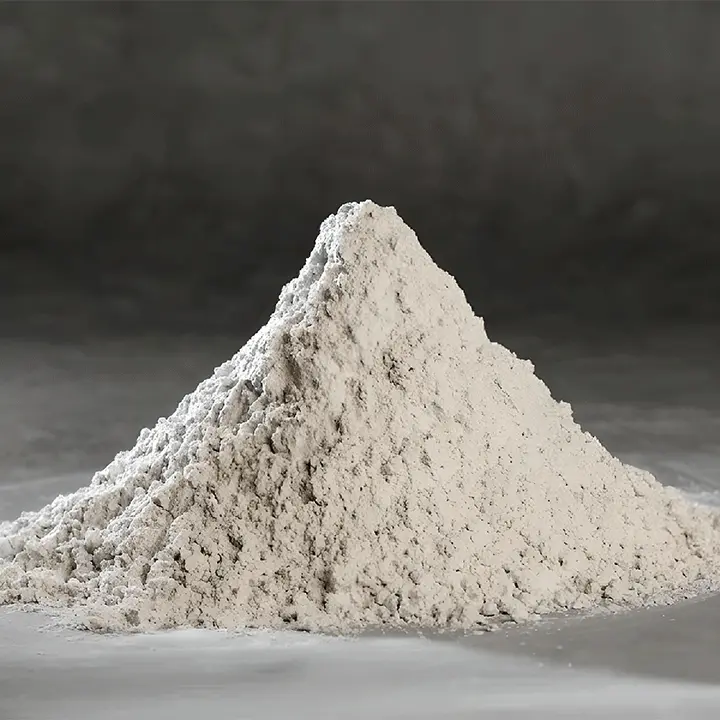
A by product of cement falls into two categories based on calcium content and glass phase. Ground granulated blast furnace slag (CaO >40%) exhibits latent hydraulic properties: in the presence of an alkaline activator (calcium hydroxide or cement hydration products), the slag glass dissolves and precipitates C-S-H. Fly ash (SiO₂+Al₂O₃ >70%) requires calcium hydroxide to form binding phases, a true pozzolanic reaction. Silica fume acts as a highly reactive pozzolan with particle diameters under 0.5 µm.
Slag (GGBFS): Hydration starts after 6–12 hours; contributes to strength up to 90 days. Replacement levels of 30–70% are common for mass concrete.
Fly ash (Class F): Slower reaction, reduces early strength but improves long-term durability (sulfate and alkali-silica resistance).
Silica fume: High surface area (15–30 m²/g); fills interstitial voids and reduces permeability. Dosages stay below 10% to avoid excessive water demand.
Selecting the right by product of cement depends on the required setting time and exposure class. For marine structures, slag blends lower chloride diffusion coefficients by an order of magnitude compared to plain OPC. For high-rise pump concrete, fly ash improves workability at constant water-cement ratio.
Physical and Chemical Specifications for Quality Control
Fineness and Particle Size Distribution
The reactivity of any by product of cement correlates directly with Blaine specific surface area. Slag grades range from 350 m²/kg (standard) to 600 m²/kg (ultrafine). Finer fractions accelerate early hydration but increase water demand. Golden Fortune produces GGBFS with controlled residue on 45 µm sieve (<2%) and median particle size (D50) between 4 and 6 µm, balancing reactivity and rheology.
Glass Content and Chemical Moduli
For slag, the glass content should exceed 90% by mass; crystalline phases contribute little to strength. Two moduli define performance:
Basicity coefficient (Kb) = (CaO+MgO+Al₂O₃)/(SiO₂) — values above 1.4 indicate high hydraulic activity.
Hydration modulus (Mh) = (CaO+MgO+Al₂O₃)/SiO₂ — target range 1.6–1.8 for EN 15167 compliance.
Fly ash requires loss on ignition below 5% (carbon content reduces air entrainment efficiency) and a fineness >65% passing 45 µm. Silica fume must maintain SiO₂ >85% and no visible agglomerates.
Performance Benefits in Hardened Concrete
Replacing 30–50% of Portland cement with a by product of cement changes the microstructure in four measurable ways:
Refined pore structure: The secondary C-S-H fills capillary pores >50 nm, reducing water absorption by 40–60% compared to plain OPC after 56 days.
Sulfate resistance: Slag blends lower tricalcium aluminate (C₃A) effective content, preventing ettringite formation. Concrete exposed to 50,000 ppm sulfate shows expansion below 0.05% after 2 years.
Alkali-silica reaction (ASR) mitigation: Fly ash and slag consume alkalis and reduce pH; ASR expansion drops below 0.1% at 14 days (ASTM C1260).
Reduced heat of hydration: For mass foundations, a 50% slag replacement cuts peak temperature rise from 55°C to 32°C, eliminating thermal cracking risks without cooling pipes.
Data from industrial trials show that ternary blends (cement + slag + fly ash) achieve 28-day compressive strengths 5–10% higher than OPC reference while keeping the heat of hydration below 250 kJ/kg. These mixtures meet ACI 301 specifications for structural concrete.
Processing Challenges and Solutions for Ready-Mix Producers
Using a by product of cement introduces three practical issues on site: extended setting time, slower early strength gain, and potential for carbonation if curing is inadequate. Each has proven countermeasures:
Delayed set: Use of accelerating admixtures (calcium nitrate or sodium thiocyanate) at 0.5–1.0% by cementitious weight returns initial set to 4–6 hours. Alternatively, reduce slag content to 25% in cold weather.
Low early strength: Ultrafine grades from Golden Fortune show 1-day strengths 8–12 MPa (50% slag) when cured at 20°C. For cold weather, use heated mixing water (30–40°C) and insulation blankets.
Carbonation risk: Proper moist curing for at least 7 days allows the pozzolanic reaction to consume portlandite and densify the surface layer. Without curing, the alkalinity drops faster than OPC.
Precast producers often prefer slag blends because steam curing at 60°C for 6 hours develops 80% of 28-day strength, matching OPC cycles. For slipform paving, fly ash class C (self-cementing) maintains consistency over long haul distances.
Environmental and Durability Verification Protocols
Specifying a by product of cement requires third-party testing beyond standard compressive strength. European Standard EN 15167-1 mandates testing for chloride resistance (rapid migration test), freeze-thaw scaling, and sulfate expansion. In North America, ASTM C989 classifies slag into Grade 80, 100, and 120 based on slag activity index at 7 and 28 days.
Slag activity index (SAI) = (strength of slag blend / strength of OPC) × 100. Grade 120 requires SAI ≥120% at 28 days.
For fly ash, ASTM C618 limits moisture content (<3%), SO₃ (<5%), and LOI (<6% for Class F).
Silica fume conforms to ASTM C1240 with a required pozzolanic activity index >105% at 28 days.
Structural engineers should request mill certificates for each delivery showing oxide composition, fineness, and activity index. Golden Fortune provides these certificates with every batch of ultrafine GGBFS, including the specific surface area measured by Blaine and BET-N₂ methods for consistency.
Frequently Asked Questions About By Product of Cement Materials
Q1: Can a by product of cement replace 100% of Portland cement in structural concrete?
Q2: How does a by product of cement affect the water demand for a given slump?
Q3: What is the shelf life of a bagged by product of cement material?
Q4: Does using a by product of cement increase the risk of efflorescence?
Q5: Can a by product of cement be used in concrete exposed to deicing salts?
Q6: How to verify the reactivity of a delivered by product of cement on site?
For a detailed technical review of your concrete mix design using a by product of cement, send an inquiry to the Golden Fortune engineering team. Provide your target strength class, exposure conditions (chloride, sulfate, freeze-thaw), and required slump. A custom recommendation for slag fineness, dosage rate, and admixture compatibility will be prepared within three days.
Inquiry submission: Use the form at https://www.ultrafineggbs.com/contact.html or send your project specifications directly. Every inquiry receives a preliminary mix design and a certified analysis of the corresponding by product batch.